
books
📗 Books 2025, 18: Glory Road, by Robert A Heinlein
I had a sudden hankering to reread this old Heinlein book (even older than me, it turns out, being first published in 1963). I read it as a kid, from the library, and if I ever bought a copy it isn’t accessible now.
I searched my local library’s catalogue. No joy. But the excellent World of Books duly had an old copy or two, and one was soon here.
It is almost exactly as I remembered it, which is to say it’s a tale of derring-do, sword-and-sorcery adventure, where the sorcery is sufficiently-advanced technology. We don’t learn anything about how it works, and it doesn’t matter. It’s just a fun story, very much of its time.
The first-person male protagonist is one of those highly-capable men beloved of that era’s male American SF writers. But he is relatively lacking in self-confidence at times, which is surprisingly refreshing for the type. The female lead is mostly great, and considerably more capable than the guy, even if he doesn’t exactly realise it.
Anyway, loads of fun, and I’m glad to have read it again after all these years.
📗 Books 2025, 17: Theophilus North, by Thornton Wilder
The roaring twenties, told from the seventies, and read in the… unroaring twenties? Much better than that famout novel set in the twenties.
📗 Books 2025, 16: The Cracked Mirror, by Chris Brookmyre
The new Chris Brookmyre is a detective story in multiple genres, you could say.
📗 Books 2025, 15: To the Lighthouse, by Virginia Woolf
In which I talk whimsically about a modernist masterpiece.
📗 Books 2025, 14: The Final Empire, by Brandon Sanderson
This is the first book in the Mistborn series, and I saw in a bookshop the other day that it’s now published just as Mistborn. Which is more sensible. I can’t help but imagine some potential readers were put off or confused by that ‘final’ in The Final Empire.1
My son basically made me read this. He’s a Sanderson fan and I had read none. He (my son) also told me Sanderson wanted to write a fantasy where the good guys had lost. Like what would have Middle Earth been like if Frodo and Sam had failed on their trip to Mordor? Sauron would have got the one ring back and basically been all-powerful.2
So this is basically that, with quite a different setup. The empire is ‘Final’ because it has lasted a thousand years or more and is never expected to end. Most people live as peasants, near slaves, and few noble houses are allowed to exist because the empire needs trade and internal tensions and what have you. The emperor — The Lord Ruler, as he’s known — is basically all-powerful, invulnerable. He’s said to have survived various assassination attempts up to and including a beheading. Which seems… wildly improbable, but hey, this is fantasy.
But some people — the titular Mistborn, and others — have special abilities, and there are pockets of resistance.
Sanderson writes a good enough page-turner, but I don’t know if I’ll be going on with the series. First of all there are just too damn many. But more importantly, and surprisingly, this first book is actually quite a complete story, with an ending. Sure, it’s a reasonably open ending, with hints of the kind of troubles the characters are going to face, and so on. But if there were no more books, you wouldn’t feel unsatisfied to leave it there.
And I don’t care enough about any of the characters to want to invest my time in it. Which is probably its biggest weakness. I even left it at home when we went on holiday to Canada recently. I was about 100 pages from the end and didn’t want to have to pack such a huge book that I would probably have finished on the flight over. Which is not how I’d have treated The Lord of the Rings back in the day, just to give one example.
📗 Books 2025, 13: No Great Mischief, by Alistair MacLeod
This was published in 2000, and my partner’s parents gave it to me that year or the next. I have a vague feeling I also knew about it from somewhere else. Maybe just saw it in a bookshop and thought it looked interesting. Either way, I never got round to reading it till now.
It’s the story of a Scottish family — clan, almost, and certainly they’re referred to that way in the Gaelic terms that pepper the book — that migrated to Canada some time after Bonnie Prince Charlie’s 1745 uprising. It’s simultaneously the history of that migration, and the story of a present-day descendent of the family, now a successful orthodontist in Ontario; and his older brother who is in less successful circumstances. And most of all, of how they came to be that way.
I decided, since we were taking a trip to Canada, that now might finally be the time to read it. I started it on the way to the airport, but I don’t think I read any while we were still over there.
I’ve finished it now, though, and it’s pretty good. Nice use of parallel storylines, various bits about Scottish history and modern-day (well, actually the modern parts are set in the 80s) Toronto, and so on.
MacLeod came up in conversation while we were over. Not apropos of this; I just recognised the name. He was mentioned as a poet, I think, and I believe that’s how he’s better known. Still, he’s a decent novelist too.
📗 Books 2025, 12: The Age of Wire and String, by Ben Marcus
This is a strange wee beastie. The edition I have was published in 1998, and I must have bought it then or not long after. I vaguely remember reading a bit of it and finding it amazing, really powerful. And I obviously started it, because I had a bookmark in it, a few pages in.
But every time I’ve had a look at it since, it hasn’t really grabbed me. Until recently, when I started it again.
And… I’ve no idea what I saw in it back then. It’s a work of surrealism, but it’s just wilfully obscure. Every sentence is grammatically and syntactically sound, but semantically meaningless. It purports to be a catalogue or almanac of a society, with sections titled ‘Sleep’, ‘God’, ‘Food’, and so on. And within them chapters, or short stories, called ‘Sky Destroys Dog’,‘Ethics of Listening When Visiting Areas That Contain Him’, ‘Hidden Ball Inside a Song’.
It can be strangely compelling in places, almost reaching the level of poetry. But mostly it’s a bit of a chore to get through. If I hadn’t had it and kept it so long I probably wouldn’t have bothered.
A very curious work.
📗 Books 2025, 11: Blitzkreig Bops, by Alli Patton
I picked this up at a stall at the local market a few weeks ago. It’s a slim volume, taking its title from the Ramones' song ‘Blitzkrieg Bop’, and subtitled, ‘A Brief History of Punks at War’. Alli Patton is a music journalist from the southern US and this slim book takes a look at how punk, from the 70s through to the 20210s, has been used to resist war, and call for peace and justice.
She starts with Stiff Little Fingers and the Troubles in Northern Ireland, and moves on through apartheid South Africa to Chile during Pinochet’s regime and punk bands in East Germany during the Cold War.
And then beyond that, decade by decade. There are always wars and oppression, and it seems there are always punk bands resisting and calling for peace.
Worth a read, and she includes a YouTube playlist of some of the artists she covers.
📗 Books 2025, 10: The White Album, by Joan Didion
I read one of the pieces from this, ‘At the Dam’, on my MA course. It didn’t make a huge impact on me at the time, but enough to keep Didion’s name in my mind, and eventually to stir up enough interest for me to get this.
It’s a set of personal essays covering various events around the end of the sixties and the early seventies. It struck me, reading this, she’s kind of a gonzo journalist, or at least gonzo-adjacent, in that the often puts herself in the narrative. Which is good and proper in my humble opinion. Not as intense as HST, but still.
There’s a lot of good, interesting stuff here, including one piece that involves her hanging out with The Doors, waiting for Jim Morrison to arrive. It’s not much about music, though, and I don’t know why she chose to call it The White Album.
One minor annoyance about at least this edition is, although the front matter credits the various publications the pieces originally appeared in (Life, The New York Review of Books, etc), it doesn’t tell us which piece appeared where.
But that doesn’t detract from the pieces themselves.
📗 Books 2025, 9: The Interpreter, by Brian Aldiss
Slim, old-fashioned, good idea, but not that well executed.
📗 Books 2025, 8: The History of Rock ‘n‘ Roll in Ten Songs, by Greil Marcus
Should I include it if I started it years ago? Yes. Is it beautifully written? Yes. Is it definitive? Certainly not.
📗 Books 2025, 6: The Pale Horse, by Agatha Christie
Christie does the supernatural! Or not? And reaches the 60s.
📗 Books 2025, 5: Annihilation, by Jeff VanderMeer
As The Dispossessed starts with a wall, Annihilation starts with a tower. And as LeGuin’s wall round a spaceport both closes the planet off from the rest of the universe, and encloses the universe, depending on how you look at it; so VanderMeer’s tower has its topological oddity. It starts at ground level and goes down, into the ground underneath it, rather than rising into the air.
Or so the Biologist sees it, But this is Area X, and things are rarely as they seem.
The Biologist is the first person narrator. Accompanied by three other women — the Psychologist, the Anthropologist, and the Surveyor — they are the latest in a series of groups sent in to investigate the mysterious zone.
Almost everything is unexplained in this book. It is incredibly compelling, gripping, even, but everything remains unexplained, the ending is open. Yet while there are three more books in the series, I feel it’s such a perfect little nugget, beautifully crafted, that to read on would almost spoil it.
I suspect that’s not true, though. We are in safe hands with VanderMeer, so I expect the continuation will be sound. I remember my friend Simon having a similar response when he read Hyperion. Its perfectly-crafted open ending seemed to him like it didn’t need a sequel. But of course The Fall of Hyperion was magnificent, and so were the two Endymion followups.
Anyway, this is great, but you probably already knew that, what with winning awards and being ten years old.
📗Books 2025, 4: Northanger Abbey, by Jane Austen

We started watching Miss Austen, the BBC serial about Jane’s sister Cassandra trying to get hold of Jane’s letters a few years after her death. That made me want to read some more Austen, the only I’ve read before being Pride and Prejudice.
So I tried Northanger Abbey. Which is mainly a spoof of the gothic novels that Austen herself would have been reading at the time, and also, of course, a romance.
I enjoyed it a lot, but it ended very surprisingly. It has the omniscient narrator you might expect for a book of its time, but it’s mostly written in close third-person. We are privy to Catherine’s thoughts and fears. But the thing is, when we get to the climactic scene, when everything is going to be resolved and our heroine end up happy (it’s not much of a spoiler), Austen (or the narrator) turns away.
Instead of being with Catherine as the hero rides to her emotional rescue, we are told about it. We’re kept at a distance, no longer aware of what’s going on in her head. It’s an absolute masterclass in the difference between ‘showing’ and ‘telling’ in writerly terms; but the wrong way round for a really satisfying experience.
Perhaps it was a continuation of the style of those gothic romances she was parodying, but read today, it’s a strange choice.
📗 Books 2025, 3: The Great When, by Alan Moore

I think I read somewhere that this ends on a huge cliffhanger. It doesn’t. Or I wouldn’t describe it in those terms.
It has an epilogue, entitled ‘The Old Man at the End’, set 50 years or so after the main story. Someone we take to be the protagonist fears for his life; and the close-third-person narration hints at or mentions some events that intrigue. But we’re not left hanging.
The book is described as ‘a Long London novel’. though, so we certainly expect additions to the series in time.
The term ‘Long London’ is not used in the book, I think, though our normal, everyday London is called ‘Short London’ at one point. ‘The Great When’ is used, and is one of the terms for another London that exists parallel to ours in some sense. Certain people, with certain kinds of imagination (or damage), can find and use some few portals between the two realms.
You know the sort of thing. Parallel worlds, unseen realities, aren’t exactly new. But Moore is such a good writer, this is a high, fine example of the form, even if there have been others like it before. The richness of his description and believability of his characters make this a five-star affair, if I gave stars to books.
And books are key here. It all kicks of in 1949, when Dennis Knuckleyard, 18 years old, orphaned in the war, and working in a second-hand book shop, comes into the possession of a book that doesn’t exist.
It is imaginary, being named in an Arthur Machen tale. Which means he has to get it back to the other London before very bad things start happening.
Highly recommended, and I eagerly anticipate the next volume, despite not being cliffhung by this one.
📗 Books 2025, 2: Vivaldi and the Number 3, by Ron Butlin

I read about this some four years ago on Jack Deighton’s blog. It sounded interesting enough that I tried to order it via Pages of Hackney. But they told me it was out of print.
I couldn’t even find it on Amazon; no Kindle version. So I left it.
Until just recently, when I had cause to by some second-hand books from World of Books. Something made me think of this one. Quick search, and there it was.
And it’s even weirder and more fun than I imagined from reading Jack’s review. It’s a series of short stories, with some interconnections, about various classical composers (plus some philosophers). But it’s all deeply surreal. You’ll find Beethoven living in present-day Edinburgh, for example.
What’s it all for? I don’t really know. But they’re great little vignettes, easily digestible, and lots of fun.
📗 Books 2025, 1: The Murder of Roger Ackroyd, by Agatha Christie
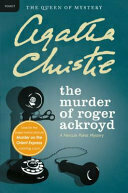
I got this by Agatha Christie for Christmas and started straight after Conclave, so technically last year. But I didn’t finish it till the new year, so 2025 it is.
Another great one from Christie, with a killer twist. Poirot has retired and is living in the country. But that kind of character never really gets to retire, do they?
Unpleasant Men
This morning I read the whole of the Vulture article about Neil Gaiman. That link’s to an archived copy, because someone said on Facebook that the original has had the references to Scientology removed because of legal threats. And also it’s paywalled.
It’s so depressing that a man who seemed so decent, so generally a positive force in the world, can turn out to have been an abuser all these year. Allegedly, I suppose I must say.
You know, Paul Cornell included Gaiman as a character in one of his Shadow Police stories, The Severed Streets. If I remember the ‘Neil Gaiman’ character was a villain. We took it as fun at the time; but I wonder if Cornell had an inkling that he wasn’t the nice guy he seemed.
In other shitty-men news, Matt Mullenweg has been blowing up most of the good feeling people have about WordPress over the last few months. I’m glad I moved my site off it a few years ago. But now he’s attacked a woman who used to work on WordPress but hasn’t for years. For no very obvious reason, it seems.
Just being shitty.
📚 Books 2024, 26: Conclave by Robert Harris
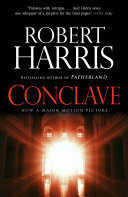
After my recent viewing of the film based on this, my daughter got me the book for Christmas.
It’s surprising how compelling a book can be when you know exactly what’s going to happen, and it’s about something that you wouldn’t normally give a toss about. Though on the latter, I suppose the boy can leave the church, but it always leaves its mark, or something.
Anyway, it turns out this Harris guy can really write. Who’d’ve thought?
I note with interest that the ‘why this story, why now’ question that I mentioned when writing about he film, never even crossed my mind while reading this. I approach a book with a different set of expectations from how I do a film, maybe.