
📚 Books 2026, 22: All That We See or Seem, by Ken Liu
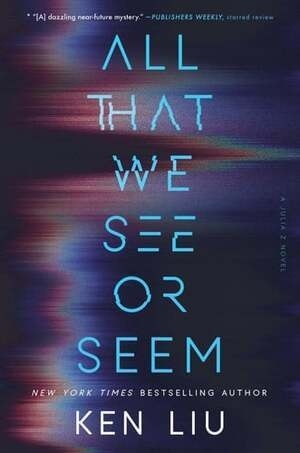
Ken Liu is best known (to me at least) as the translator of the first and third volumes of Liu Cixin’s ‘Three-Body Trilogy’. But he’s an accomplished SF author in his own right.
All That We See or Seem (described as the first of a series, because of course) is a cyberpunk story, in the sense that it’s set in the near future and concerns hacking. The lead character, who goes by ‘Julia Z’, was a member of hacking group as a teenager, and after it got broken up and the leaders arrested, she is trying to live on the right side of the law.
But that’s all backstory, with details revealed to us gradually as the main story needs them. In the book’s present, she is approached by a man whose wife has gone missing and is seemingly being held to ransom by a criminal gang. Piers wants Julia to use her skills to find his wife, Elli. Elli is an ‘onierofex’, or dreamweaver: a talent in a new form of entertainment where people enter shared dreams. The mechanism for this is not entirely clear, but it involves scanning the participants brains in some form.
There are gangsters after them, of course, and we’re off. One thing that struck me about this is, you recall the ‘capable man’ stories of the so-called Golden Age of SF? The heroes of Heinlein, John W Campbell, or Doc Smith stories, who could turn their hand to just about anything the plot required?
Well Julia is very much a ‘capable young woman’, in what feels like a surprisingly similar vein. As a hacker, she can do smart things with computers, of course. But she also turns her hand to smart-drone design; counter-surveillance (OK, that’s kind of computer/hacker-related); and ultimately intrusion, in the form of breaking into an enemy base.
It’s all convincingly done, don’t get me wrong. While you’re reading it, you’ll mostly believe it’s all plausible, she’s convincingly drawn. But looking back, wow: that’s quite some capability.
It’s good, though. I recommend it.