
📚 Books 2026, 19: Persuasion, by Jane Austen
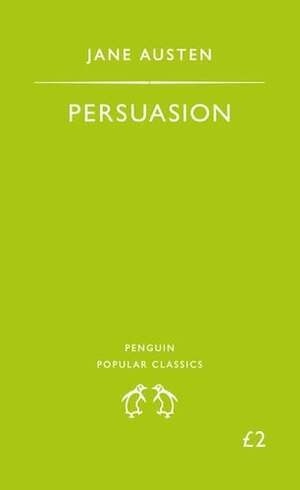
I’m perhaps reading with too much of a modern writer’s eye these days, because I was constantly thinking, while reading this Penguin Popular Classics edition of Persuasion: it’s all telling, no showing at all!
Which is not entirely true, and I’ve also commented in the past on these pages, that we shouldn’t treat that instruction as sacrosanct anyway. There are plenty of times where telling is the best way, the right way, to approach part of a story. We call it storytelling after all. And this is Jane Fucking Austen!
So yes, there is a sense at times that we’re skating across the surface of things, not really seeing the interiority of Anne, except when we are; and there are times when the narration switches from close-third-person to omniscient, in a way that can be slightly confusing: are we getting Captain Wentworth’s thoughts here, or is it Anne projecting what she thinks he’ll be thinking?
But I still sat up till 2 o’clock finishing it.
The oddest thing is the way how some dialogue is rendered. There’s a lot of free indirect speech, including in places where I would have preferred actual, reported speech (and as I write I realise that’s probably the main cause of the slight disconnect I felt). But there are some parts where direct and indirect speech seem to be merged in the oddest way.
Here’s an example from chapter VI:
Mary deplored the necessity for herself. ‘Nobody knew how much she should suffer. She should put it off as long as she could;’
The section in quotes is clearly meant to be Mary’s dialogue, but the ‘she’ in question is Mary herself. There are numerous examples like this throughout the book, but it’s far from all instances of reported speech. Just at the end of the paragraph immediately before the above, we have :
Mary, who, on having occasion to note down the day of the month, exclaimed, ‘Dear me, is not this the day the Crofts were to come to Kellynch? I am glad I did not think of it before. How low it makes me!’
Similar formulation, but conventionally structured. Now there’s no absolute ‘correct’ way to render speech. Everything we use today is a convention. But I don’t recall that kind of formulation in Austen before. I would say I don’t recall seeing it anywhere before, except I think there was a similar instance in my recent reading of Moby Dick. But a singular instance in a long book like that feels like a genuine mistake, whereas here it was surprisingly frequent.
My minor gripes aside, it deserves its place in the literary hall of fame.