
I find this kind of horrifying: Denmark’s state-run postal service will no longer deliver letters. And I can see Britain’s Royal Mail going to same way.
It feels like we’d be cut off, in kind of a way. I mean I don’t know when I last sent a letter, but still.
I mean, Christmas cards!
📗 Books 2025, 18: Glory Road, by Robert A Heinlein
I had a sudden hankering to reread this old Heinlein book (even older than me, it turns out, being first published in 1963). I read it as a kid, from the library, and if I ever bought a copy it isn’t accessible now.
I searched my local library’s catalogue. No joy. But the excellent World of Books duly had an old copy or two, and one was soon here.
It is almost exactly as I remembered it, which is to say it’s a tale of derring-do, sword-and-sorcery adventure, where the sorcery is sufficiently-advanced technology. We don’t learn anything about how it works, and it doesn’t matter. It’s just a fun story, very much of its time.
The first-person male protagonist is one of those highly-capable men beloved of that era’s male American SF writers. But he is relatively lacking in self-confidence at times, which is surprisingly refreshing for the type. The female lead is mostly great, and considerably more capable than the guy, even if he doesn’t exactly realise it.
Anyway, loads of fun, and I’m glad to have read it again after all these years.
The Naked Gun, 2025 - ★★★½
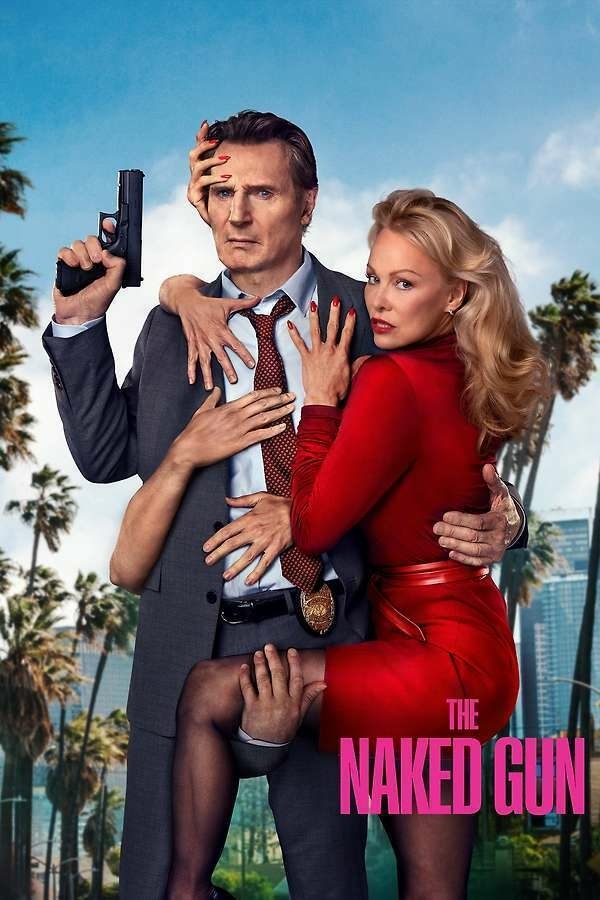
Remakes can be just as much fun as the original, it turns out. I note I gave that four stars, which seems high, but you know how it is: we award these things in the moment.
Anyway this new version updates the old without losing any of its zany charm and laugh-out-loudness. Well worth a couple of hours of your time.
The Ballad of Wallis Island, 2025 - ★★★★½
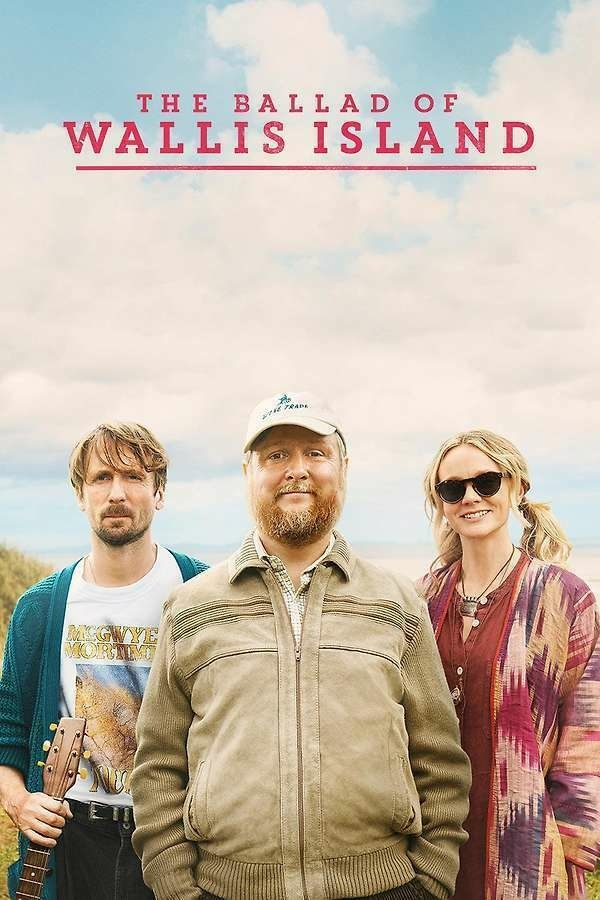
I forgot to write about this when we saw it a couple of weeks back. I went in knowing nothing about it but the basic setup: rich guy invites faded, formerly popular, folk duo to his island for a private gig.
I didn't even know it was a British film. The above description gives kind of Glass Onion vibes when you tell it to people, but this is nothing like that. It's much more gentle and charming and sad yet happy.
The music's great too. Highly recommended.
📗 Books 2025, 17: Theophilus North, by Thornton Wilder
The roaring twenties, told from the seventies, and read in the… unroaring twenties? Much better than that famout novel set in the twenties.
I read Doc Searls’s piece, How about ASO, for Attention Surfeit Order?. I was sure I had used that expression, or one like it, on my blog. A quick search led me to a 2006 post about attention in various senses, which has ‘Attention surfeit disorder?’ as a subheading. The amusing part was that in that subsection, I referenced Doc Searls.
Continually making decisions is cognitively taxing. That’s why we gravitate to morality systems like religion, the Free Software Foundation, and CAMRA.
That line amused me in The Vegan Morality Policy by Terence Eden.
Obviously my last books post should have had ‘Cracked’ not ‘Carcked’ in the title. Fixed now, but visible forever in the URL.
The New York Times Connections is getting harder. Or I’m getting worse at it. That’s two Saturdays in a row I haven’t got any rows. I only do it at weekends, and not always then, but still.
What the hell is a ‘brad’? And ‘spike’? Come on. (I’d say more, but spoilers, you know.)
📗 Books 2025, 16: The Cracked Mirror, by Chris Brookmyre
The new Chris Brookmyre is a detective story in multiple genres, you could say.
📗 Books 2025, 15: To the Lighthouse, by Virginia Woolf
In which I talk whimsically about a modernist masterpiece.
📗 Books 2025, 14: The Final Empire, by Brandon Sanderson
This is the first book in the Mistborn series, and I saw in a bookshop the other day that it’s now published just as Mistborn. Which is more sensible. I can’t help but imagine some potential readers were put off or confused by that ‘final’ in The Final Empire.1
My son basically made me read this. He’s a Sanderson fan and I had read none. He (my son) also told me Sanderson wanted to write a fantasy where the good guys had lost. Like what would have Middle Earth been like if Frodo and Sam had failed on their trip to Mordor? Sauron would have got the one ring back and basically been all-powerful.2
So this is basically that, with quite a different setup. The empire is ‘Final’ because it has lasted a thousand years or more and is never expected to end. Most people live as peasants, near slaves, and few noble houses are allowed to exist because the empire needs trade and internal tensions and what have you. The emperor — The Lord Ruler, as he’s known — is basically all-powerful, invulnerable. He’s said to have survived various assassination attempts up to and including a beheading. Which seems… wildly improbable, but hey, this is fantasy.
But some people — the titular Mistborn, and others — have special abilities, and there are pockets of resistance.
Sanderson writes a good enough page-turner, but I don’t know if I’ll be going on with the series. First of all there are just too damn many. But more importantly, and surprisingly, this first book is actually quite a complete story, with an ending. Sure, it’s a reasonably open ending, with hints of the kind of troubles the characters are going to face, and so on. But if there were no more books, you wouldn’t feel unsatisfied to leave it there.
And I don’t care enough about any of the characters to want to invest my time in it. Which is probably its biggest weakness. I even left it at home when we went on holiday to Canada recently. I was about 100 pages from the end and didn’t want to have to pack such a huge book that I would probably have finished on the flight over. Which is not how I’d have treated The Lord of the Rings back in the day, just to give one example.
Wimbledon without line judges: do not appprove. Makes the court look weirdly empty; drains some of the drama; and puts people out of a job. Presumably not their actual occupation, their career, but still.
Bring back the line judges!
Clue, 1985 - ★★★½
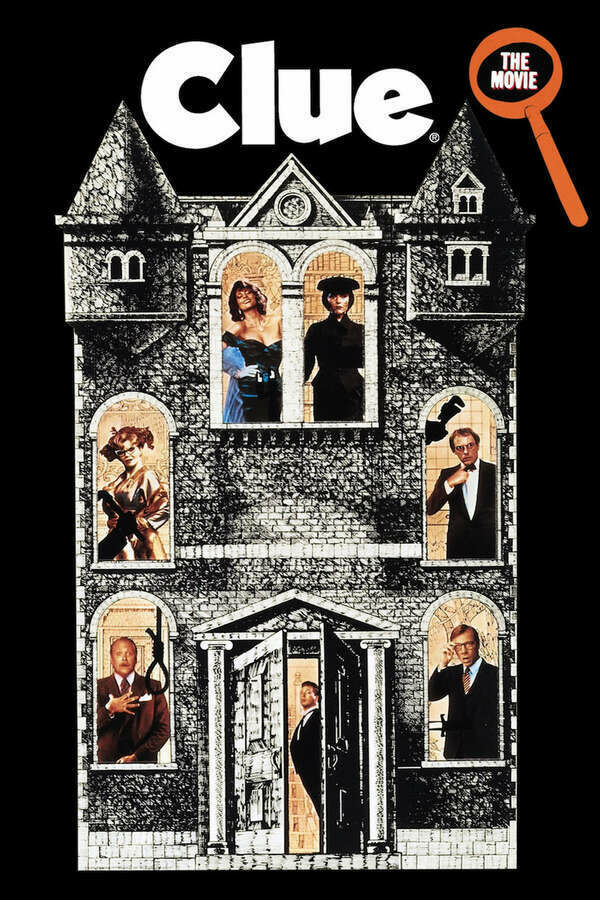
This was daft, but quite fun. A film based on a board game. Specifically on Cluedo. Which in America, strangely, seems to be called 'Clue'. Why would you not use such a great, clever name as 'Cluedo'? Unless they don't have Ludo there? But that seems impossible.
Anyway, it's probably the second-best thing I've seen Tim Curry in. Hmm, he was in Times Square, wasn't he? I remember enjoying that, but not much about it.Right now I'd have to but this ahead of it. He plays the butler, and since one couple turn up in the same car, and it's a stormy, rainy night, I was getting serious Brad & Janet vibes. I was disappointed when they had an umbrella on getting out of the car, instead of a newspaper.
Anyway, the writers had to struggle a bit to fit the conventions of the game into an actual story, but they did OK. There are shenanigans, murders, betrayals, multiple endings. All in all, not bad.
I see, the stand with multiple microphones has both a harmonica attached, and different quality mikes, like a lo-fi one to get that loudhailer effect. Even though there’s an actual loadhailer on the keyboards to one side.
Wait, Neil just has an ordinary stand with a single mike now. Was I hallucinating the great cluster of them a few minutes ago?
Well they may not be Crazy Horse, but they’re still pretty damn hot. And Neil himself is in incredible voice.
Just switched to the Glastonbury live feed. Why have Neil Young’s non-Crazy Horse band got such weird mike stands? And why has Neil himself got like fifteen mikes? Very strange.

📗 Books 2025, 13: No Great Mischief, by Alistair MacLeod
This was published in 2000, and my partner’s parents gave it to me that year or the next. I have a vague feeling I also knew about it from somewhere else. Maybe just saw it in a bookshop and thought it looked interesting. Either way, I never got round to reading it till now.
It’s the story of a Scottish family — clan, almost, and certainly they’re referred to that way in the Gaelic terms that pepper the book — that migrated to Canada some time after Bonnie Prince Charlie’s 1745 uprising. It’s simultaneously the history of that migration, and the story of a present-day descendent of the family, now a successful orthodontist in Ontario; and his older brother who is in less successful circumstances. And most of all, of how they came to be that way.
I decided, since we were taking a trip to Canada, that now might finally be the time to read it. I started it on the way to the airport, but I don’t think I read any while we were still over there.
I’ve finished it now, though, and it’s pretty good. Nice use of parallel storylines, various bits about Scottish history and modern-day (well, actually the modern parts are set in the 80s) Toronto, and so on.
MacLeod came up in conversation while we were over. Not apropos of this; I just recognised the name. He was mentioned as a poet, I think, and I believe that’s how he’s better known. Still, he’s a decent novelist too.