
Bloody Ebooks!
I read Inverted World on the Kindle. It always annoys me that you’re put at the start of the text on opening. I like to go back to the cover and work forward. Sometimes I use the contents links for that, and I think I might have done so here, skipping the introduction, because they nearly always contain spoilers.
So I started with the famous opening sentence I wrote about. But because I linked to the book’s Wikipedia page, I skimmed the article. Which mentioned a prologue, that I had somehow missed.
As it happens, missing the prologue didn’t really matter, didn’t affect my enjoyment of the book. But first, I don’t know how people can refer to the first sentence of Chapter 1 as the opening sentence, when there’s a prologue full of sentences before it.
And second, be careful how you read your ebooks. You might miss something.
Inverted World by Christopher Priest (Books 2022, 9)
With its fairly famous opening line — ‘I had reached the age of six hundred and fifty miles.’ — I kind of thought I had read this before, long ago, maybe as a teenager. But no. It turned out definitely not.
A young man learns his place in a city — Earth City, as they call it — which is moving. Rails are placed before it and lifted up behind it so they can be laid in front again. The city is winched along on the rails by fits and starts. Why? Why is it in motion, and why do the inhabitants work desperately to keep it so? And why is the fact kept hidden from city dwellers who are not ‘guildsmen’?
The answers, or some of them, are within. Though there is no answer to why ‘guildsmen’ is the correct word. Women are second-class citizens in the city. And worse outside it, on the whole.
The people of the city are human, they speak English mostly. They know their ancestors were from Earth planet, as they refer to it. The people in the villages they pass also seem to be human, and they mostly speak Spanish. The sun appears not as a sphere, but as a kind of disk with spikes top and bottom. What can be going on? The title suggests some kind of inversion, but what is it?
Ultimately the mystery isn’t solved in a very interesting way, and the ending is sad, but maybe happy, but maybe sad.
Priest has written much better books, but it bears reading.
The Absolute Book by Elizabeth Knox (Books 2022, 8)
This was prompted by a Guardian article — listicle, you might say, since it’s basically a big list — of books for the summer (last summer): Summer reading: the 50 hottest new books everyone should read. I borrowed it from my local library. Kind of great that you can borrow ebooks from the library. Especially during lockdowns, when the buildings themselves were closed.
It is a magic realist novel set mostly in Britain and faerie; or the sidhe, as it’s called here. It starts with the story of the tragic death of the main character’s sister, when they were both in their late teens or early twenties. Was it murder? certainly the driver of the car that killed her was imprisoned.
The loss of her sister haunts Taryn’s life, predictably. But if there are hints that the death is somehow linked to the other mysteries that run through the book, then it is never satisfactorily resolved that there is or isn’t any connection.
That aside, we soon find ourselves — unexpectedly, for me at least — in another world. It seems that all the otherworlds exist: Munin and Huggin, Odin’s ravens, turn up. We hear that ‘The Great God of the Deserts’ went mad because his believers had too many different ideas of what he was like, so heaven is closed. A visit to purgatory is made.
Taryn finds out she is damned, because of an action she took — or didn’t take, a sin of omission — regarding her sister’s killer. And seems to accept this, and another evil at the heart of the Sidhe, without trying to understand it, without raging against it.
It’s good, but there are definite weaknesses. I found the action scenes very confusing. Some of the geographical descriptions, too. And it feels a bit… maybe unfocused is the word? Hard to say what exactly I mean by that, but I guess it’s that some things are hinted at when they should be explained. At least eventually.
There are a few oddities. It’s set mostly in Britain, but some Americanisms creep in where they wouldn’t. Can’t think of any specific examples, but it’s on the level of saying ‘highway’ instead of ‘motorway’. That kind of thing.
Well worth a look, though.
Musky Times
I wasn’t going to write anything about Elon Musk buying Twitter, because I mostly don’t care. But Robin Sloan, in his newsletter, which isn’t really a newsletter, because he just sends a link to a blog post (with a few added words), says this:
An industrialist intends to purchase Twitter, Inc. His substantial success launching reusable spaceships does nothing to prepare him for the challenge of building social spaces. The latter calls on every liberal art at once, while the former is just rocket science.
I wanted to quote that because I loved ‘just rocket science.’ The common expression, ‘It’s not rocket science’ has always mildly amused me, as a physics graduate. Because rocket science is relatively both simple and easy. It’s straightforward Newtonian physics. Mass. Acceleration. Forces. The physics is simple, the sums are easy.
You don’t have to go anywhere near even Special Relativity (still straightforward, if harder), General Relativity (much more complex), or of course anywhere close to quantum physics (frankly the most complex and confusing thing of all).
All of which is just to say that physics has more and less difficult areas. Rocket engineering, of course, is quite another matter. There you’ve got all sort of complex materials science, chemistry, end even — if crew are involved — biology, sociology, psychology. Those are much harder.
As far as common similes for the ease of something go, I’ve always preferred ‘It’s not brain surgery.’ If I think about it I’m amazed that operating successfully on a living human brain is even possible, and I bow my head to those who can do it. While hoping they’ll never have to go near said bowed object, of course.
Anyway, that would have been that for this post, except that I pasted the above quote from Sloan into a text editor. But it didn’t look like it does above. It looked like this:
An indus-tri-al-ist intends to pur-chase Twit-ter, Inc. His sub-stan-tial suc-cess launch-ing reusable space-ships does noth-ing to pre-pare him for the chal-lenge of build-ing social spaces. The lat-ter calls on every lib-eral art at once, while the for-mer is just rocket science.
Where did all those hyphens come from? They look like they’re non-printing characters. Ones that won’t show up when a web page is rendered, but are there in the source code. Why? I can only imagine two reasons:
- a deliberate ploy to make it harder to copy quotes, as I have done above. But Sloan is a pro-web kinda guy, as far as I can tell. It doesn’t seem like something he’d do.
- A glitch. An artifact of the software he used to create the post. It’s most likely that. Weird one, though.
Stranger still is that the character is not even a hyphen. As I discovered when I search-and-replaced it in BBEdit, it actually appears to be this: \x{AD}.
I don’t even know what that is. Some kind of hexadecimal representation of something. An invisible hyphen, presumably. Which I had to search-and-replace with actual hyphens to make them visible above. Looking at the source code, it’s written as the HTML entity ­, which the DuckDuck tells me is a ‘soft hyphen’.
All very odd.
I have positive feelings about Sloan, except for his closing image. I’ll risk another paste:
Wishful descriptions of Twitter as “the de facto public town square” or “the closest thing we have to a global consciousness” sound, to me, like Peter Pan begging the audience to clap and raise a swooning Tinkerbell.
You don’t have to clap.
Yeah, but… of course you have to clap. Without wanting to get all metaphysical on you, if you don’t clap when Tinkerbell is dying, you’ve got no soul.
Luckenbooth by Jenni Fagan (Books 2022, 7)
This came to me by way of The Guardian’s summer reading recommendations last year. I ended up reading it in the tail end of winter, or spring, but that doesn’t matter. In his review, M John Harrison describes it as ‘brilliantly strange’, and that’s about right.
It’s a tale told across times, and tied to place. That place is number 10 Luckenbooth Close, in Edinburgh. Just off The Royal Mile, in fact, which is a place I lived as a student. I was in an alley called James Court, though, not the fictional Luckenbooth Close.
The close may be fictional, but the idea is not: luckenbooths were a kind of market stall in the High Street (part of The Royal Mile). Presumably that’s where Fagan got the street name from.
Though I discover today that a luckenbooth is also a piece of jewellery: a kind of heart-shaped brooch , named after the market stalls in turn.
The book, though, is about none of those things. Instead it’s about a series of people who live in the titular tenement block across the centuries. We start with the Devil’s daughter, who — well, I won’t go into spoilery details. William Burroughs is one of the characters, strangely. Apparently he did visit Edinburgh.
It is an astonishing work, involving the saving of ghosts, murders, the Millennium celebrations, homelessness, and much more. Highly recommended.
I no longer follow anyone on Twitter that I haven’t met, but I’m thinking of making an exception for this glorious translator between modern slang and business-speak:
It’s not yet the end of March. I’ve just put the cushions on the outdoor chairs, and put the umbrella up to shade me from the sun as I sit in the garden drinking coffee. I’m about to cut the grass. And I can hear seagulls.
The Schrödinger's Cat Trilogy by Robert Anton Wilson (Books 2022, 4–6)
Yes, all I do is reread. Sometimes it seems that way, anyway. Well, it was the end of 2014 when I read this last. Seven and a quarter years seems fair. It’s a lot of fun, which is why I keep returning to it, I guess.
The missing scientists, that I mentioned last time? True, it’s never explicitly explained where they went, but I think it’s clear that they found out how to move into other worlds, and went off to visit next-door universes.
The three volumes are entitled The Universe Next Door, The Trick Top Hat, and The Homing Pigeons, by the way.
I’m still making my way through the mammoth book that I mentioned before, but slowly. It’s The Books of Jacob, by Olga Tokarczuk, and you’ll read about it here eventually.
Propaganda and Suffering
I’ve seen a strange set of opinions popping up on Twitter over the last week or so, essentially blaming the US, the UK, and/or NATO for Putin’s illegal and horrifying war on Ukraine. Which on the face of it is bizarre, at best.
It’s possible that NATO’s expansion over the last couple of decades was unwise. Yet who could blame small countries close to Russia from seeking the protection that membership brings? Putin’s belligerence was well known even before the current attack.
George Monbiot makes the point well in his excellent Guardian piece:
There is a strong argument that Nato should have been disbanded at the end of the cold war. But while Putin’s sense of threat seems to have been heightened by Nato expansion and mission creep, Nato expansion has also been driven in part by Putin’s belligerence. Are we really to believe that Estonia and Latvia joined because they wanted to attack Russia? On the contrary, it’s because they fear attack. While Nato’s growth is likely to have contributed to the crisis, it’s ridiculous to suggest that Russia is not the aggressor.
– George Monbiot, We must confront Russian propaganda – even when it comes from those we respect
He suggests that Russian propaganda is at least partly to blame. It seems have made inroads on the left. Monbiot mentions the Stop the War Coalition, which normally we would think is an admirable goal and organisation. But their recent letter claims the British government ‘have poured oil on the fire throughout this episode.’ I’m no supporter of Johnson or the Tories, but I don’t think that’s fair. They also say that they ‘do not endorse the nature or conduct of either the Russian or Ukrainian regimes.’
I don’t know what the Ukrainians have done except prepare to defend themselves, and then do so. I’m as against war as any former CND member from the eighties, but when a country is invaded, it has a right to fight back.
Monbiot says it well:
True anti-imperialism means opposing not only the west’s imperialism, essential as this is. It’s about opposing all imperialism, whether western, Russian, Chinese or other.
– George Monbiot, As before
As always, of course, it is the ordinary people who suffer. I recommend donating if you can, to one of the organisations working to help the people of Ukraine:
The Velvet Underground, 2021 - ★★★★
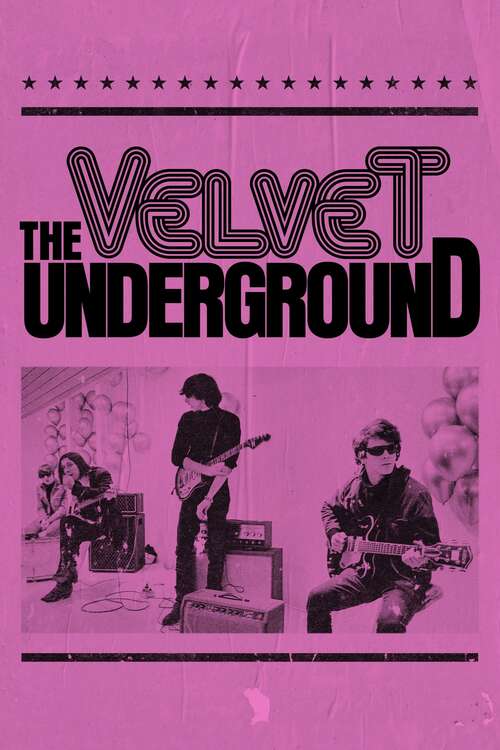
There's a lot to like here if you're already a fan — or at least, have some interest. Probably not too much if neither of those apply.
It has interviews with those who are still with us (or who were when it was made). Not just John Cale, Moe Tucker, Doug Yule, but members of Andy Warhol's Factory crew (the 'Superstars'), like Mary Woronov and Gerard Malanga.
I'd like to have heard more of the songs, especially the less well-known ones, and seen more footage of them, such as there is. It uses the documentary style that just films people speaking and edits those interviews together. That has a certain power, but I feel it might have helped to have a narrative, a voiceover elaborating on the story.
Recommended, though.