
His Dark Materials on TV
Minor spoilers ahead.
I am loving what they’re doing with HDM1 in the BBC/HBO adaptation. It has just enough variation from the books to keep it interesting (especially since I re-read them recently). Yet it manages not to distort the story in the way that so upset my then-ten-year-old son in the film version of (part of) the first book.
Bringing in the scenes of Lord Boreal crossing to “our” Oxford, and finding out about who Grumman is, is inspired. It will have the effect of making more sense of the inciting incident for Will, when he turns up. In the book it was never entirely clear who the people who searched his house were sent by, and why the authorities were interested in him. This way, it will.
I’m looking forward to next week’s arrival of Lin-Manuel Miranda as Lee Scoresby.2 And we’ll get Iorek Byrnison, too. That’ll be a big test of the CGI.
Which leads me to the only thing that slightly lets it down: Pantalaimon’s default form as an ermine. It looks a little too fake and plasticky to me. Most of the other daemons look fine, so I don’t know why the lead one should be so poor. Maybe it’s because he’s the only one that gets much screen time where he talks.
On that note, two points about Mrs Coulter’s daemon, one which struck me on my recent reread, and the other just tonight. We never learn its name. Nearly every other daemon that gets a mention, gets a name. And it never speaks. Certainly not so far in the TV version, and I’m fairly sure it never does in the books, either.
Which no doubt tells us something about the character of the woman.
Watchmen by Alan Moore & Dave Gibbons (Books 2019, 21)
I like to reread this from time to time, and right now I’m considering watching the TV version that’s currently on. It’s HBO, which means Sky over here, which would traditionally have ruled it out on ethical grounds. But times and corporate ownerships have changed. The Murdochs no longer own Sky TV, so I can let myself watch it.
But then we have the other ethical question, about Watchmen in particular. Which is to say, since Alan Moore feels that he was cheated by DC over the ownership of the creative work, and repudiates all derivative works, shouldn’t we avoid them too? I saw the movie version, but I didn’t get the Before Watchmen spin-offs.
Well, it’s been a long time; Moore and Gibbons must have known what they were signing up for, even if things didn’t go quite as they expected. I recall seeing Moore at a convention in Glasgow in 1985 or 86, where he said, “DC are utter vermin.” Yet he went on to work with them often after that.
Plus, I’m already reading Doomsday Clock, which brings the Watchmen universe into the DC multiverse, so personally, that ship has sailed.
How does the story stand up today? It’s still excellent, I would say. With the obvious weakness of the ending. Though thinking about that, what’s weak is how preposterous Veidt’s plan is. Accepting that, that part of the story is well executed.
It’s still one of my favourite comics.
Northern Lights, The Subtle Knife and The Amber Spyglass by Philip Pullman (Books 2019, 18, 19 & 20)
His Dark Materials, as I said.
Holy hell, this trilogy is good! I think I’d forgotten just how good it is.
In the first book we meet Lyra, a wild orphan who lives in fabled Jordan College in a parallel Oxford. Plots and adventures quickly ensue.
The second volume starts with Will, a boy who lives in our world, and who has to run from his home because he has killed someone. How will his story connect to Lyra’s?
And the third builds on everything that has gone before, and a whole lot more.
There are armoured bears, angels, daemons, airships, witches, harpies, the dead, and much else. The fate of worlds hangs in the balance.
If you haven’t read it, you should. You could start watching the TV series instead, but I expect there’ll be a long wait between the seasons, and the books are right there.
Of course, I’m going to find myself in a similar position with the sequels. It was eighteen months ago that I read part 1, so presumably we won’t get the conclusion till some time in 2021.
I like what they’re doing with the TV series so far. Enough changes to keep it interesting, not enough to spoil it.
Corbyn is saying that Johnson is trying to “hijack” Brexit and turn it into a right-wing project — “Thatcherism on steroids”. That’s not hijacking; that’s what it always was.
Election Blues
I don’t fully understand the rationale of the Lib Dems and SNP pushing for an election at this point. No-deal is still firmly on the table, it seems to me, and if the Tories get a big majority — or even just an actual majority — then we remainers are done for.
Yet Ian Dunt at politics.co.uk describes it at as “one last chance” for remainers. He makes a compelling case. If he hadn’t gone for the election, Johnson could likely have got the Withdrawal Agreement Bill (WAB) through parliament. This way, at least there’s a chance. A hung parliament, a coalition that gives us a second referendum.
A new Remain campaign that is successful.
That’s a lot of “ifs,” and we lose everything if any one of them goes the wrong way.
And Carole Cadwalladr reminds us that the illegality and foreign money in the referendum have never been addressed.
Another “if”: if Johnson could have got the deal through parliament, why did he back down and go for the election? Maybe it’s just be that he expects to get a majority, and thereby make it easier to get the WAB through in a new parliament. But I can’t help thinking that he’s up to something. That he and Dominic Cummings have some plan that will get around parliament somehow.
Hard to see what that could be, but how far would you trust those proven liars and crooks?
On Pausing Stories
Almost exactly a year ago I started reading a novel, then put it on hold. This year I’ve done the same, for different reasons.
I started The Long Way to a Small, Angry Planet by Becky Chambers in October of last year. I quickly put it aside as November approached. I realised that it — or at least its start — was much too similar to the novel that I planned to start for NaNoWriMo.
I haven’t got back to it yet.
This year it was the new Philip Pullman, The Book of Dust vol 2: The Secret Commonwealth
Now, you’ll recall that I said I might do this after I read the first of the new trilogy. Other things got in the way of that, though.
So I read a chapter or two of the new one, and realised I needed to refresh my memories. There’s a whole thing that we learn about at once that I don’t remember. Or at least don’t remember how it happened.
There’s also a TV series coming. I was aware it was in development, but not of how soon it was going to be. Turns out it’ll be on in a week or two.
So now I’m worried that watching it is going to be a bit like the recent Good Omens series was for me; really well done, I appreciated it… but I had re-read the book too soon before watching it, meaning it was all just a bit too recent in my memory for maximum enjoyment. But we’ll cross that ice bridge to another world when we come it it. The trailers look great, anyway.
The difference with this year’s pause will be that, while I will get back to the Chambers eventually, I’m obviously not in any hurry to do so. Whereas I fully expect to restart The Secret Commonwealth as soon as I’ve recovered from the ending of The Amber Spyglass. Which I’ll probably be starting quite soon.

Hannah Green and Her Unfeasibly Mundane Existence by Michael Marshall Smith (Books 2019, 17)
No, it’s me, not London Below: this has also faded quickly from my mind, despite the fact that I love MMS, and I really enjoyed this as I read it.
Still, it’s very good. Hannah is an ordinary girl living in present-day California with her dad and (maybe) mum (sorry, mom).
Until the devil turns up, and her grandfather turns out to be his engineer. And he knew Bach.
Inevitably, the world needs to be saved.
Neverwhere by Neil Gaiman (Books 2019, 16)
While I was reading this I thought it was probably my favourite of Gaiman’s prose works. And I thoroughly enjoyed it. But just a couple of weeks later, as I write, it’s already fading from my memory.
Maybe that’s just me, or maybe it’s London Below.
Either way, well worth a read.
More on Tarantino
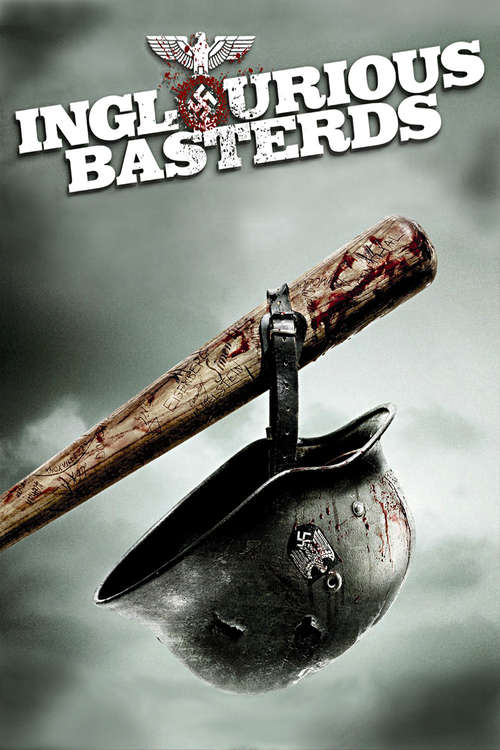
Following on from my musings of a few weeks ago, regarding Tarantino’s introducing a slight degree of counterfactuality into a fictionalised version of the real world, we watched Inglourious Basterds the other day. (That film is ten years old. How?)
So it seems like adding counterfactual happy (happier) endings to real-world things is what he does now? I don’t know what happens in Django Unchained or The Hateful Eight, though. Turns out I haven’t really watched his stuff since Jackie Brown.
The Handmaid's Tale by Margaret Atwood (Books 2019, 15)
It’s to my shame that I hadn’t read this classic of modern literature before now. And it turns out, now that I have, that it’s really good. Surprise, surprise. I don’t really care for dystopias, as I’ve said before. Interesting that the book I linked to there had just won the Clarke, and the one we’re discussing was the inaugural winner of that award.
For the first few chapters I was distracted by wondering how this situation, this state, could have come to be. Strangely what I found difficult to cope with was not the restrictions, the rolling back of rights — they are horrific, but I could and can easily imagine an America (or, hell, maybe even a Britain) that could enact those laws.
No, what I found hardest to believe in was the dress codes. The way not just the Handmaids, but the marthas (domestic servants), econowives (lower-class, probably infertile women, assigned to lower-class men) and even Wives (the wives of the ruling-class men) all dress in the standard costume of their class.
Somehow I feel — or at least felt — that it would be harder to get everyone to dress the same way than to obey laws that restrict more important freedoms.
As the chapters went on, those concerns evaporated. The telling of the backstory through Offred’s reminiscences outlines a convincing route from 80s America to Gilead. Though a lot more could be told: it is only an outline. Still, it’s enough.
These days, with actual nazis poisoning our political discourse, and attempts to roll back reproductive rights even in France, it sometimes feels — as Atwood no doubt intended — that Gilead is not so much a fable as a warning.
Where, and in what direction, am I meant to slide? Because I can’t get past this screen in the iPhone camera app “Manual.”

The Seventh Function of Language, by Laurent Binet, Translated by Sam Taylor (Books 2019, 14)
I need to start making notes about where I hear about books. This hasn’t been on my Kindle for long, but I have no idea what prompted me to buy it.
I’m glad I did, though. This is great. It’s set in 1980, and Roland Barthes, the philosopher and semiologist (semiotician?) gets knocked down I the street by a laundry van. He dies later in hospital.
That much is true. But Binet uses it as the jumping-off point for a mystery caper of sorts, in various picturesque cities in Europe (and a brief dip into the US). Because Barthes was believed to have been carrying a paper detailing the titular function.
Along the way we learn things about semiotics and linguistics, aided by the police officer who is investigating the case
It’s a strange one, but pretty good.
Tempted to register one of the many available domains using “chuntering from a sedentary position.” It would be a John Bercow fan site, of course.