Starting the Year (and a Brief Look Back)
2022. That’s a lot of 2s. Though just wait till the 2nd of February.
Happy New Year to one and all. Who knows what 2022 will bring, but let’s hope it’s at least some relief from the difficulties of 2020 and 2021. But the coronavirus doesn’t care about calendars, and neither does viral evolution.
Anyway, I posted 143 times in 2021, which is broadly in line with recent years. Here’s the breakdown, because why not?
| Month | Posts |
|---|---|
| Jan | 22 |
| Feb | 12 |
| Mar | 17 |
| Apr | 14 |
| May | 10 |
| Jun | 11 |
| Jul | 12 |
| Aug | 6 |
| Sep | 14 |
| Oct | 6 |
| Nov | 8 |
| Dec | 11 |
2020’s stats, and 2019’s.
This Site Now Has a Dark Theme
As you’ll have noticed if you’re looking at this post on a device set to dark mode, I’ve added a dark theme. At the moment it’s just automatic: if your device is set to dark you get the dark mode, if light, you’ll see it as it has been for the last year and a half. I might add an option switch at some point.
Let me know if anything looks weird.
Mary Poppins Returns, 2018 - ★★★½

Fun sequel to a Disney classic. Good songs, and Lin-Manuel Miranda. Probably not as memorable as the original.
A Note I'd Like to Send Back Through Time
If you’re dealing with family photos back in the seventies, eighties, nineties, it’s great that you write the date and place on the back (thanks, Mum). That’s super useful. But could you please name the event and the people, too?
Yes, of course, you know what it was and who they were. But you’re not writing it for you. You’re writing it for your descendants, decades later, who want to know who these people were.
Why yes, I am scanning some old family photos, why do you ask?
Oh, and also: don’t waste film on scenery. The Scottish hills and moors are lovely, but I’m not interested in scanning old photos of them. Give me people, family, friends. Give me backgrounds, the wallpaper in the old house. Show me bookcases, wood-effect stereo systems. Old streets and shop signs.
And people, above all, people: that’s what casual photography should be for.
You know what no one took pictures of in the film days? Food. I’d actually love to see some old Sunday roasts or birthday cakes, but I don’t suppose they’d look that different from today’s.
Planetfall by Emma Newman (Books 2021, 27)
This is a novel about a human colony on an unnamed planet. There are, as we soon learn from the first-person narrator, Renata, lies and mysteries at the heart of the colony. Not least of those is how and why the humans came to live on this particular planet, in this particular place.
The place is at the foot of a mountain-like, biological, probably engineered structure they call the ‘City of God’. Twenty years ago — or more: the colony has existed for twenty years, but it’s not clear how long the journey through space took — a small group of humans managed to get there in a spaceship. They were led by ‘The Pathfinder’, a woman who, we discover through flashbacks, knew what planet to head for because of a revelation she had had after ingesting the seed of a mysterious plant.
The intrigue of the novel is about how that backstory and the rest is filled in, how the colony keeps going, and what happens in the ’now’ of the story, when a mysterious human arrives.
How they designed and built a ship capable of getting there is not explained, and how far away from Earth it is is never stated. But I don’t think Newman really understands the scales applicable to astronomical distances. On several occasions characters refer to having travelled (or in flashback, being about to travel) ‘millions of miles’ to get to the new planet.
Our sun is 93 million miles from the Earth. If we’re talking about distances that are sensibly expressed in terms of millions of miles, then we’re talking about places inside our own solar system. And this is definitely not that.
Just to check, I asked Siri how far in miles it is to Alpha Centauri. It looked up Wolfram Alpha and told me, ‘About 25.8 trillion miles.’ That’s the closest star system to our own. It’s not wrong to call that ‘millions of miles’, but it’s not exactly accurate. A trillion, after all, is a million million. And that’s just the closest system.
It doesn’t affect the story, but it’s a weird thing for an SF writer to have missed, for no beta reader to have picked up, for an editor working at an SF publisher not to have caught.
Other than that, she does a great job of telling a first-person narrative from the point of view of someone who has some mental issues. All narrators are unreliable, and perhaps this one more so than usual. So we wonder how much we can rely on her telling of what happens, especially at the end.
There’s a religious background to this: the Pathfinder believed — and convinced those who came with her — that they would find God in the mysterious ‘city’. Did they? Maybe, maybe not.
It’s part of a four-book series, which apparently can be read in any order. The next one (in terms of when they were written) looks like it takes place back on Earth, so we may learn nothing more about what happened in the colony, which was cut off from home.
Hench by Natalie Zina Walschots (Books 2021, 26)
The title comes from ‘henchman’ — or -woman. We are in a world where superheroes exist, and thereby, also super villains. Anna Tromedlov works as a ‘hench’ — or tries to. As the novel starts she’s using a temp agency, trying to pick up work.
At first it seems to be a comedy, but then she’s at a press conference given by the villain she’s working for, when the heroes arrive. Things get a lot darker.
Are superheroes, with their disregard for public safety, the real danger in a world like this? This novel takes a good look at that question, with accompanying adventure, threat, and romance.
It’s good. Cory Doctorow recommended it.
If she didn’t start out planning to call herself ‘The Palindrome’, would you ever think to read her surname backwards?
Pour One Out for Joe
Or maybe that should be ‘flame one up for Joe’, considering his preferences. It’s the anniversary of Joe Strummer’s death today. Nineteen years. I still miss him.
'Spider-Man: No Way Home, 2021 - ★★★★'

Pretty good follow-on from the earlier Spider-Man films. My daughter tells me ‘All the fan theories were right.’ I wasn’t aware of them, so I hope that’s not a spoiler for anyone.
Turned out Doctor Strange (long my favourite Marvel character) wasn’t being quite as idiotic as I’d thought from the trailer, so that was good. Sets things up nicely for his next film.
Comet Weather by Liz Williams (Books 2021, 25)
An enjoyable present-day story of magic in Somerset and London. Mostly the country, with Glastonbury and Avebury and such places featuring in passing.
Four adult sisters are making their different ways in the world, but their mother disappeared a year ago. Ghosts and the spirits of stars sometimes wander the family home, where one of the sisters still lives, and the others come and go. A comet is due in the sky soon, and magic threats appear to be building.
Magic realism, you could call it, in the sense that it’s set in the real worlds and magic is just there, for this family and a few other people at least. Everyday problems of relationships and such are part of it. The boyfriend of one of the sisters is a ghost.
I enjoyed it, and will probably read the sequel, which is out. My main problem with it was that the four sisters’ voices weren’t distinctive enough. The story is told from their multiple viewpoints. This is helpful to me, because it’s something I’m struggling with myself. Indeed, my supervisor suggested that maybe I shouldn’t have so many viewpoints.
Three. I have three. Hands up who thinks that’s too many?
A Song Needs Words
On What a Song Is
It seems like I’m increasingly often hearing people — especially, but not exclusively, Americans — referring to things as ‘songs’ that are not, in fact, songs.
For example, Doctor Who does not have a theme song. Nor does Eastenders — though long ago a song using the Eastenders theme music made a dent in the UK charts.
Red Dwarf and Firefly, to take two more science-fictional examples, do have theme songs.
Because here’s the truth of it: it’s not a song if it doesn’t have words. One or more human voices singing (because the verb sing goes with the noun song, obviously) is what is needed to make a piece of music into a song.
Those first examples above? Those are theme tunes. It’s not hard to understand the difference. For the Eastenders-based hit, somebody wrote words to go with the music; somebody sang it.
I’ve been thinking of this as a recent thing, people referring as ‘songs’ to pieces of music without words. But I recalled why Eastenders came to mind. Long ago in the distant past (the 80s) I had a housemate who had an American girlfriend. That programme came on the telly, and she said, ‘Oh, I love this song.’
Much more recently, on the Accidental Tech Podcast (ATP), John Siracusa was trying to locate a beeping sound that something in his basement was making.1 It was a series of electronic tones, played in a melodic fashion. a little tune, in other words. But he repeatedly referred to it as a ‘song’. Which it very definitely was not.
Other Takes
I’m not saying there are no grey areas here. What about the voice used as an instrument, where it only makes wordless tones; mouth-music, as we used to call it? Or pieces that are largely instrumental, but have one vocal piece thrown in, like Glenn Miller’s ‘Pennsylvania 65000’, where the band stop playing at a couple of points and shout the title?
Or Mendelssohn has a series of pieces entitled ‘Songs Without Words’. What are those, then?
Birdsong, or whale songs? The clue there is in the adjectives, of course: just as nut milk is a milk-like drink made from the relevant nut (or similarly, oats, soya, etc), so birdsong is a song-like thing made by a bird.
Since I’m seeing this as mainly an American thing, let’s consult America’s favourite dictionary, Merriam-Webster:
Definition of song (noun)
- the act or art of singing
- poetical composition
- a) a short musical composition of words and music
b) a collection of such compositions- a distinctive or characteristic sound or series of sounds (as of a bird, insect, or whale)
- a) a melody for a lyric poem or ballad
b) a poem easily set to music- a) a habitual or characteristic manner
b) a violent, abusive, or noisy reaction (put up quite a song)- a small amount (sold for a song)
3a is the key one in my argument, clearly. 5a moves disturbingly in the opposite direction, since it refers to ‘a melody’. But since the melody is specifically ‘for a lyric poem or ballad’, the fundamental need for words still stands.
In the end, if it hasn’t got words, it’s not worth a song.
-
Spoiler: it was the freezer. ↩︎
Boosted
Just got my booster vaccination. I now have a dose of Moderna sloshing around my veins. So we’ll see how that interacts with the previous two Oxford-AstraZeneca doses.
Yes, we should be sending all this extra vaccine to poorer countries, because that would be the right thing to do, the moral thing. But even for self-preservation, we should be doing that. Every infected person is a mutation factory, so the fewer infected people there are in the world, the less chance there is of a mutation that’s vaccine-resistant or worse.
That’s self-preservation on a societal scale. But that same sense, at a personal level, lets me say, if they’re offering it here, I’m going to take it.
The Time of the Ghost by Diana Wynne Jones (Books 2021, 24)
I read this because I happened on an article about it on Tor.com: ‘Diana Wynne Jones’ The Time of the Ghost Breaks All the Rules of How To Write a Book’, by Emily Tesh. Let’s ignore the incorrect possessive apostrophe in the title1; it was the assertion about it breaking all the rules that drew me, made me want to read the article. A few paragraphs in I realised that I wanted to read the book, and the article was heading deep into spoiler territory. So I stopped reading it and downloaded the book. Read it as soon as I finished the last one.
It’s the story of four neglected sisters, whose parents run a boys’ boarding school and have no time for anything else, including their daughters; and of a ghost that is haunting them, and who might be one of them. And of an ancient darkness that the sisters accidentally invoked.
But the real darkness is the neglect.
Highly recommended, and the article I linked above is very good and insightful (but deeply spoilerific) too.
-
Jones is not plural, so it should be Jones’s. ↩︎
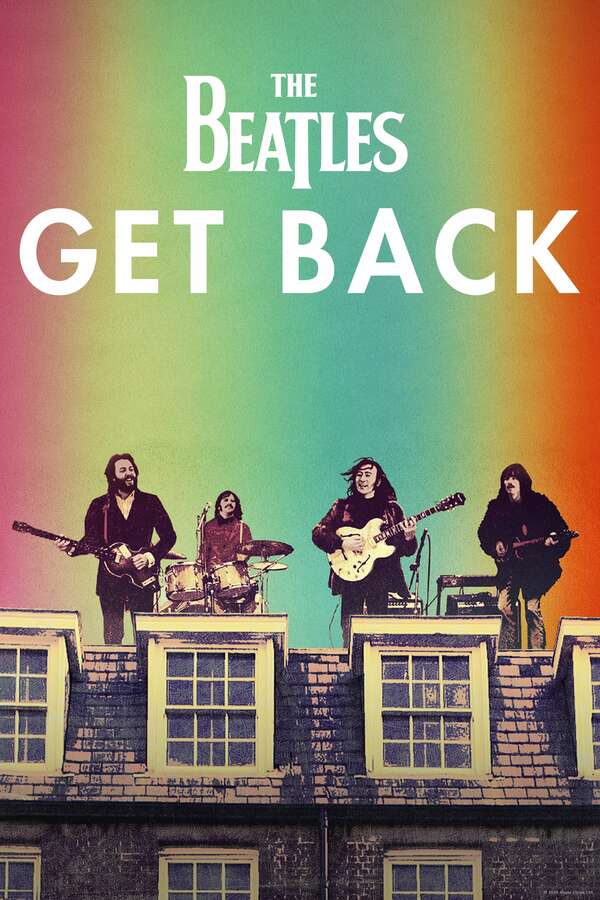
'The Beatles: Get Back, 2021 - ★★★★★'

I already wrote about watching the first part, but the whole thing is just as fantastic.
The middle episode does feel like it has some 'middle volume of a trilogy' longueurs. It definitely dips a bit. But that reflects the state of the band at the time. They're trying to bounce back from George walking out and returning, they've moved from the Twickenham warehouse to a new studio in their Apple HQ, and they're rethinking the whole project.
They're contemplating what it's all about.
The third part leads up to the famous rooftop live performance, which is glorious, and delightfully presented with split-screen images showing interviews with people in the street below and two bobbies coming in with 'Thirty complaints about noise.'
I wrote before that this is only for the true fan, but I think the third part would work even if you only have a passing interest.
The French Dispatch, 2021 - ★★★★

Wes Anderson's latest is a wild romp, slightly incoherent at times -- or, not incoherent, exactly but confusing in a good way. Until you realise afterwards that it did all hang together and make sense.
It tells the tale -- several tales -- of the eponymous fictional magazine, which is loosely based on The New Yorker. Here, it is a supplement to a Kansas newspaper, published from a city in France.
There are four stories, wrapped in a framing sequence of the editor-in-chief dying and his will saying that the magazine should cease publication.
There's chaos, slapstick, wild events, and Anderson's usual painterly visuals. It's loads of fun.
The Caledonian Gambit by Dan Moren (Books 2021, 23)
Dan Moren writes about Apple stuff over at Six Colours, and at Macworld and so on, but he’s also an SF writer. This is his first novel, and there are already a couple of sequels. The series is described as ‘The Galactic Cold War,’ and that’s a pretty good description.
There are several planets, linked by wormholes. From what I can tell, they’re all originally Earth colonies, but there is at least one empire and one commonwealth, and Earth itself has been conquered by the empire. No aliens, at least so far.
It’s pretty good, in an ‘SF meets cold-war thriller’ kind of way. There’s nothing groundbreaking, but a set of characters I wouldn’t mind spending more time with, and an intersting situation.
What struck me, as a Scot, was the ‘Caledonian’ part. Moren is American, but he spent some time in Scotland. Caledonia is the name of one of the colony planets – predictably, the one where most of the action happens. Part of its capital city is called Leith. Just down the coast there’s Berwick.1 Various other towns or areas have names drawn from Scotland. It has moons called Skye and Aran. A group of terrorists or freedom fighters are called the Black Watch – though slightly oddly their leader is called De Valera.
Worth a read.
-
Berwick is not actually in Scotland, though it has been at various times in history. North Berwick is in Scotland. ↩︎
Get Back to Christmas
We subscribed to Disney+ last night, so that we could watch Peter Jackson’s The Beatles: Get Back. I had thought it was going to be a movie, but it turns out it’s a miniseries: three two-hour episodes. The second drops today, and the third tomorrow.
It’s built from hours of footage that were recorded for the Let It Be documentary back in 1969. I remember watching that once and being disappointed by it. The main problem was that it was presented as a fly-on-the-wall thing, but the fly was aurally challenged.
In other words, you couldn’t make out much of the chatter between the guys. That, almost as much as hearing them rehearsing and working on the songs, was kind of the point.
If you were making a documentary like that today you’d probably have all the band members wearing microphone packs, as the participants in reality TV shows do, so that what they said would make it to storage. Back then, though, even if that had been practical,1 it was far from obvious that the individual Beatles would all have complied. Plus we’d want to hear from Brian,2 and Mal, and Glyn, and the other George, as well as John, Paul, George, and Ringo.
That’s a lot of microphone packs. So of course, the original producers relied on ambient miking. It’s fine when the speaker is near one of the vocal mics, or when they’re right under a boom, but otherwise… well, as I say, Let It Be was a frustrating experience.
However, technology has come a long, long, way in the succeeding fifty years. Every word in this is clear as a bell,3 undoubtedly with the help of modern digital audio editing. It’s slightly ironic to note that one of the first things the band say is that the place they’re working in – a warehouse in Twickenham – is acoustically bad. An odd choice of a place in which to work on writing and performing songs.
Anyway, as of the cliffhanger ending of episode one, this series is fucking amazing! Totally brilliant!
But only if you’re a fan. If you only take a passing interest in The Beatles, or (weirdly) none at all, you probably shouldn’t waste your time on this.
The Disneyfication of Christmas
Disney have made a genius move in launching this when they did. We will be far, far, from the only people who took out a subscription to watch this, with the intention of cancelling it after a month.
A month. What’s a month after yesterday, the 25th of November? Oh yes.
All those subscriptions that are due to renew on Christmas Eve or Christmas Day? So many of them won’t be cancelled, either just to have things to watch over Christmas, or to keep the kids happy, or because people will forget with everything else going on.
I don’t mind, I’ll probably try to catch up on some of the newer Marvel and Star Wars stuff, of which there is just far, far, too much now, in my humble opinion.
But there’s not too much Beatles.
-
It wouldn’t, because they would have had to be wired microphones ↩︎
-
I don’t know what I was thinking here. Obviously Brian Epstein was dead by 1969 and isn’t in the film. My thanks to Tony for pointing this out. ↩︎
-
The odd line is given a subtitle, but I think those are more about Scouse accents than inaudibility. ↩︎
The Origin of Angels?
I was surprised just over three weeks ago when I learned – from the Saturday Guardian, the physical newspaper, of all things – that Doctor Who was staring the next day. I was aware it was going to be happening this autumn, certainly, but somehow I’d missed any hype about it online.
I was perhaps more surprised to learn that it was going to be a single story. Surprised, and pleased: a six-parter, just like the old days, like the ones I grew up with. Of course, back then you’d get a few four-parters and maybe a six, all across what felt like many weeks. In this case, the six parts will make up the whole season. But still. There would be cliffhangers.
Now we’re three weeks in, halfway through.
There are cliffhangers. So many cliffhangers. Cliffs hung so thoroughly that the metaphor breaks down. The whole thing even started with The Doctor and Yaz hanging upside down. Not from a cliff, but still.
Hang those cliffs. The angels have the blue box.1 No, wait, that’s for later. Or earlier. This time haze is getting to me.
This season, series, story, whatever you want to call it, is incredible. I am loving it. If they can hold up this quality, and especially give it a good ending – stick the landing, as people say for some (I believe gymnastics-related) reason – then it could be the high-water mark of Doctor Who.
And even if they don’t manage a great ending, the ride will have been worthwhile.
But I want to get something out there before we get too much further into the series, and spoilers ahead, probably, so stop reading if you haven’t seen at least up to episode 3, ‘Once, Upon Time.’ Also if you think speculations can be spoilers. I, personally, don’t.
OK, so, we’ve seen glimpses of the Weeping Angels in these episodes. These creatures feed on time energy, and in this story, time energy is going wild, has been unleashed in dangerous ways. Whatever all that means (‘Time is evil,’ as one of the priest-triangles said).
I think we’re seeing the origin of the Weeping Angels. Or we’re going to see it. Something that happens in this story will bring the Angels into being. No idea what, mind you. I thought the Mouri in the Temple of Atropos might end up turning into them, but I think we’ve moved away from there now.
Anyway, all is well in Who-land.
-
I may never even write this, but I have been completely Berenstained by this phrase. I firmly remember it as blue box, and some places on the net do say that. But most say phone box, and I just played the relevant part of Blink and, indeed, that says phone. According to the transcript on Genius it goes ‘They have taken the blue box, haven’t they? The angels have the phone box.’ So both terms are used, but not the key one in the way I remember it. ↩︎
Mona Lisa Overdrive by William Gibson (Books 2021, 22)
Talk about not remembering books: I’ve got to ask myself whether I ever did read this one. I remembered one thing from it, but it’s not how I remembered it. When people jack in to the matrix they use headsets – ’trodes’ – with electrodes that connect to their temples.
There is a transition between the real world and cyberspace when they connect, and I had this memory of one cowboy (people who enter the matrix or cyberspace are called ‘cowboys’ or ‘jockeys’) who had a set of trodes that made the transition feel like the world was falling apart. I’ve been half waiting for that bit through these three books. Here’s a quote:
‘Ready?’
‘Yes,’ she said, and Tick’s room was gone, its walls a flutter of cards, tumbling and receding, against the bright grid, the towering forms of data.
‘Nice transition, that,’ she heard him say. ‘Built into the trodes, that is. Bit of drama…’
So that must be the bit I remembered, but if you had asked me I’d have said I thought it came a book or two earlier, and was mentioned more than once.
But what of the book itself? It keeps up the standard, maybe raises it slightly. We have four interconnected stories, four viewpoint characters, told in alternating chapters. One of the stories – that of Kumiko, who is experiencing the flutter of cards, above – isn’t really relevant, in the sense that it doesn’t drive the plot at all. Things that happen around her do affect the main plot, but she’s not really aware of them.
What surprised me about this and the three books overall, is how much they really are a trilogy. I had the impression that they were considered only to be very loosely connected at best; essentially three stories set in the same milieu. But in fact not only do characters recur, everything here ties back to the events of Neuromancer, which happened some fourteen years before.
All very worth reading if you haven’t already.
Songs and Singles
You’ve probably heard a song off an album – you’ve heard the album, maybe a few times, but it’s just kind of washed over you, not really made much of an impression – you hear a song, maybe on the radio, maybe some random or curated playlist, and you go. ‘Wow! What a great song!’ And then you realise it’s from that album, the one that washed over you.
That’s what singles were for. Still are for, since they’re still released, though it’s not quite the same.
I just had that experience with Radiohead. Kid A never made much of an impact on me, but when I turned BBC 6 Music on tonight, a killer track was playing. Steve Lamacq back-announced it. He was playing the whole album, and the track was ‘The National Anthem.’ I knew Kid A had a track of that name, but it had never really got to me. But there, now, tonight, it was just amazing.
A similar, if inverted, effect is when the album is so good that it kind of drowns out a brillant single. I can only think of one example of that at the moment. If you cast your mind back (assuming it goes that far) to when The Jam released ‘The Eton Rifles,’ it was an incredible song.
But Setting Sons is such a good album that I hardly notice ‘The Eton Rifles’ on it.
Anyway. Singles. Yes.
Adventures in Mac Repairs
I have a 15-inch MacBook Pro from 2017. It’s in perfect working order, except the battery was past its best. ‘Service recommended,’ it always said when I checked. But it was fine, I could get a couple of hours out of it, and I rarely use the computer away from somewhere I can plug in. Especially this last couple of years.
But the screen had developed a problem. There were marks on it that I couldn’t remove. They were kind of hard to photograph, but you can see them here:
I discovered there was a known defect in models of that era called ‘screen delamination.’ The top layer of the screen’s coating was becoming detached from the underlying one.
People had solutions, which involved careful cleaning with various solvents or mild abrasives: isopropyl alcohol, or, I don’t know, toothpaste, maybe.1
Inevitably, the whole affair has a ‘gate’ name: Staingate. Perhaps less inevitably, but unsurprisingly since it’s a manufacturing defect, Apple have long since acknowledged the problem and offered a free repair programme. As long as your machine was no more than four years old.
I discovered these facts back in the summer. Dug out my receipt. I bought the laptop four years and four days ago. Damn!
At the time I was deep in working towards my dissertation, so I wasn’t going to spend any more time on it. In September, though, I thought it would be worth contacting Apple support and seeing what could be done. I couldn’t get a Genius Bar appointment, but I could take it to an Apple Authorised Service Provider called MR in Shoreditch. They had a look at it and said, yes it’s the delamination thing, you’re outside the free programme, we can fix it: 800 quid.
Too much. But! they also said that it would be worth taking it in to Apple. They might, depending on who you saw, do it for free anyway.
I was slightly sceptical, and we were getting ready for a trip to Scotland at the time, so I left it. Eventually, though, I booked it into the Genius Bar.
You’re outside the programme, they said. But we’ll fix it under consumer law. No charge.
The Sale of Goods Act (or its successors) for the win again: a laptop screen should last longer than four years.
During the tests they run, the guy noticed that the battery was poorly, and offered a replacement. £199 seems steep, so I said no thanks.
Yesterday I got an email to say it was ready to pick up, so I toddled off to Westfield. The staff member who brought it out to me asked me to wait while she checked something. Came back and said, ‘You know how you rejected the battery replacement? Well it seems they did it anyway. We won’t charge you.’
So that was weird. The work note that came with it said ‘Battery won’t charge at all,’ which was not true when I took it in. But here I am with a good-as-new battery. Well, actually new.
All of this required what they call a ‘Top case replacement.’ ‘Top case with battery,’ in fact, which suggests the battery is in the screen part of the laptop, not the keyboard part, which seems weird.
The big downside – but one that had been prepared for – is that I lost all my stickers. I had heard of this kind of thing happening, so I took photographs.
The questions now are how and whether to replace them.
-
Don’t clean your computer screen with toothpaste. ↩︎