
Longform
Hannah Green and Her Unfeasibly Mundane Existence by Michael Marshall Smith (Books 2019, 17)
No, it’s me, not London Below: this has also faded quickly from my mind, despite the fact that I love MMS, and I really enjoyed this as I read it.
Still, it’s very good. Hannah is an ordinary girl living in present-day California with her dad and (maybe) mum (sorry, mom).
Until the devil turns up, and her grandfather turns out to be his engineer. And he knew Bach.
Inevitably, the world needs to be saved.
Neverwhere by Neil Gaiman (Books 2019, 16)
While I was reading this I thought it was probably my favourite of Gaiman’s prose works. And I thoroughly enjoyed it. But just a couple of weeks later, as I write, it’s already fading from my memory.
Maybe that’s just me, or maybe it’s London Below.
Either way, well worth a read.
More on Tarantino
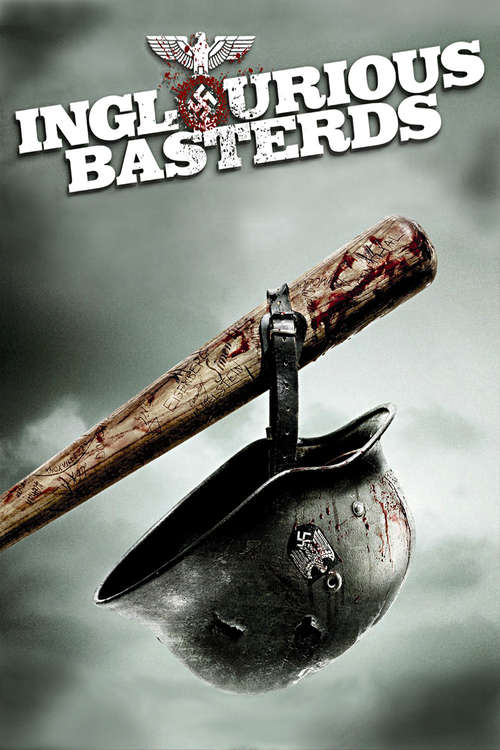
Following on from my musings of a few weeks ago, regarding Tarantino’s introducing a slight degree of counterfactuality into a fictionalised version of the real world, we watched Inglourious Basterds the other day. (That film is ten years old. How?)
So it seems like adding counterfactual happy (happier) endings to real-world things is what he does now? I don’t know what happens in Django Unchained or The Hateful Eight, though. Turns out I haven’t really watched his stuff since Jackie Brown.
The Handmaid's Tale by Margaret Atwood (Books 2019, 15)
It’s to my shame that I hadn’t read this classic of modern literature before now. And it turns out, now that I have, that it’s really good. Surprise, surprise. I don’t really care for dystopias, as I’ve said before. Interesting that the book I linked to there had just won the Clarke, and the one we’re discussing was the inaugural winner of that award.
For the first few chapters I was distracted by wondering how this situation, this state, could have come to be. Strangely what I found difficult to cope with was not the restrictions, the rolling back of rights — they are horrific, but I could and can easily imagine an America (or, hell, maybe even a Britain) that could enact those laws.
No, what I found hardest to believe in was the dress codes. The way not just the Handmaids, but the marthas (domestic servants), econowives (lower-class, probably infertile women, assigned to lower-class men) and even Wives (the wives of the ruling-class men) all dress in the standard costume of their class.
Somehow I feel — or at least felt — that it would be harder to get everyone to dress the same way than to obey laws that restrict more important freedoms.
As the chapters went on, those concerns evaporated. The telling of the backstory through Offred’s reminiscences outlines a convincing route from 80s America to Gilead. Though a lot more could be told: it is only an outline. Still, it’s enough.
These days, with actual nazis poisoning our political discourse, and attempts to roll back reproductive rights even in France, it sometimes feels — as Atwood no doubt intended — that Gilead is not so much a fable as a warning.
The Seventh Function of Language, by Laurent Binet, Translated by Sam Taylor (Books 2019, 14)
I need to start making notes about where I hear about books. This hasn’t been on my Kindle for long, but I have no idea what prompted me to buy it.
I’m glad I did, though. This is great. It’s set in 1980, and Roland Barthes, the philosopher and semiologist (semiotician?) gets knocked down I the street by a laundry van. He dies later in hospital.
That much is true. But Binet uses it as the jumping-off point for a mystery caper of sorts, in various picturesque cities in Europe (and a brief dip into the US). Because Barthes was believed to have been carrying a paper detailing the titular function.
Along the way we learn things about semiotics and linguistics, aided by the police officer who is investigating the case
It’s a strange one, but pretty good.
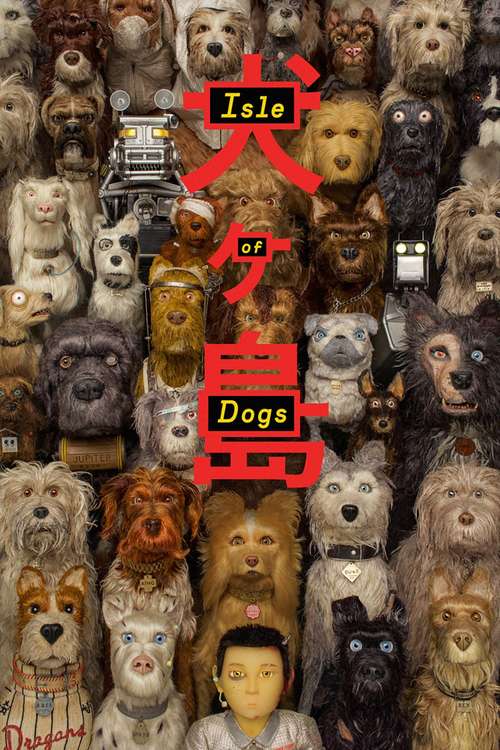
The End of Newspaper Delivery
We’ve been getting The Guardian delivered on Saturdays for several years. Not any other days, because who has time to read paper newspapers except at the weekend? But it’s great to get up and have the paper there to read over breakfast.
Sadly, a couple of weeks back we got a note with our delivery:
Sorry, we are stopping deliveries from the 1st of October.
Not too surprising, I suppose. It’s hard to imagine that enough people get deliveries to make it worth their time and effort. And it’s not like they’re going out of business: they’ll still be selling papers, just not delivering them.
So I suppose we’ll have to go out and buy the paper on Saturday mornings, like it’s the — actually, not like it’s the past at all. I’d bet that there have been newspaper deliveries as long as there have been newspapers.
Still, it’s not like they’ve stopped everywhere. I expect there are still a few places out there that still deliver. But what next? Will our milkman stop delivering?1
In this golden age of home deliveries, remember that we depend on people being willing and able.
- Yes, we get milk delivered three times a week, since you ask. ↩
Jason & Dan
If you saw my post the other day complaining about typography, you might have been confused. I went to see Jason & The Scorchers last Friday. They were playing in a co-headline tour with the Kentucky Headhunters and Dan Baird & Homemade Sin.
On the night we saw them, the order they took the stage was: Headhunters, Scorchers, Homemade Sin.
That was completely the wrong order, at least for the audience at London’s Shepherd’s Bush Empire on that night. The energy and connection of the Scorchers meant that the peak for the whole event came as they finished their set — in the middle of the evening.
No doubt you think I just think that because I’m a fan of the Scorchers, and not particularly of Dan Baird. And there is some truth to that. But I watched the last twenty minutes or so from off to one side — OK, I was standing at the bar — so I had a good view of the front of the crowd; and it was clear that they weren’t as excited, as into it, as involved, as they had been an hour before.
No matter, it was still a great night, and I’m sure some people were happy that the running order was that way round. What drove me to post that picture, though, was the distraction that backdrop caused me. I couldn’t really appreciate the music for staring at it.
In case it’s not obvious to you, take a look at the ampersand, and tell me how there’s any possible way it can make sense in that orientation.
Tarantino Thoughts
Quentin Tarantino’s Once Upon A Time In Hollywood is kind of a love story, kind of a biopic, and kind of a history.
Note that this post contains spoilers. Don’t read on if you haven’t seen it and care about being spoiled.
Or maybe “buddy pic,” rather than “love story;” but the relationship between the two leads will be analysed for its homoerotic content, no doubt.
How it certainly has been described is “a love letter to Hollywood,” and that’s fair enough. What it also is, is a counter-factual, or alternative history. But don’t worry, I’m not going to claim this one for SF.1
The main characters – fading cowboy actor Rick Dalton, played by Leonardo DiCaprio, and his regular stunt double Cliff Booth, played by Brad Pitt – are invented. But most of the other named characters, and many who are mentioned or appear as extras, are real people. The most significant of these is Sharon Tate, played by Margot Robbie. And it’s her story that makes this film most interesting, and maybe problematic.
Because of course she died tragically, murdered by members of Charles Manson’s “Family” cult. And in this version — she doesn’t.
If you know the history — which of course, many younger people won’t, which makes for different ways of experiencing the film — then you spend half the time expecting the massacre. There are captioned dates, and even though most of us wouldn’t know the date of the murders, there can’t really be any other reason for showing them. And then when it comes, something else happens.
The violence in that scene is gruesome, over the top, ludicrous — almost hallucinogenic, making me wonder if the tripping Booth2 is meant to have hallucinated some or all of it. But there’s no need for there to be so much of it, or for the majority of it to be directed at women. The “Family” did consist largely of women, I guess, but I can’t help but feeling that Tarantino is revelling in it a little too much.
And on top of all that, as my family agreed after seeing it: there’s no real need for the whole Sharon Tate thread of the story. It would have made a fine tale if were just about the two actors against the backdrop of late-60s Hollywood. I wonder what the point of it was. Did Tarantino feel he could in some way “save” Sharon Tate?
The Haunting of Hill House by Shirley Jackson (Books 2019, 13)

A genuinely chilling, even scary, ghost story, is not something you read that often. Or I don’t, these days, at least.
Combine that with compelling characters, comedy, and tragedy, and you’ve got kind of a small masterpiece.
I only say “small” because it’s quite short. I only know Jackson from a film version of “The Lottery” that they used to show us in school. I’m not sure why they showed us it, exactly, because we didn’t study it in English, and as far as I recall we didn’t discuss it. I think maybe it was a sort of treat, and the school only had a few films, that it showed repeatedly. These were actual films, I should add. Played on a projector, watched on a screen.
Anyway Jackson’s story always stuck with me, and now this one joins it.
The 392 by Ashley Hickson-Lovence (Books 2019, 12)

We went to WOMAD a couple of weekends ago, and in the literary tent we caught the end of a reading from, and an interview with, this young Hackney writer. It was an interesting talk and the book sounded compelling, so we bought a copy (and got it signed).
It’s set over 36 minutes on the inaugural journey of a new (nonexistent) London bus route, from Hoxton to Highbury. Told as the thoughts and conversations of various passengers (and the driver).
If you’re familiar with the area and the local slang (which may in fact be national or global slang in places), it’s particularly enjoyable. But the themes are universal, so don’t suppose it’s only for Hackney & Islington folk.
I have my problems with the ending, but it’s well worth checking out (and it’s very short, and in bite-sized pieces, if you’re looking for something easy).
What Was Lost by Catherine O’Flynn (Books 2019, 11)
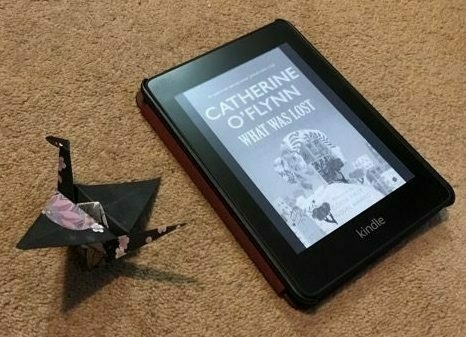
This was recommended to me by an Open University tutor when I was doing the creative writing course a few years back. Which experience, I note, I barely wrote about here. I have a Diploma in Creative Writing, don’t you know?
Anyway, there was an exercise which included writing a plan for the next major piece we were going to write. I wanted to write something that was set in an exotic city, and I mentioned in my plan that I wanted the city to be a character in the story. I was thinking maybe of something like China Miéville’s Bas-Lag.
My tutor suggested that the shopping centre in this book might be a similar kind of thing. Which turns out not really to be accurate. It’s set largely in and around the mall, and some people say they have a sense of it watching them, but nothing is ever made of that.
It’s strange, in that it starts off apparently being a kids’ book, or at least YA; but after the first part it takes a turn, into something else entirely.
It’s not bad, but I wouldn’t particularly recommend it.
Milkman by Anna Burns (Books 2019, 10)

This is not mainly a book about The Troubles; nor about religion or politics, though it is about all of those. It's a book, above all, about gossip and rumour and silence, and the harm that those can do to a person, to a society.
The unique approach — no-one is named, almost no proper names appear — I found quite endearing. And far from obfuscating things, it many ways it makes the story easier to follow. Instead of having to remember whether Mary, Margaret or Roisin is the oldest sister, it's “first sister.” “Oldest friend;” “maybe-boyfriend.” Honestly, all books should be like this. Relationships are important, after all.
Though you can also see it as a sly reference to the common complaint about living in small communities, that you're always someone's daughter, someone's brother — never yourself.
Anyway, Booker Prize winner, and all. Dead good.
Rosewater by Tade Thompson (Books 2019, 9)

Nigeria, 2066 (and various years before that). Our hero, Kaaro, is a sensitive. An alien entity sits in a dome at the heart of the city of Rosewater, and many strange things happen.
The start of a trilogy, and I'll be getting the sequels, you can be sure. Top stuff.
Touch by Claire North (Books 2019, 8)

I enjoyed North's previous novel , with some reservations. This one was similar. I read it in a day — it's quite the page-turner — and it has a compelling plot trigger.
The first-person narrator is an entity who can jump into any human body from its current host, just by making skin-to-skin contact — the "touch" of the title. Male or female, young or old, it doesn't matter. The host doesn't know anything about it while they are possessed, and is left unharmed — unless, of course, something happens to their body while the possessor is in control.
Sounds pretty gruesome like that, so it's impressive that our sympathies are with the narrator throughout.
Good story, slightly flat ending. Hey-ho.
In Dreams: A Unified Interpretation of Twin Peaks & Other Selected Works of David Lynch, by H Perry Horton (Books 2019, 7)

This is an incredible piece of work, about an incredible body of work.
I don’t recall how I heard about it. I think I saw a tweet, or something, thought it looked interesting, and instantly bought it because it was only a few quid on Kindle. It’s a huge book which tries — successfully, in my mind — to explain how the bulk of David Lynch’s creative works can be considered part of a single story, which Horton refers to as The Dream.
Now obviously Twin Peaks, Twin Peaks: Fire Walk With Me, and Twin Peaks: The Return are all part of the same story. As are the various spinoff books: Jennifer Lynch’s The Secret Diary of Laura Palmer, and Scott Frost’s The Autobiography of FBI Special Agent Dale Cooper: My Life, My Tapes, from back around the time of the original broadcast; and Mark Frost’s more recent The Secret History of Twin Peaks and Twin Peaks: The Final Dossier, which I’ve written about here.
But Horton argues that the whole story gets kicked off in Eraserhead, and that Blue Velvet, Lost Highway, Mulholland Dr and Inland Empire are side stories related to the main branch. The overall story being about an eternal being, The Dreamer, who dreams reality into existence, and also creates another being, known as Jowday, or Judy, who becomes his adversary. BOB, the possessing spirit of the original Twin Peaks, is a creation of this entity, and the Black and White Lodges are the vanguards in the battle between the two beings.
Sure, on one level it’s just good vs evil, heaven & hell — “just,” I say, as if that wasn’t enough. But the sheer scope of it is astonishing. The eighteen hours of The Return has been hailed as an incredible masterpiece of visual storytelling. But when you include all that I’ve listed above, and three of Lynch’s paintings to boot — it must be one of the greatest — in terms of size, at least — creative works by a single visionary. True, it’s far from being by a single creator, but the vision behind it is solely or primarily Lynch’s, or that of Lynch and Mark Frost.
And even if the connections to the other films are just in Horton’s head (and, to be fair, those of others whose work he acknowledges): the obviously-connected stuff is still amazing, and the current work, Horton’s book that I’m writing about, is something a of a creative triumph itself.
One that is slightly marred by its self-published nature and obvious lack of an editor — there are a lot of typos — but a hugely impressive one nonetheless.
Though obviously it’s only for the very serious Twin Peaks fan.