
Longform
Crazy Rich Asians, 2018 - ★★★½

In considering how rich families try to control who their progeny marry, I found it interesting to see if this mapped on to Pride and Prejudice at all. Only if if you stretch things quite a lot. “Darcy” and “Elizabeth” are already together at the start, after all.
It’s a fun enough romp if you don’t mind the fantastical displays of fabulous wealth. Interesting too, to see Michelle Yeoh as a controlling mother rather than a kickass starship captain.
Venturing Out: A Status Report from Hackney
I had cause to go to Westfield in Stratford the other day. It looked like this at about noon:

The Levis shop was open. I was picking up some jeans that had been in for repair. That’s a good note for when this is all over, incidentally. If your Levis wear into holes or get torn, most of their shops offer a repair service now. They may have done for years; I only learned about it a month or so back. But it means that for significantly less than a new pair of jeans, I have two good-as-new pairs, including the ones which were already my favourites. One antidote to fast fashion.
There was almost no-one around, and no-one was getting very close to anyone. In Lakeland I was able to get a refill (really, replacement) for one of our SodaStream CO2 cylinders. But they didn’t have any new ones. It seems unlikely that those have been panic-bought, but I was thinking of getting an extra one in case it becomes hard to get replacements, so others might have been ahead of me.
In and out within half an hour, and the parking was the least I’ve ever paid at Westfield: £3. I wouldn’t normally drive if I wasn’t buying much, but getting on the Overground would have been the opposite of social distancing.
Or maybe not, if it had been as empty as the mall.
But just yesterday I gave my daughter a lift to a friend’s house — same idea, avoid the bus — and up in Stamford Hill at around 4:30pm it was really busy with pedestrians. A lot of cars on the road, too. Maybe that was normal or less than, for that time on a Tuesday, though.
Dropped into the wee Sainsbury’s on the way back. No fresh fruit or veg at all. Most tinned goods and bread gone — no toilet rolls, obviously — plenty of snacks and crisps, surprisingly. Either panic-buyers prefer healthy options, or Sainsbury’s are quicker at getting unhealthy supplies back.
I have to confess to feeling a small amount of smugness at having stocked up over the last year or so. Brexit was the initial trigger, but I soon realised that having a supply of non-perishable items is actually pretty useful. If you can afford to buy a bit extra from time to time, and you’ve got the space to store it all, of course.
On the other hand, meals are going to get dull really fast without a regular supply of fresh things.
But if that’s the most we have to worry about, we’re doing better than many. I hope you are coping OK, dear reader.
Bajrangi Bhaijaan, 2015 - ★★★★★
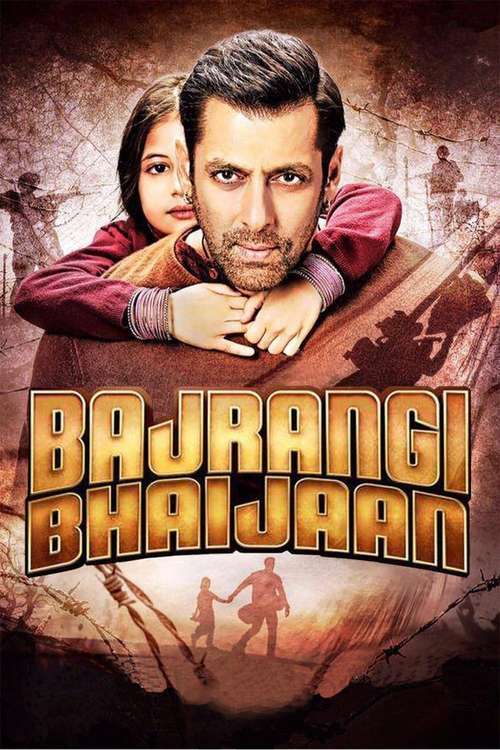
I loved this film more Than I can possibly say. Sure, it’s sentimental as hell, but if you can watch the tale of a mute Pakistani girl who gets lost in Delhi, and looked after by a Hindu Indian guy, without a tear in your eye, then you have no heart.
Harry Potter and the Methods of Rationality, by Eliezer Yudkowsky (Books 2020, 3)
Harry Potter fan fiction, by Merlin’s beard! I heard of this book — HPMOR, as it’s known — from my son, a couple of years ago. Didn’t think about it for a while, and then recently I saw a tweet from a friend-of-friends, @ciphergoth:
The correct quote is "There is no justice in the laws of Nature, Headmaster, no term for fairness in the equations of motion." https://t.co/n3qAmdyhV2 pic.twitter.com/Agxq7FruRk
— Paul Crowley (@ciphergoth) January 28, 2020
The fact that it was a quote from Harry Potter, and that I didn’t recognise it — indeed, it didn’t seem like something Harry would say — intrigued me, so I clicked through.
And then I shortly found myself downloading the ebook and reading it for the next… actually, month or so.
Because this book is looooooong! It’s a retelling of just the first Harry Potter book, along with much more, and it’s about half as long as all seven of the JKR originals.
In fact, it could have done with an editor. I thoroughly enjoyed it, but it has some weaknesses.
First, the strengths, though. Yudkowsky can write a page-turner almost as well as Rowling. What we have here is an alternative universe in which Petunia Evans marries someone else, not Vernon Dursley. They adopt Harry, and bring him up in a loving home. Harry’s adoptive father is a scientist, which is where he learns his rationality. So his first thought when he discovers that magic exists is to try experiments to understand its capabilities and limits. Experimentation soon gets overwhelmed by events, though, as the plot gets going.
There are other differences from the original, of course, and the end result is very different.
Part of what Yudkowsky does is takes the literal translation of Voldemort’s name — “flees from death,” essentially — recognises the rationality of that feeling — who wouldn’t prefer going on living, to dying? — and builds from there.
The major flaws are wordiness and couple of authorial tics that get repetitive and mildly annoying. He has a tendency to refer to people by their role, rather than their name: “The Defence Professor,” rather than “Quirrell,” for example. Which is fine if used sparingly, for variety. But he has people referring to other people like that, when they just wouldn’t.
There’s also overuse of scenes that start like, “The boy stood in the forest…” and only slowly revealing which boy. Again, fine occasionally, but he overdoes it.
And a few Americanisms creep in: like calling the staff of Hogwarts the “faculty.” And anachronisms: nobody apologised for their snarkiness in 1992, since the word hadn’t been coined yet. Well, I could be wrong there: this site says it goes back to 1906 or earlier. No-one in Britain, then.
But I shouldn’t complain. It’s an astonishingly well-constructed work, and I thoroughly enjoyed it.
The Clash On Display

My favourite band have become a museum piece.
Or at least, some of their instruments, clothing, lyrics, and memorabilia are in an exhibition which the Museum of London1 has been running since the fortieth anniversary of London Calling in December. I popped along today.

It’s small, but pretty good. The centrepiece is Paul Simenon’s smashed bass from the famous cover photo. It lies under glass on a red velvet cushion, like a fallen warrior lying in state (see above).
It’s actually kind of gruesome. “That’s no way to treat an expensive musical instrument,” as someone once said.

I didn’t learn anything I didn’t already know, I don’t think. Except maybe that Joe had a backup white Telecaster, that I don’t think I’ve ever seen him use, either live, in video, or in photos. His iconic black one is in the Rock ‘n’ Roll Hall of Fame, I believe. Or another museum.
Oh, and see the poster in that shot? “Two for a fiver”? When I bought London Calling it was only £3.99. Both times, as I’ve written about before.
Anyway, worth checking out, especially since it’s free. My main complaint: there are a lot of songs that could have been playing, even if they kept it to the relevant album. Instead they had a loop of just three (“London Calling,” “Train in Vain,” and “Clampdown,” the latter two live versions).

- Which I had never before visited, in thirty-two years living here. ↩
Glen Matlock Remembers How to Rock, but Nearly Forgets the Songs That Put Him Where He Is
Glen Matlock doesn’t seem to have much time for the past, except the past as he sees it. Cover versions of the New York Dolls, or one or other size of The Faces, are fine. But the songs that he co-wrote? The songs that are responsible for what fame he has — for 200 people being out on a cold, virus-infested night, to see him?
Those songs — that single song, in fact 1 — is relegated to the encore.

There’s nothing wrong with keeping your best-known songs for the encore, of course. But when the ticket site said “Curfew: 10:30,” and it’s 10:27 and there hasn’t been a single Pistols song, you can start to get a bit twitchy.
On the plus side, he did introduce “Pretty Vacant” by saying, “This is ‘SOS’,” referring to his borrowing of the intro riff from the Abba song.
It was a good night, though. His originals and the covers were all fine. It’s just that, if you heard a no-name pub band playing those songs — well, you wouldn’t bother going out specially for it.
The night was billed as “Glen Matlock + Earl Slick.” I’m embarrassed to admit I had to look up who Slick was. Turns out he only replaced Mick Ronson in Bowie’s band, and worked with John & Yoko! And now he’s playing lead guitar in Glen Matlock’s band. Oh well.
- There’s no point in asking what that is. You’ll get no reply. ↩
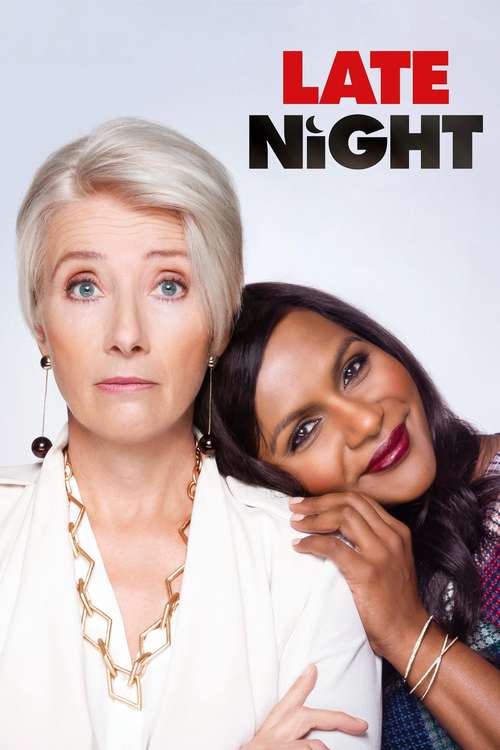
Parasite, 2019 - ★★★★½
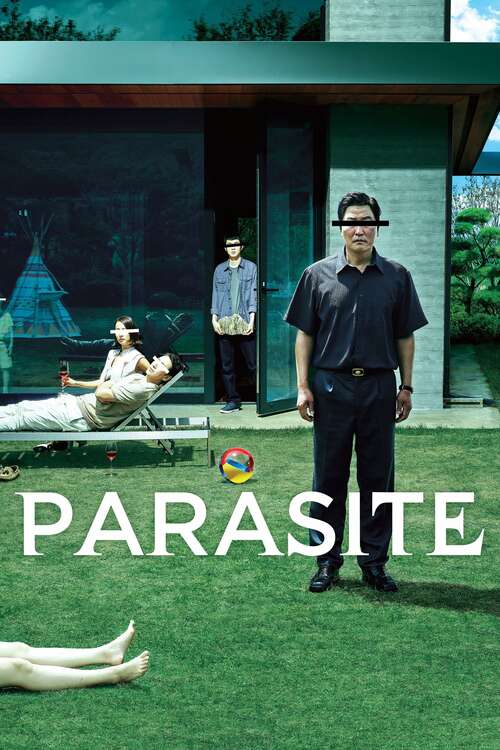
A richly deserved Oscar winner, despite what the Leader of the Free World might have to say about it. He should start by watching it, obviously.
Fighting with My Family, 2019 - ★★★½
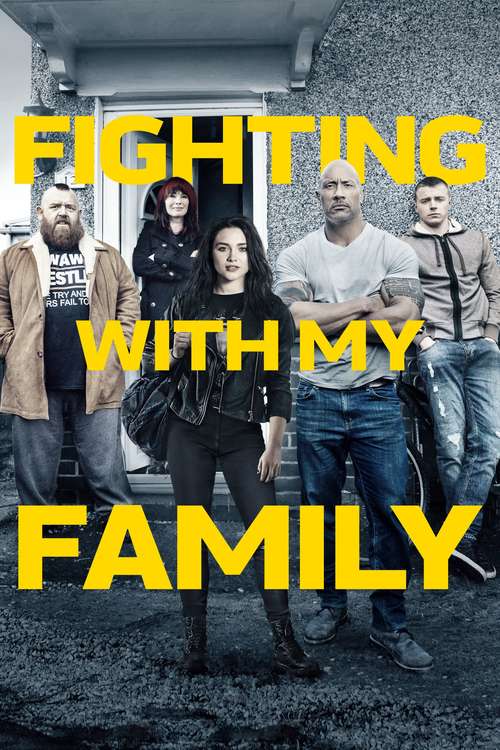
I didn't expect to be watching a film about wrestling, much less one made in association with the WWE. I mean, if had been about the old British wrestling matches they used to show on Sundays on ITV -- Big Daddy, Giant Haystacks, Kendo Nagasaki -- then maybe.
But this turned out to be a lot of fun. Written and directed by Stephen Merchant, it's based on the true story of a wrestling-mad family in Norwich, and how they try to get into the giant American wrestling entertainment business.
Not bad at all.
The Grand Budapest Hotel, 2014 - ★★★
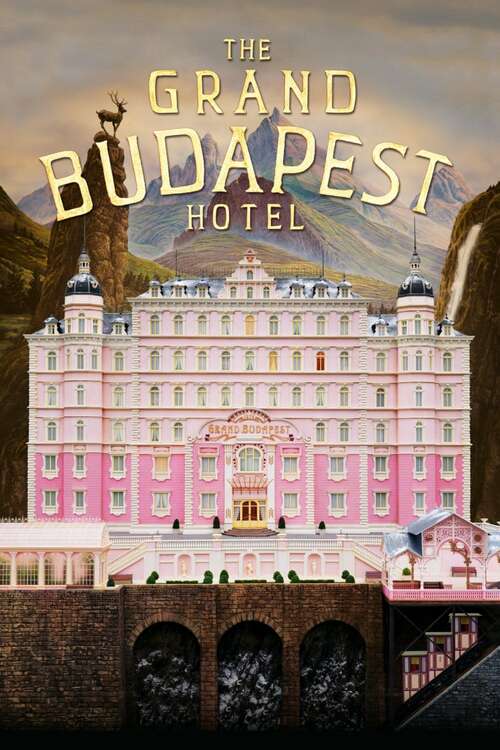
I note that I gave this three-and-a-half stars when I added it to Letterboxd, some time last year. Watched it again last night, for, I think, the third time. My inclination is to reduce its number of stars. I don’t dislike it, by any means, but I don’t love it the way the rest of my family do.
Last night I was more puzzled by it than I recall being before. Why the three layers of story? I’m not sure that adds anything. I like the look, and I originally loved the weirdness, but... in the end it just feels kind of shallow.
The Cabin in the Woods, 2011 - ★★★★★ (contains spoilers)
This review may contain spoilers.
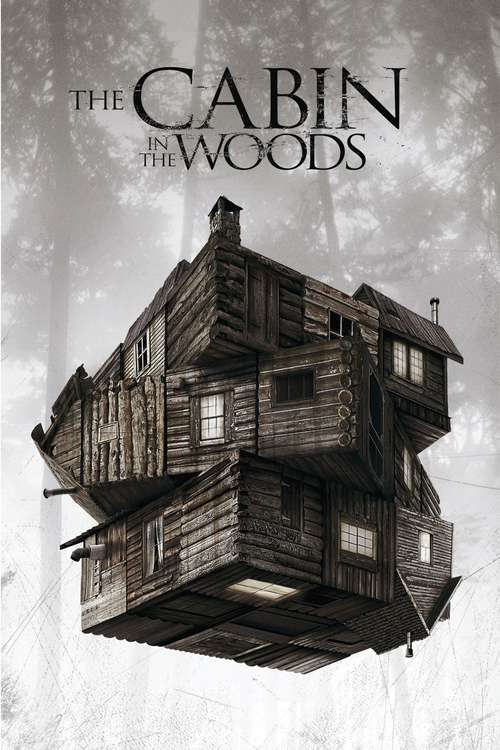
I'm surprised to find this is from 2011. I saw it when it came out, but it doesn't feel like eight or nine years ago. Three or four, I'd have said.
The fact that I'm surprised to find that Chris Hemsworth is in it probably reflects the length of time that has passed, though.
Anyway, it stands up really well, though the question I asked the last time: why do they have a big red "Release all the monsters" button? That still stands.
Springsteen On Broadway, 2018 - ★★★★
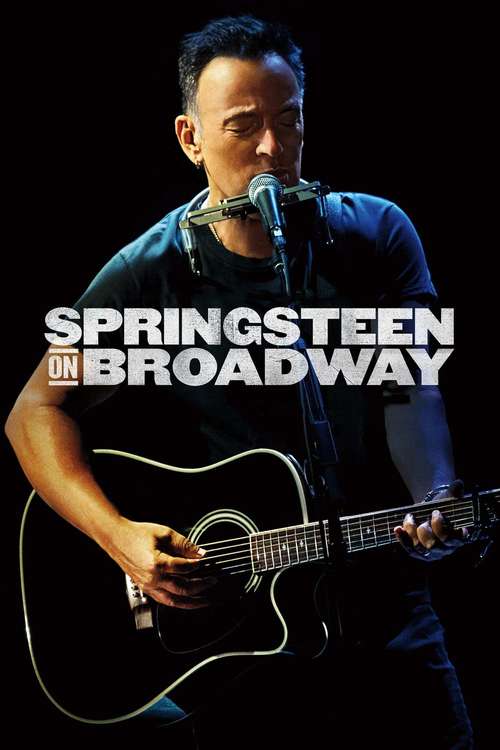
I finished this last night, but actually watched it over the course of several weeks. Not the way I'd normally watch a film, but since it's mainly about the music, the interruptions don't really matter.
Except... it's actually equally about the music and the storytelling. Both are valid and worthwhile. There was no single overarching narrative, though. The stories are a set of recollections of Springsteen's life. There are connections, of course, but each one stands alone well enough to watch it in this disjointed way.
Anyway, my main complaint is that it was too short and could do with having more songs. He's written a vast number, after all. Well worth watching if you're a fan. If not, then you probably won't want to.
Jojo Rabbit, 2019 - ★★★½
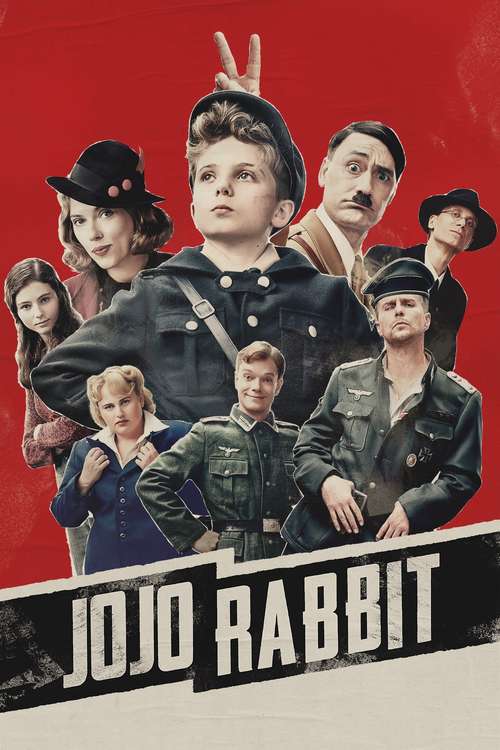
I liked this a lot more than I expected to. When I saw the trailer (I think back in December, when we saw Knives Out) I was a bit freaked out by it. What’s this, you’ve got a film about a kid in the Hitler Youth, with Hitler as a character, and they seem to be playing it for comedy? This looks well dodgy.
My kids knew it was by Taika Waititi , though, and that seemed to make it likely to be OK? I dunno, but eventually I decided to give it a chance.
And it turns out to be really good. A sweet film in many ways, though with plenty of menace and darkness, as you'd expect from where and when it's set -- which is an unnamed German town or city in the dying days of the Second World War. Waititi himself plays Hitler, who is not in fact the real one, but an imaginary friend that lets Jojo, the ten-year-old title character, talk to someone about the things he can't talk to anyone else about.
So I enjoyed it, but I can't help asking: why did he choose to make this film? Why that story, why now? It's based on a novel, Caging Skies by Christine Leunens. But Wikipedia's description of it as "the internationally bestselling Hitler Youth novel" leaves me none the wiser.
Not, of course, that there has to be a specific reason for a creator to make something. And it's far from the first comedy about Hitler or the Nazis. But there's just something about the idea of it -- not the actuality -- that leaves me a little uncomfortable, in a way that The Great Dictator or The Producers didn't.
The Memory Police by Yōko Ogawa (Books 2020, 2)
Translated by Stephen Snyder. I asked for this for Christmas, because I saw it reviewed in The Guardian and it sounded interesting. And it is, but I had some problems with it.
Let’s look at the blurb:
Hat ribbon, bird, rose.
To the people on the island, a disappeared thing no longer has any meaning. It can be burned in the garden, thrown in the river or handed over to the Memory Police. Soon enough, the island forgets it ever existed.
When a young novelist discovers that her editor is in danger of being taken away by the Memory Police, she desperately wants to save him. For some reason, he doesn’t forget, and it’s becoming increasingly difficult to hide his memories. Who knows what will vanish next?
That “[f]or some reason” is where this book doesn’t quite work for me. The setup is fine: a type of item, and the memories, the very idea of that item, disappears. The titular police make sure that all instances of the item — roses, hats, photographs… — are removed. But some people keep their memories and the ideas, and try to keep the things. The Memory Police find them and cart them off.
The protagonist’s mother was taken in that way when the protagonist was small.1
Why is it happening? How is it happening? Who are the Memory Police, and what happens to the people they take? Can they be resisted, and how can the islanders get their memories back? These are the sorts of questions you would expect to have answered, were this a science fiction novel. Are the islanders the victims of some sort of mind-control experiment? Are they in a simulation?
This is not a science fiction novel.
“For some reason”. Don’t read this expecting to find out what the reason is, or to get answers to any of the other questions.
All that said, I enjoyed reading it. The sense of danger, of menace, is palpable, but subtle. It’s about people trying to live their lives under these bizarre conditions. It’s just frustrating thinking about it now, about the unanswered questions.
But maybe I’m reading it wrong. In her essay “SF reading protocols,” Jo Walton writes:
A reviewer wanted to make the zombies in Kelly Link’s “Zombie Contingency Plans” (in the collection Magic For Beginners) into metaphors. They’re not. They’re actual zombies. They may also be metaphors, but their metaphorical function is secondary to the fact that they’re actual zombies that want to eat your brains. Science fiction may be literalization of metaphor, it may be open to metaphorical, symbolic and even allegorical readings, but what’s real within the story is real within the story, or there’s no there there. I had this problem with one of the translators of my novel Tooth and Claw—he kept emailing me asking what things represented. I had to keep saying no, the characters really were dragons, and if they represented anything that was secondary to the reality of their dragon nature. He kept on and on, and I kept being polite but in the end I bit his head off—metaphorically, of course.
The essay is largely about how there is a “toolkit” for reading SF — a set of understandings, of tropes — without which some can find the genre difficult to understand. We learn that toolkit, or build it, from early reading of the genre. But she follows the above quote with this:
When I read literary fiction, I take the story as real on the surface first, and worry about metaphors and representation later, if at all. It’s possible that I may not be getting as much as I can from literary fiction by this method, in the same way that the people who want the zombies and dragons to be metaphorical aren’t getting as much as they could.
Maybe that’s what went wrong for me with The Memory Police: Ogawa wrote a metaphorical work — about people trying to live their lives under bizarre conditions, as I wrote above. I read it with the expectation that the bizarre conditions would have an explanation, and they don’t, because they are “only” metaphors.
For, I would have to suppose, a totalitarian state, where the slightest infraction of arcane and obscure laws leads to being carted away by the secret police.
We also get sections of the novel the protagonist is writing. It is about a woman who loses her voice, and communicates using a typewriter. Then the typewriter is taken away from her. It works as a metaphor for the situation the protagonist lives in: a metaphor within a metaphor.
And from the Guardian review that started this:
Why this is happening is unknown; the ideology of totalitarian control and cultural isolation is implied, rather than explicitly outlined, and its intersection with the supernatural strengthens the feeling of allegory.
So maybe I should have been warned. Calling it “supernatural” suggests something more in the magic realism vein. That might be a better way to approach it. Magic needs — or at least, generally gets — less of an explanation.
- Note the lack of names, too: the editor is given an initial, R, but the only character given an actual name is a dog. ↩
The End of the Dream. The Start of the Resistance
Ian Dunt, writing at politics.co.uk:
What is happening is a tragedy. A betrayal of Britain’s role in the world. A betrayal of the Europeans who came and made this their home. A betrayal of the idea that this is a calm, sensible country, that thinks in practical and pragmatic terms about what it is doing, that deals in small ideas instead of grand ideologies.
– The end of the dream. The start of the resistance.
Worth reading the whole thing.
Thing 2: Horsin’ Around
The second of the two good things today is that Netflix now has the last few episodes of Bojack Horseman.
It seems my only reference to it here was one allusive comment on the first episode. But it has consistently been one of the best things on telly. People dismiss it because It’s a cartoon with talking animals, but it’s so much more than that.
Issues of addiction, depression, fame, guilt, and so much more, sit alongside the funny animals. And it can be very funny, too.
Thing 1: How Good is the Place?
The first positive thing about today that I was talking about earlier is that tonight brings the final episode of The Good Place.
As this programme progressed it got hard to imagine how they were going to end it. And that remains true for me: they’ve already given us two good endings in the last two episodes, either of which would have been fine as a way to close the show. So how will they do it for real?
We’ll find out tonight.
In the Departure Lounge
Here we are, then, on the last day of the UK’s membership of the EU. We fought, we lost, and now we’ve got to live with the consequences.
Which won’t really start to take effect until the start of next year, of course, because we’ll be in the transition period until then. Until 2021 we’ll still be able to travel freely; there will be no added tariffs on goods; food standards will still be the high ones we’re used to.
Ah yes, food standards. Just the other day I had a realisation — no, it was something that I already knew. More a dawning fear of how close a bad thing was. What brought it home was this headline in the Independent: “Brexit: US insists chlorinated chicken must be on menu in any UK trade agreement.”
Obviously no-one’s going to force anyone to buy or eat chicken, chlorine-washed or otherwise. But remember why chicken in the US is washed in chlorine, and why importing it into the EU is banned: it’s because the food standards are significantly lower than those in the EU. The chlorine washing is to kill off bacteria and make the meat fit for human consumption.
So what that headline means is that a US trade deal could depend on the UK lowering its food standards. That’s what Brexit means: our government could choose to lower the standards of hygiene required in food production. Sit with that thought for a while.
There are a couple of good things to think about on this bleak day. Both of those are also from America, and neither has anything to do with Brexit. But I’ll leave them for later posts. Stay tuned.
I leave you with this delightful snippet of Alex Andreou, on the Remainiacs podcast, suggesting how to cope with today, and the future.
Irony Failure Among Elite Headteachers
“Private schools criticise plans to get more poor students into university“. Of course they do.
Sally Weale writes in The Guardian:
Leading private schools have challenged plans to widen access to the most selective universities in England, warning they could lead to discrimination against young people “on the basis of the class they were born into”.
Which doesn’t happen at the moment. Not at all.