
Longform
This Is No Time to Unlock
Boris Johnson’s update to Britain’s – or in fact, only England’s – lockdown conditions has confused people. But even if it hadn’t, it’s too soon for us to be opening things up again.
By “us” I mean everyone: the human race as a whole.1 Everywhere in Europe, to go by the papers, there’s talk of easing lockdown conditions. In Australia people can meet in groups of up to ten.
But the virus hasn’t gone away. It’s still out there, being breathed out and in. Waiting for our preventative measures to fail. Not to anthropomorphise it.
It’s not over. It’s not close to being over. It won’t be over till there’s a vaccine. Or a cure, but a vaccine seems more likely.
-
Don’t get me started on how politicians, at least here and in the US, have been referring to a “national emergency,” when it’s so much more serious than that. ↩︎
When Harry Met Sally..., 1989 - ★★★★
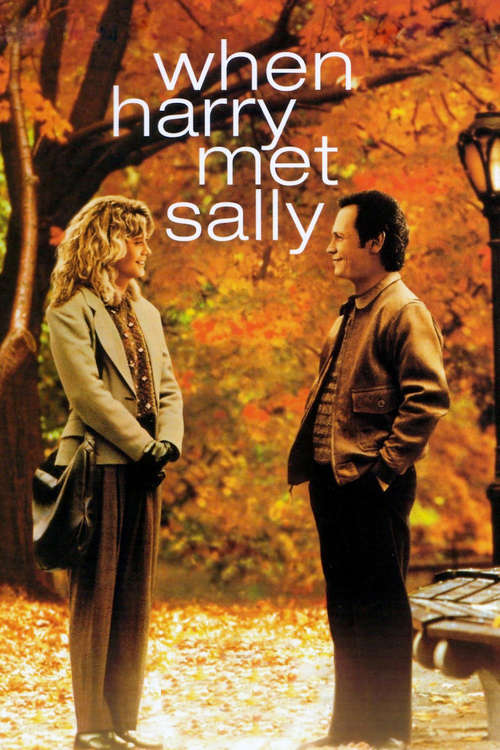
Somehow I’d gone this long without ever seeing this. I’m glad I put it right now. The dialogue is glorious! Nora Ephron may be my favourite screenwriter after Aaron Sorkin, where dialogue is concerned.
The ending flops a bit. In fact, I think I’d have enjoyed it more if they hadn’t got together, but hey, what can you do?
Returning Blogs
Here’s a reason (another reason) why feed readers are great: Tom Coates of PlasticBag.org has written his first post in seven years. There’s no reason to unsubscribe from blogs that haven’t posted for a while – no reason even to notice that fact normally – so up it pops in NetNewsWire1 today.
The post itself is good – a bit meta (entirely meta) – but there’s nothing wrong with that.
I keep seeing suggestions that blogging is undergoing a renaissance, and I think it might be true. Of course, lots of us never went away, either as readers or writers. But it’s good to welcome Tom back.
-
Other feed readers are available. ↩︎
No More...
Sad to hear of the death of Dave Greenfield from Covid-19. The Stranglers were not really like other punk bands. But they were the band that got me into punk. I heard ‘No More Heroes’ on the radio one weekend, after hearing my school friends talk about punk, and I never really looked back.
I never saw them live, and I didn’t follow their career after the first three or four albums; but there’s a lot of good stuff in those early ones.
Greenfield is, I think, the first musician of that generation to die from the pandemic.
Ayoade On Top by Richard Ayoade (Books 2020, 6)
This is Richard Ayoade’s detailed analysis of the 2003 film View From the Top, directed by Bruno Barreto and starring Gwyneth Paltrow. It is, by all accounts, a masterwork.
By Ayoade’s account, at least. I haven’t seen it. Ayoade is a comedian. The book is pretty funny. The film, I suspect, is quite bad.
Static Leads to Static
I’m almost beginning to wish I hadn’t switched my site to static generation. Not really, though. I’m very pleased with the way the site is performing, with how it looks, and with how easy it is to change things.
It’s just the non-static parts that I want to get working that are complex. By which I mean comments, of course, and Webmentions.
Comments are obvious. And the “obvious” way to make them work with a static site – and one that has good support built into Nikola, the generator application I’m using – is Disqus. But Disqus is known to track its users and show ads, and I don’t want that for anyone who might comment here.
So I’ve been trying other options. But none of them work as easily as you’d hope. There are always complexities, difficulties, bits you have to glue together or even build yourself.
So far I’ve tried:
- Isso: you have to run a service on your site. I couldn’t get the service to respond.
- Staticman: I couldn’t get its service to start. A problem with configuring the private key setting.
- Remarkbox: at the time of writing this is still active, but I’m not sure I’ll keep it. It works like Disqus, in that the comments are hosted on a third-party site, which is not really in keeping with the whole static site/indieweb ethos. It’s not advertising driven like Disqus, but it behaves a bit strangely, at least on here. We’ll see, though.
Lots of blogs manage without comments, of course, including many of the most successful and long-running ones. But I’ve always had a fondness for them. They were building communities online long before there was a Facebook or a Twitter.
The other way to join the conversation is to send and accept Webmentions. I won’t try to explain those here, but again, there’s a certain amount of infrastructure needed to get them working, and I’m not quite there yet.
Still, it all means I’m learning things, which is good. And my posts and pages are just text files, which is as they should be.
Repairability Is Good
It’s good when you can repair things. We had a problem with the switch on the kettle the other day, and I was able to open it up, put various bits back in place, and get it working again. It tripped not one but three circuit breakers in the house and blew the fuse in its plug, all while it was failing, but that’s what safety devices are for, I guess.
And today I’ve just fixed the switch on our hoover. Actually it’s a Miele, and this video by an Australian repair person was really helpful. He’s dealing with a different model, but it’s the same problem – the switch wouldn’t stay on – and the same construction and even part number.
I was able to get the footswitch off following what he did, and order a replacement part online. It arrived today, and all went back together really smoothly, and now our hoover Miele vacuum cleaner1 is working again.
Oddly the part number on the replacement is different from that on the broken one, which matched the number the video guy quotes.
Anyway, while I’d have tried these repairs under normal circumstances, it’s especially useful at the moment, when it’s not like you can go shopping, or get someone to come in and fix things.2
Tate and Tennant Killing It
I see that, unlike Little Britain, Catherine Tate is still very funny when she brings back old characters for charity. Especially with David Tennant’s help.
“Being Scottish is not an underlying condition!”
Misbehaviour, 2020 - ★★★½

Good wee film about the women who protested at the 1970 Miss World show. Based on what actually happened.
Surprising to learn that the phrase “Women’s Liberation” only originated then.
The Power and the Glory by Graham Greene (Books 2020, 5)
I’ve never read Greene before, except for I think one short story, and a chapter or two of his autobiography. This is fascinating. It’s the story of a Catholic priest in Mexico at a time when the church was banned. I had no idea that such a time existed: I think of Mexico as a very Catholic country, so such oppression is surprising.
The genius of it is that all the characters are so convincing. From the “whisky priest” himself – sinful, still believing, considering himself damned, yet trying to do what he can for people he feels are his parishioners; through to the hardline atheist lieutenant of police that is trying to find him. No-one is entirely good or bad, but there is sympathy for them all.
It’s justly considered a classic.
Women on the Verge of a Nervous Breakdown, 1988 - ★★★
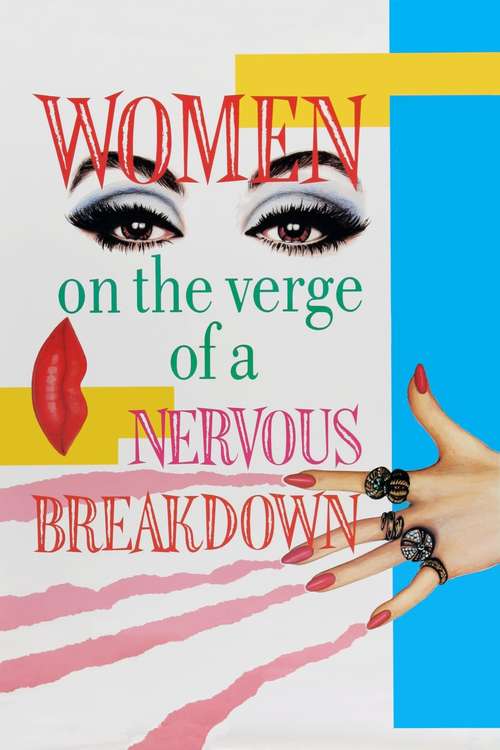
Well this is a lot funnier than the title would suggest. I think I had always thought it would be kind of bleak, but it’s not at all. There’s betrayal, attempted suicide, attempted murder, and a lot of property damage; but it’s very lighthearted.
Sunset Boulevard, 1950 - ★★★½

Good to watch an old movie for a strange. Great example of starting with the end and telling the whole story in flashback. The voiceover gets a bit wearing, especially when it’s telling you things you can see perfectly well happening on screen.
It’s quite a strange film, and another example of Hollywood telling stories about itself.
Website Changes
Abstract/TL;DR
I’m changing my site. Everything should go on working, but comments will disappear for a while.
Details
I’m changing both the server my site runs on, and the way it’s built. I’ve been using WordPress for the blog since I started it in 2006 (before that I used LiveJournal, and at some point I imported those posts, so the earliest entries go back to 2002). Just recently, though, I started having a problem with it.
Everything was still running OK, but I couldn’t post to it from external sources. So I couldn’t use MarsEdit, which is my preferred way to post, or the Micro.blog app for status updates, or even services like IFTTT, which has been adding notes and ratings for all the films I’ve watched over the last few months, from Letterboxd.
I’m sure I could have tracked down the cause and fixed it. But then there’s also the fact that I recently got round to upgrading to WordPress 51. I had avoided that because I didn’t like the new editor when I tried it out before. I don’t know quite why, but eventually I bit the bullet and upgraded.
And I hate it. I never really cared for the online editing experience at the best of times, which is part of the reason I preferred using MarsEdit. But I just have a visceral bad reaction to the new editor.
Add to that that static sites are a) much faster to serve and b) what “all the cool kids” are using nowadays. I started to look into moving to a static site.
The two big players here are Jekyll and Hugo. I’ve used Jekyll before, when I was at SAHSU. The documentation for the RIF2 is hosted at GitHub Pages, and that uses Jekyll, so it’s worth having a local implementation for testing, which I did.
But as a programmer, there can be times when you want to change the tools you use. Jekyll is written in Ruby; Hugo is in Go. I don’t know either of those, and while I like learning new languages, that wasn’t the purpose of this exercise.
In short, I wanted something that is written in Python, and I found it in Nikola.3 For reasons too boring to explain, I had trouble with it on my existing server, so I’ve set up a new one at Linode. I’ll be switching over to it later today. You shouldn’t see any changes, except:
- All the comments on the blog will disappear. They’re not lost, and I plan to get them back, but I need to find the best way to do that. For now, comment via Twitter or Micro.blog.
- The Atom feed may be broken. I’ll try to get that fixed. The RSS feed should still be fine, and at the same location as before. Anything that uses it should carry on working without any fuss.
- If you follow me via WordPress.com (Hi Andrew), sorry. That’s going away. Try my RSS feed instead. Or Twitter; all posts automatically get Tweeted to my timeline.
The Last Bike Ride
I came off my bike today. Don’t worry, I’m not hurt, beyond a couple of scrapes. But as I was going down – you know how people say things go into slow motion? It wasn’t quite like that, but I did have time to think, “Shit, I hope they don’t have to call an ambulance.” And once I was down and realised that nothing was broken, I thought, “I hope no-one comes running to help, cos I’ll have to wave them away.”
No-one came to help, of course – mainly because there was no-one around. But all this is ironic, given that I read a piece a week or so back by a keen cyclist, saying he wanted to ride, but wasn’t going to, because if he got hurt then he’d be taking much-needed resources from the NHS.
“That’s very noble,” I thought, and then proceeded to completely ignore the implied advice.
No longer. From now until this is over, I’ll be exercising indoors, or at most, in the garden. It’s a shame, because I do love to get out on the bike, especially in the spring. But everyone has to put up with limitations during this, and this is a pretty minor one.
Howl's Moving Castle, 2004 - ★★★★½

I read the book to the kids years ago, but I wasn’t sure whether I’d seen this. Turns out I hadn’t, though I must’ve seen a few scenes, because I was familiar with the imagery.
Anyway, this is wonderful. Right up there with the best of the Studio Ghibli fims.
Erin Brockovich, 2000 - ★★★★

I wouldn’t have expected that a film about someone fighting an evil corporation that is poisoning people could be so feelgood. But this achieves it.
Wear a Mask! And Celebrate Your Immune System
Yesterday’s XKCD “Pathogen Resistance” turns things round and shows the current crisis from the point of view of the virus. It is genius. And even has a Watchmen reference in the mouseover text.1
But more importantly, and unrelated: it turns out that wearing a mask — any kind, even just a scarf– will help to reduce the spread of the virus. This is contrary to what we were told initially, but it makes complete sense even without technical analysis. Anything coming between someone else’s droplets and your lungs, or your droplets and someone else’s lungs, is better than nothing coming between them.
It’s like wearing a cycling helmet: I’ve always thought that something between my head and the ground, should I come off, is better than nothing.
And there are designs online for making masks out of any old cloth. I feel #blessed that my daughter has an A-level in textiles and a sewing machine.
On the question of masks, though, something has been confusing me since this all started. And to an extent, before that, really, when I’d occasionally see people out and about wearing what appeared to be a hospital-style mask. Which is, where did people get such things? How did they come to have what looked like professional medical supplies in their private possession? Aren’t these things controlled?
Clearly not, for the last one. And I wondered why? Why did people have them? Now, that seems like a foolish question. And it ignores the cultural differences, whereby in parts of Asia it’s considered rude not to wear a mask if you are sick. Makes sense, though I always wonder how horrible it is if you sneeze while wearing one.
- “We’re not trapped in here with the coronavirus. The coronavirus is trapped in here with us.” ↩
Drive Your Plow Over the Bones of the Dead, by Olga Tokarczuk, Translated by Antonia Lloyd-Jones (Books 2020, 4)
I like this quote from near the end:
The fact that we don’t know what’s going to happen in the future is a terrible mistake in the programming of the world. It should be fixed at the first opportunity.
When I read Tokarczuk’s Flights at the start of last year, it was actually this one that had led me to her. Warren Ellis recommended it in his newsletter, if I remember correctly, and the title intrigued me. What I didn’t realise then was that the title is a quote from William Blake: “Drive your cart and your plow over the bones of the dead,” he says, in Proverbs of Hell. With that spelling, I note.
Apparently it caused a great fuss when it was published in Poland. I don’t understand why, but cultures are different.
Unlike Flights, it’s a complete, single story. It’s also much simpler. The narrator is an interesting character, though her practice of astrology adds nothing to the story and gets in its way to an extent.
Each chapter has a quote from Blake as an epigraph. I don’t think she used the thirteenth proverb of hell, though it could be seen as the narrator’s north star:
All wholesome food is caught without a net or a trap.
The Big Short, 2015 - ★★½

You might come out of this film with a better understanding of the events that led to the 2008 financial crisis -- or you might not. More likely, I think, you'll sort-of understand it while you're watching, but be none the wiser when it's all over.
The question of what happened is explained, but not the one of how it was allowed to happen.
But I think the problem with this as a movie is that it tries to dramatise the events, using versions of some of the real people involved as characters; but it doesn't go far enough in that. We don't see anything of their lives outside of their financial dealings, so it fails to humanise them sufficiently. As characters, I ended up just finding them tiresome.
To really help us to understand the whole thing, it would need to be a documentary, and that would have been harder to sell. So by not quite being enough of one thing or the other, it fails at both.
Writing News
I wrote a screenplay and submitted it to the BBC Writersroom (which they always present that way, probably to avoid having to decide where to put the apostrophe) “Interconnected” competition. The idea was to write a five-to-ten-minute piece with between two and four characters, communicating via videoconferencing app. Very now.
I only heard about it (from my friend Andrew on Facebook) six days ago. I don’t think I’ve ever written a finished piece so quickly.
They will, of course, get thousands of submissions, so mine stands little chance of being one of the chosen four, but it was very satisfying to get it done.