Longform
Corona Vu
This article was in yesterday’s Independent. I felt like I had travelled back in time to last May:
Crucially, the report, which was written by independent experts, concludes that NHS guidelines failed to consider airborne infection, a key way the virus is transmitted.
– Sean Russel in the Independent, NHS Covid guidelines ‘fundamentally flawed’ and need replacing, says nursing union
It further says:
But research now suggests that airborne transmission – where tiny droplets of saliva from people talking, calling out or coughing can remain suspended in the air – can be a particular problem in poorly-ventilated rooms.
– As above, Independent article
‘Now’? Research now suggests that it’s airborne? We’ve known that since at least June of last year. In fact, I first posted about masks, and about going out with a rudimentary one, in early April!
How can NHS guidelines be so ludicrously far from what we understand? It would be comically far if it wasn’t so serious.
Everything I Never Told You by Celeste Ng (Books 2021, 3)
This book is infuriating. At times, and in certain ways, at least. Or not the book, but some of the characters.
For example, the parents, especially the dad – are so fucking pathetic it makes me angry. He can’t even boil an egg for his kids’ breakfast when his wife’s away.
And throughout the early part you’re wondering why do they both love Lydia much more than their other two kids? Even before she dies, I mean?
Oh, yes it’s a dead girl story, did I mention that? Lydia is fridged in the first line, so it’s not a spoiler. It’s totally a fridging, though. That page tells you that the term means killing a female character ‘often as a plot device intended to move a male character’s story arc forward.’ Lydia’s death drives the whole plot, including the actions of her father and brother, so it definitely qualifies.
Her mother and little sister too, but that doesn’t lessen the truth of it.
It’s a very good exposition of a family with secrets at its heart. Though in the case of some of the secrets, there’s no very good reason for the person to keep them secret. A lot of problems could have been avoided – including, probably, the death of Lydia – if people had just talked to each other. That’s part of what’s so infuriating about it at times.
But maybe that – the difficulties people, families, have in communicating – is the point.
I also wondered why she chose to set it in the time she does. The present day parts are in 1977-8. I think it’s so that she can write about the particular immigrant experience she does: second and third generation Chinese immigrants to the US.
I picked this up because one of my tutors recommended it to me, due to its use of an omniscient narrator. I’m trying something similar with something I’m working on at the moment. This article in the New York Times practically credits Ng with bringing omniscient narration back into fashion. I don’t feel that it ever really went away, but maybe it has remained more common in SF than in literary fiction. Though as I write that I’m not sure I could cite an example from recent SF either, so maybe I’m wrong.
Here’s a good article by Ng herself about her decision to use the device. It’s been useful to me, anyway. And I actually enjoyed the book, aside from being annoyed at times.
No Project, Plenty of Fear
All through the Brexit debate, and after, people warned that it would cause problems in Northern Ireland. And now here we are:
Loyalist paramilitary groups have told the British and Irish governments they are withdrawing support for the Good Friday agreement in protest at Northern Ireland’s Irish Sea trade border with the rest of the UK.
– Rory Carroll in The Guardian, Brexit: loyalist paramilitary groups renounce Good Friday agreement
Brexiters dismissed those concerns as fearmongering.
I don’t know what the end result of this will be, but I can’t imagine it being good.
After the Money's Gone
Robin Rendle raises a concern we should all (who write on the web) have:
But if my URL is dead, my website dies with it.
My work shouldn’t be presented in the Smithsonian behind glass or anything, I’m just pointing at this enormous flaw in the architecture of the web itself: you’re renting servers and renting URLs. Nothing is permanent because on the web we don’t really own any space, we’re just borrowing land temporarily.
– Robin Rendle, Inheritance
What happens to our websites after we’re gone? There needs to be a way to memorialise them, make sure they’re still around in some form. Archive.org is great, but it doesn’t keep the canonical URLs alive. Famously, Tim Berners-Lee wrote, ‘Cool URIs Don’t Change.’ Disappearance is the biggest change of all.
Although I see from there:
Pretty much the only good reason for a document to disappear from the Web is that the company which owned the domain name went out of business or can no longer afford to keep the server running.
– Tim Berners-Lee, Cool URIs Don’t Change
Hmm, is that a good reason? and it’s surprisingly slanted towards companies, considering the origin of the web, and TBL’s place of work.
(And speaking of cool URIs – or domains – home.cern? That is fantastic!)
The Tree, the Mayor and the Mediatheque, 1993 - ★★½
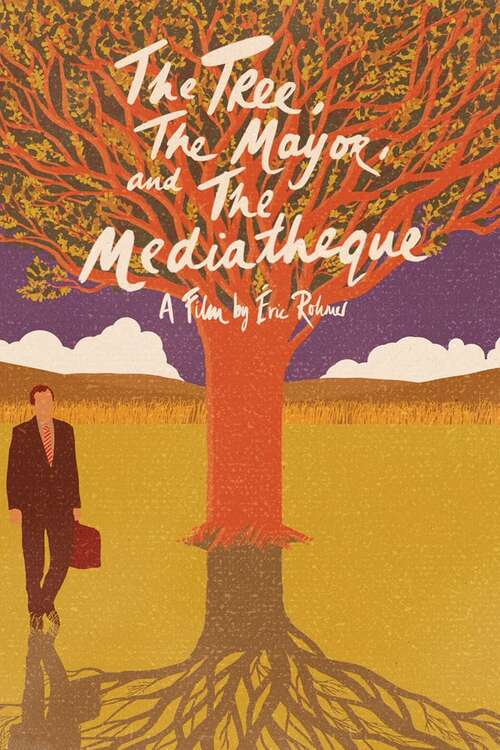
After watching Call My Agent! on Netflix, we wanted to watch some French films, and maybe with some of the actors and/or directors who were in the series. So we started with this.
It's described as a comedy. It's mildly funny in places, but it's mainly a kind of social commentary thing about land use in rural France. Enjoyable enough.
A Year Passes Like Nothing
It’s exactly a year since I last went out to an event.1
I referred to ‘being out on a cold, virus-infested night’ to see Glen Matlock in Leytonstone, and it seems really weird now that I did it.
What were we thinking? Gathering together in a small hall, where people were singing and shouting. And not a mask to be seen! Masks? who had masks? How would we have drunk our beer while wearing a mask? You probably wouldn’t have been let in if you had turned up wearing a mask.
Although I had good social distancing at the start, when I was almost the only one there.
Memory, eh?
-
I actually thought it was on the last day of February 2020, which was the 29th, not the 28th, making it hard to hit the exact anniversary, but my blog and calendar both tell me I was wrong. ↩︎
Pretend It's a City, 2021 - ★★★½
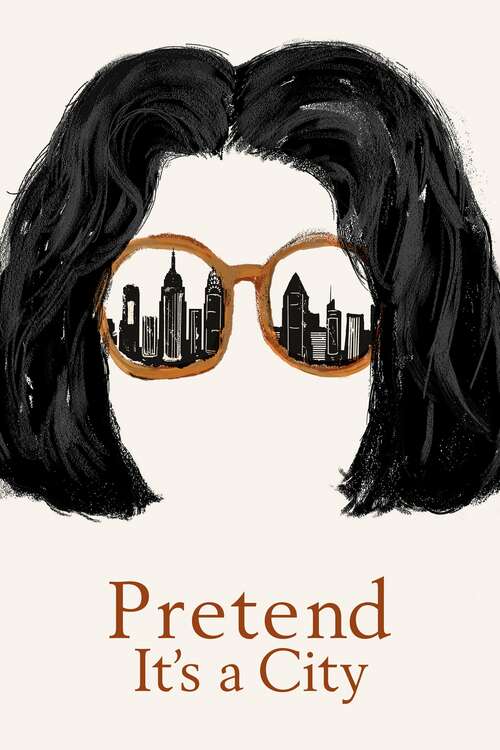
Date is approximate, and anyway we watched the various parts over two or three weeks.
Really good, though annoying in places. Fran Lebowitz is great on many things, misanthropic on many things, and would be fun to talk to. Scorsese is a great interviewer, but he doesn’t have to laugh at everything she says.
Rocks, 2019 - ★★★★

Great, moving film about a teenaged girl whose mother leaves — it’s never stated why, but most likely because of mental health problems — who tries to keep life going normally for herself and her little brother. Inevitably there are problems, with school, with social workers.
It’s set and filmed in and around Hackney, so I feel like these could be people I see on the streets, people my kids went to school with.
Refreshingly, many clichés are avoided: the problems are not about drugs or gangs, or even race.
A top piece of work.
Girl, Woman, Other by Bernardine Evaristo (Books 2021, 2)
It took me quite a long while to read this. I enjoyed it whenever I read a section, and I read it in large chunks at a time; but between times I wasn’t particularly drawn back to it. I think that’s probably because it doesn’t have any significant plot.
Instead it’s a series of character explorations, looking at a series of Black women (and a few men) over several decades of the twentieth century and the first two of the twenty-first.
Each story is compelling and enjoyable, and they’re all interlinked – almost too interlinked at times, you might say, because there’s an element of coincidence. But that doesn’t matter: coincidences happen, after all.
Perhaps the major downside is that you get interested and invested in a character, and their chapter ends and we move on to another one. So it’s like you’re always starting fresh. Or fresh-ish. That’s probably also part of why I had the experience I described at the start, of not being drawn back to it.
Because of my course, I’ve been thinking a lot about the choices writers make. So I was particularly aware of Evaristo’s unconventional choices regarding punctuation and capitalisation. Specifically, she capitalises proper nouns, but no other words. So sentences all start with lower-case letters. And she eschews almost all punctuation. Only the comma, the apostrophe, the question mark, and an occasional exclamation mark, are used.1 {.has-dropcap}
No full stops means – and I only consciously realised this when looking it over to write this – that every sentence starts a new paragraph, and comprises the whole of the paragraph. Even when a sentence does end with a question mark or exclamation mark, she has it end the paragraph.
All of which is fine. I found it noticeable, but not distracting. I just wonder what the intended effect is. Some people say they find things like quotes to delineate speech intrusive, and I’ve heard it said that leaving capitals off the start of sentences feels more informal. But I feel generally that most established conventions have good reasons for existing, and that the best approach is to keep to them, unless you have a very good reason for not doing so. I don’t think this novel would in any way be lessened if it were capitalised and punctuated conventionally.
And then I would be talking more about the content, not the form.
-
There may be the odd colon or semicolon, but I couldn’t find any on looking it over just now. And there are probably a couple of dashes and brackets. ↩︎
The Fire Next Time by James Baldwin (Books 2021, 1)
It looks as if I haven’t read anything yet this year. That’s far from true, of course, but this is the first book-length work I’ve finished. Though that ‘book-length’ is extremely deceptive, as it’s very short.
I read it for my course – specifically the Creative Nonfiction module that I’m doing this term. It’s a powerful statement about the position of Black people in America in the early 60s, when it was written. Things have sadly not changed much.
In terms of presentation, it’s a little odd. It’s titled as two letters: one to his nephew, and another ‘from a region in my mind.’ The first is short, and does read as if it were a letter. The second, not so much.
It’s more of a personal essay, combining memoir and political analysis. It shows a great deal of empathy, both for Black people and the white majority in his country. And it ends with a note of hope, that America can still become the country it claimed to be. I wonder what he’d think of things now.
Both parts are available at those links, so you don’t even have to buy it if you want to check it out, which you should.


It's the Wrong Time of Year for Shorts
At least in the northern hemisphere.
When I watched the film The Big Short last year, I doubted that it would help people gain real understanding of financial markets and the problems that caused the crash of 2008-9:
You might come out of this film with a better understanding of the events that led to the 2008 financial crisis — or you might not. More likely, I think, you’ll sort-of understand it while you’re watching, but be none the wiser when it’s all over.
I count myself very much in that none-the-wiser position, then and now. In particular, while I knew that the ‘short’ involved somehow betting that the price of a share would go down, it had never clicked with me exactly how the ‘short seller’ could make a profit.
Until today, when I saw this tweet, apropos of the members of a subreddit bringing a hedge fund to bankruptcy, by taking advantage of the fund’s short position. The tweet contains a screen grab of the written explanation, unfortunately, and the tweeter doesn’t know the originator of the text, but here it is:
Thank you to whoever explained this - @reddit is incredible
— Jimmy Kelly (@_jimmykelly) January 28, 2021
😩🤙🏻 pic.twitter.com/zKRlbP41gJ
The key step that I had never understood was the the short seller borrows the shares, and then sells them at the current price. If they drop in price, the seller buys them back and returns them to the original owner. I don’t think I ever realised that you could borrow shares. If you can own something, you can borrow or lend it, I guess, even if it’s imaginary, so it does make sense. If I had ever thought of it, I would have thought, well why would you borrow something that you can’t do anything with?
But you can do something with it: sell it.