
Longform
Doctor Strange in the Multiverse of Madness, 2022 - ★★★
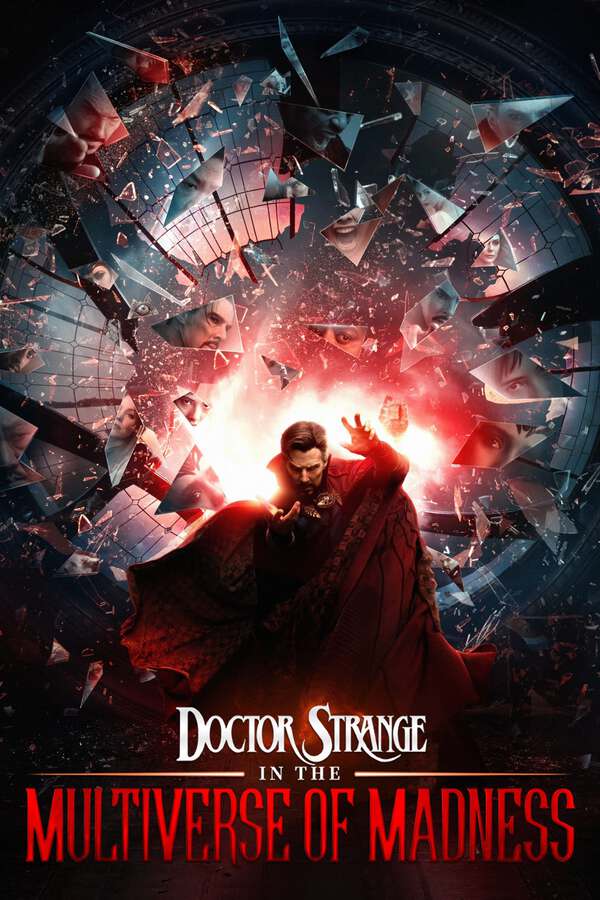
The usual Marvel daftness. I enjoyed it, but really, there's just so much of this stuff now that it's become ridiculous.
And I kind of hate what they've done to Wanda between this and WandaVision, which this kind of follows straight on from.
Summer of Soul (...or, When the Revolution Could Not Be Televised), 2021 - ★★★★
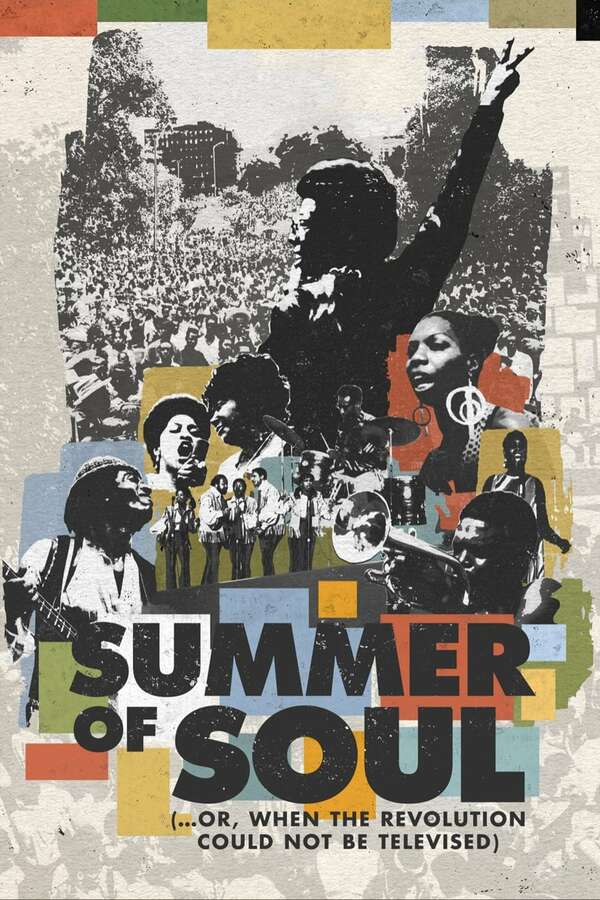
Excellent documentary about the Harlem Cultural Festival, an outdoor music festival in 1969. The same year as Woodstock, but much less well-known. The footage was shot at the time, but lay in a basement for fifty years, because the then-filmmakers couldn't get it broadcast.
We get Nina Simone, Gladys Knight & the Pips, Sly & the Family Stone, Mahalia Jackson, Stevie Wonder…
If I have a complaint it's that I'd like there to be more of the music and less of the interviews. Or not less of them: the interviews are good. I especially liked the ones that started with some of the surviving performers watching their younger selves. But for most of the acts we just get one song, and an interview gets superimposed over part of it.
Well worth a watch, though.
Together We Will Go by J Michael Straczynski (Books 2023, 1) 📚

Content warning: suicide
The first book of the year. JMS of Babylon 5 fame tells the story of a group of people who, each for their own varied reason, want to end their life.
One of their number arranges a final bus trip, across the USA, with the plan being to drive off a cliff in California. There are legal implications, so the law gets involved.
It’s desperately sad, yet happy and life-affirming at the same time. It’s told through first-person accounts of each of the characters, who have been asked to journal their experience. They’re very well-developed and you grow attached to them.
So you don’t want them to die. But you do want them to make it.
A Look Back at my 2022
The Year in Blogging
Only 98 posts in 2022, broken down as follows.
| Month | Posts |
|---|---|
| Jan | 11 |
| Feb | 11 |
| Mar | 7 |
| Apr | 5 |
| May | 2 |
| Jun | 5 |
| Jul | 4 |
| Aug | 6 |
| Sep | 11 |
| Oct | 7 |
| Nov | 11 |
| Dec | 18 |
I’m shocked that I posted less than 100 times, but there you go. I’ve been busy with other things.
Other Things
Writing a Novel
What time I had for writing outside of work, I tried to spend mainly on completing my novel. You’ll recall that I did a Creative Writing MA in 2020–21. I graduated in May 2022. My dissertation was essentially the first 15,000 words of a novel (along with a preface on how it had all come together). I promised myself that I’d finish it by the end of the year. I haven’t quite achieved that goal, but I expect to in the next couple of weeks.
New Job
But to that ‘outside of work’, above: I started a new job in February. I never quite got round to writing about it here, except on my /now page, which is an infrequently-maintained page that’s meant to say what I’m up to at any time. I was and am glad to have it, of course, but it’s amazing how much working 9–5:30 again takes away from your ability to do other things.
The job itself? I was employed as a Java Developer — that’s literally in my job title — and I have written precisely zero lines of Java.
Instead, I found myself plunged into the exciting new world of infrastructure as code, or IaC, and the Terraform language. I might write more about that at some point, but in short, it seems I work in DevOps now, and I’m enjoying it.
Digression: On Writing at Work
I’ve written over 70,000 words of a novel over the past year-and-a-half or so. But since February I’ve written something like 100,000 words at work. This comes from keeping copious notes on what I’ve being doing and what I’ve learned, and so on. I thank Obsidian for making it easy to do so, and for working in a way that matches how I want to work. But I wonder: why didn’t I keep notes like this before? I always wrote things down, of course, but not this systematically, this comprehensively.
It’s a mystery.
Jury Duty
In May I spent three weeks on a Jury at Wood Green Crown Court. That was an interesting experience. I might write more about it one day.
Etc
And all the other things that make up life. Hey, I even read 33 books last year!
RRR, 2022 - ★★★½
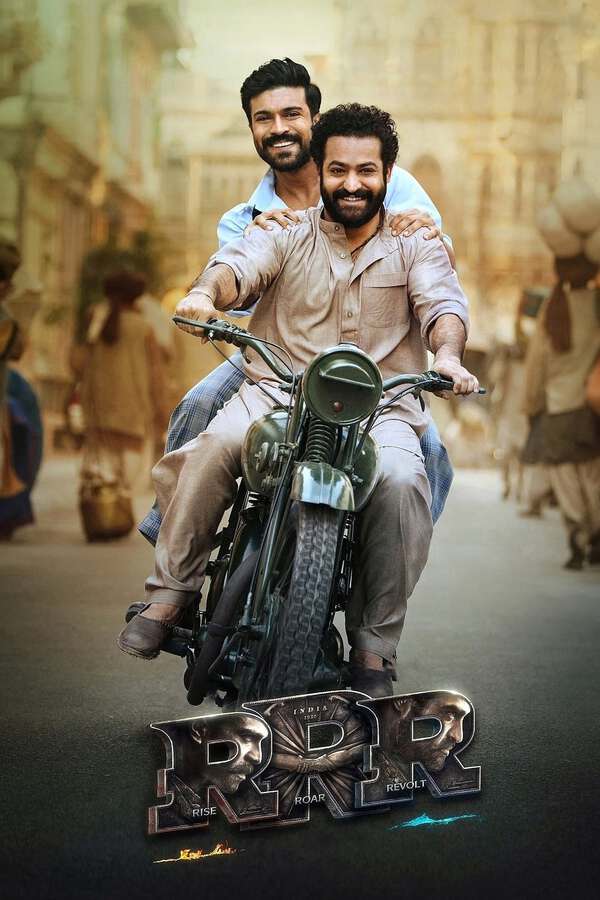
A mad, wild ride, by turns gruesome and hilarious. It's essentially a superhero bromance set in India during the Raj.
A lot of fun, but maybe just a tad too long at over three hours? Good way to see out the old year and see in the new, though.
The Thursday Murder Club by Richard Osman (Books 2022, 33) 📚
Not just another murder mystery, but an undeniably cosy one. OK, the deaths aren’t cosy, obviously, but the mood and vibe of the book certainly is.
The club in question is made up of four residents at a retirement village. They start out by speculatively investigating cold cases that a former member, who had been a police officer, had records of. But soon a hot case lands right in front of them, and things get interesting.
It’s hilarious in places, moving, well-plotted, and, let’s face it, a tad unconvincing. But you don’t let that bother you while you’re reading it.
Which you should do.
Knives Out, 2019 - ★★★★
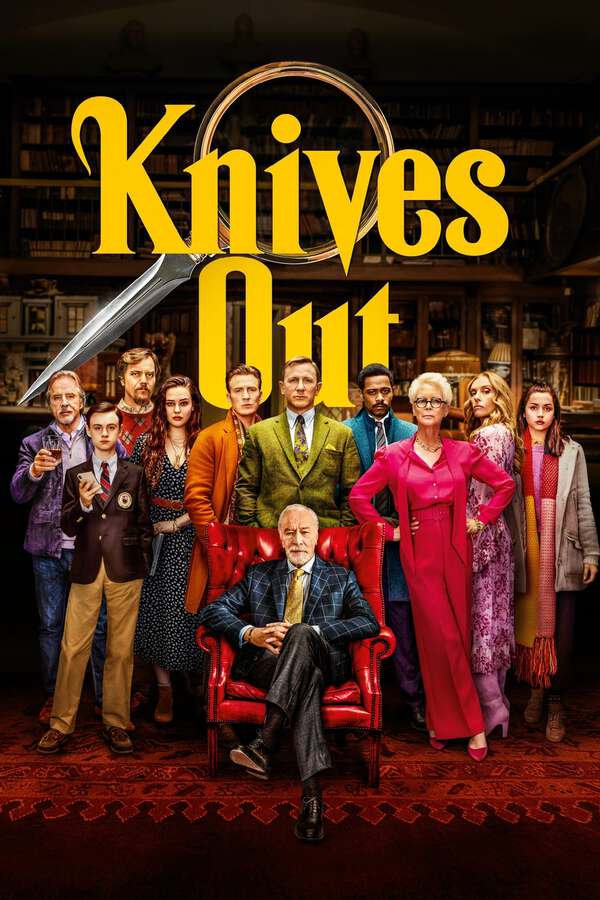
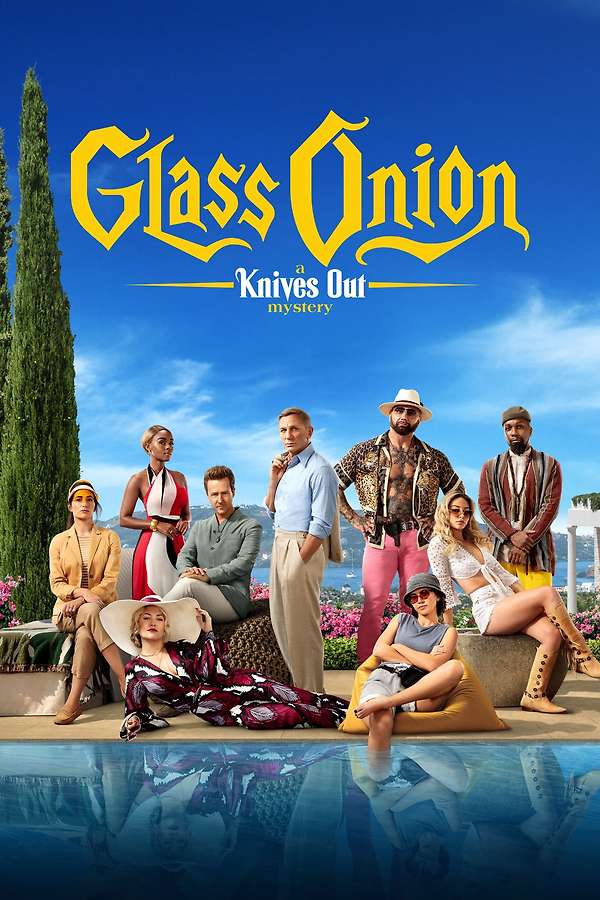
Watching the sequel the other day led us to a rewatch of the original. I see I only gave it three and a half stars (though no comments) in 2019. I’d probably tend toward four now, because I’m feeling more generous.
A murder mystery. If it wasn’t for alliteration, would that be such a popular genre?
The Perfume Burned His Eyes by Michael Imperioli (Books 2022, 32) 📚
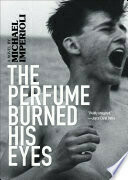
As any fan will realise instantly, the title of this comes from Lou Reed’s ‘Romeo Had Juliet’. So that’s going to draw my interest right away. Then from the blurb we learn that Lou himself is a character in the story.
Turns out it’s a kind of coming-of-age novel about a seventeen-year-old boy from Queens in 1976 or so, who moves with his mother to Manhattan, and into the block where Lou Reed is also living. The boy, Matt, becomes something of a friend/assistant to Lou for a while.
In a parallel narrative, Matt falls for a girl at his new school, who might be involved in some withcrafty kind of stuff. It’s not obvious exactly how the timelines of the two strands relate, but things come to a head — or a couple of heads, you could say.
The book closes with a chapter entitled ‘Afterwords’ (note the plural) in which the narrator — or the author — writes after Lou’s death. This section makes it seem as if the early section was based on real events. The author is a successful actor, so who knows?
I want to quote this from that last section, about Lou’s music, because I love it:
And more than anything else, it was punk. Which should come as no surprise since you were its creator. I don’t care what Detroit says, you were doing it when Iggy was a mere Osterberg and Kramer was trying to figure out who the other four would be. As for the lads from my neck of the woods (famous for their “One, two, three, four” count-off and three power chords) who are considered by some as the progenitors of the movement… well, that just makes no sense chronologically or otherwise. Not to mention (but I will) that they basically wrote the same song over and over again. And however great a song it may be, it renders deep catalog cuts redundant. Sorry, kids, I guess you had to be there—on the Bowery when it happened. But I wasn’t.
And the same goes for the little London boy. Just the first few sentences you speak to the audience on Take No Prisoners relegates John-John to a corner with some crayons and a finger up his nose. The revolution you started was one of art and intellect. It inspired the defeat of tyranny in Czechoslovakia, for Christ’s sake. God save the queen, indeed.
‘The little London boy.’ 😀
Something about the length, the writing style, and the age of the narrator, suggests that this book should or would be considered young-adult (YA). But the Lou Reed connection makes it much more likely that people in my age group will be drawn to it. I don’t know what that means.
I enjoyed it, anyway. And it was a Christmas present from my daughter.
Nothing Compares, 2022 - ★★★½
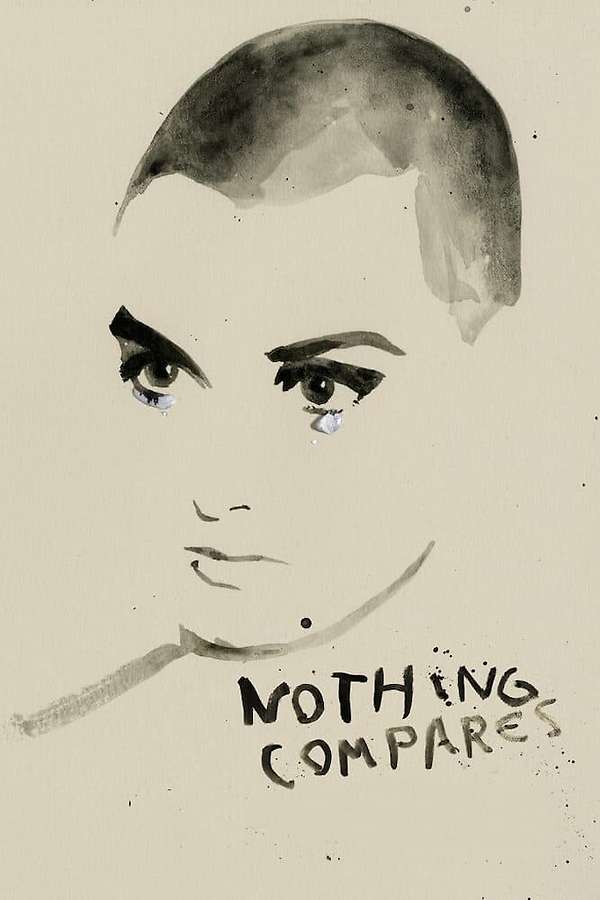
Great documentary about the wonderful Sinéad O’Connor.
A bit light on her music, mainly having fragments of live performances and TV appearances like Whistle Test and Top of the Pops.
I was assuming that was because they couldn’t get the rights, and at the end they said in a caption that Prince’s estate had refused to let them use the near-titular ‘2U’ track. Which is a bit wanky of them.
The Grand Budapest Hotel, 2014 - ★★★★
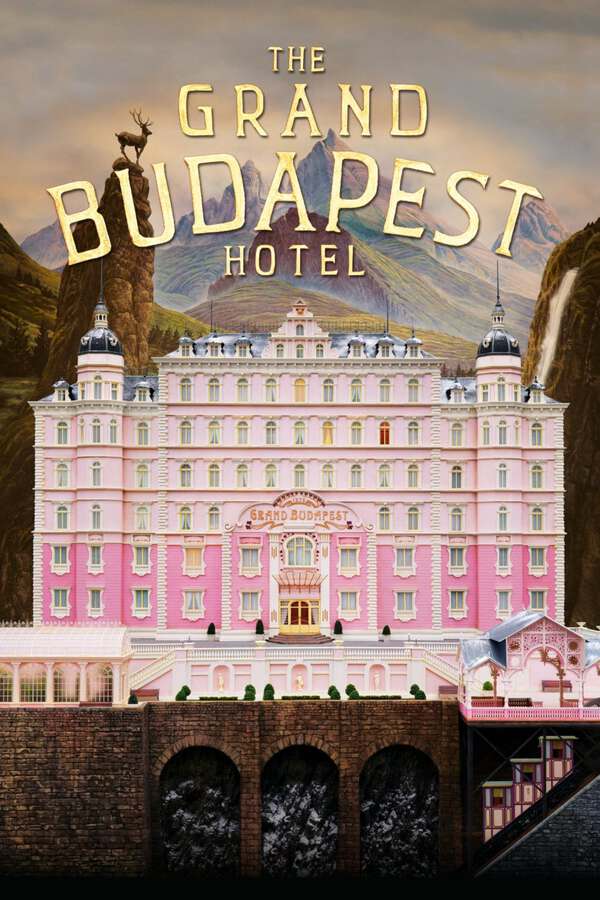
So after downgrading this the last time we watched it as a family, a Boxing Day re-rewatch leads me to boost it back up to four stars.
Mood and state of mind can have a large effect on enjoyment, clearly. Who’d have thought?
Rocannon's World by Ursula Le Guin (Books 2022, 31) 📚
I’m quite pleased to have read as many as 31 books this year. Not sure quite how I’ve managed it, what with writing my own, and starting a new job, and all. Partly a lot of rereading of page-turners, of course.
Le Guin’s Rocannon’s World was not a reread for me, though I’ve had it on my shelf for years. Bought second-hand, I’m sure, I don’t recall where or when, but it’s an edition from 1978. And it’s a super-slim volume. It probably wouldn’t be classified as a novel at all, in today’s publishing world. It’s kind of a slight story, about a person from an advanced species — an Earth-human, essentially — getting stranded on a planet at bronze-age levels of technology, with various species of native humanoid.
The titular Rocannon has to make his way across the world to find the other high-level aliens who have caused him to be stranded, avenge himself, warn his people about their aggression, and maybe try to get rescued.
It’s not bad, but it’s maybe most notable for being, I believe, the place where Le Guin first used the term Ansible for a faster-than-light communication device. She went on to use it in many other novels, and other SF authors adopted it.
And now it’s also the name for something in IT automation. Infrastructure as code. Of which concept, though not Ansible, more later, probably.
Twenty Years Without Joe
I missed posting this yesterday, what with one thing and another. Twenty years ago yesterday, the 22nd of December 2002, my friend Tony texted me and the other members of our then-band, Burn, to the effect:
Nooooooooo!
Strummer’s dead.
I was at work, and immediately googled for the story. Joe Strummer, dead at 50 from an undiagnosed heart defect. We didn’t hear the reason at once, of course.
I wrote The Death of a Hero at the time. Not much has changed, in some ways. I still play his music, both The Clash and his solo stuff. I sometimes wonder what he’d have to say about the times we live in now.
Hard to imagine he’d have been 70 this year. Such is life, and death.
Illuminations by Alan Moore (Books 2022, 30) 📚

It’s amusing, this one coming straight after this year’s behemoth, since the last book I read by Moore was a similar year-spanning (and reading-year-consuming) monster.
This one, however, is much more straightforward and shorter read than Jerusalem. It’s a book of short stories. Or more accurately, a book containing some short stories and one that is more or less long enough to be a novel on its own.
That one — ‘What We Can Know About Thunderman’ — is a fractured history of the US comics market. It tells of the two big companies — American and Goliath — and a few smaller ones that mostly got gobbled up over the years. American famously has the eponymous Man of Storms as its most famous character, along with King Bee, Moon Queen, and many more.
We get the stories of how various young fans attend conventions and end up as professionals, and what happens to some of them afterwards. But why are some odd things happening to people who work for American?
That one’s the centrepiece, but I think my favourite might be ‘American Light — An Appreciation’. Subtitled as ‘by C. F. Bird’, it presents an annotated version of a poem, the ‘American Light’ of the title, by a beat poet called Harmon Belner. In 26 pages and 86 footnotes, Moore manages to give us a pretty good beat poem, and tell parts of at least two life stories. You’ve got to read all the footnotes, though.1
The other stories are good, too. ‘The Improbably Complex High-Energy State’ takes place in the first femtoseconds of the universe.2 ‘Location, Location, Location’ is the story of an estate agent and her client after the world has ended.
Highly recommended.
Falling for Christmas, 2022 - ★★½
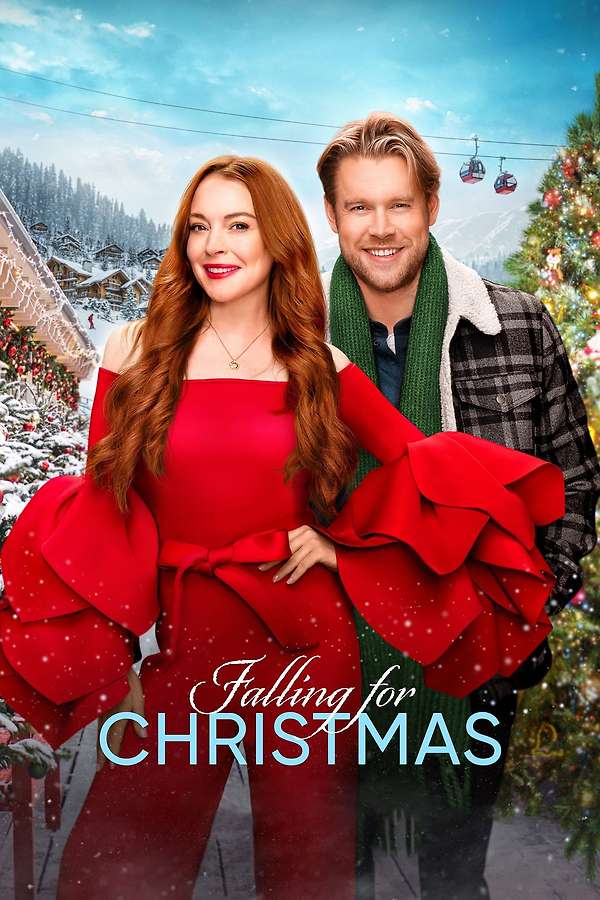
Daft but fun Christmas-based romcom. All the ingredients you could want are here.
The Silencers, 1966 - ★½
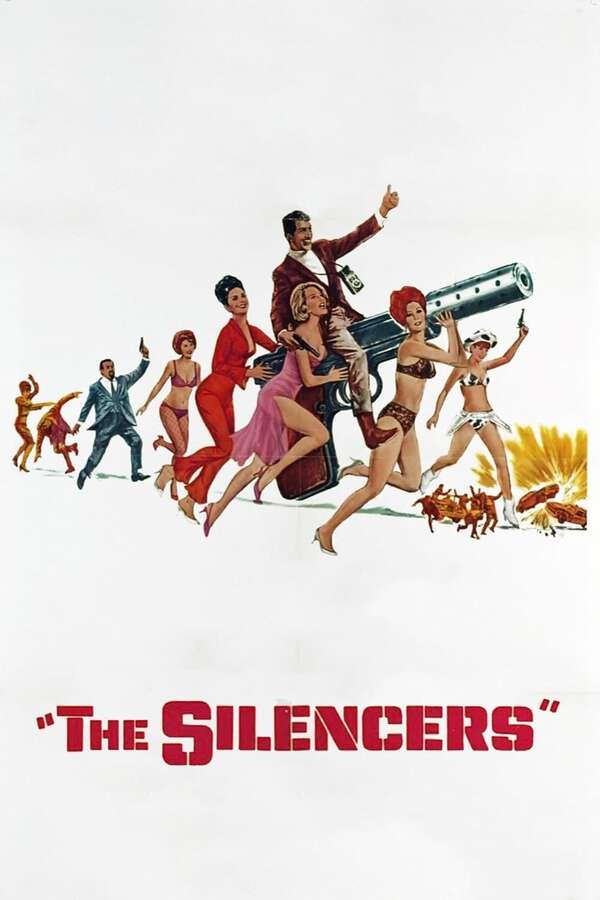
When I was a little kid my family used to go on holiday to Millport, on the Isle of Cumbrae, in the Firth of Clyde.
We didn’t go to the cinema often, if ever, back then. But Millport had a small cinema, and we always went once or twice when on holiday.
I don't recall any of the films we saw in the four years we holidayed there. What I do remember is the film posters, because they were always there, so I saw them year after year. And unusually, they were round the walls inside the auditorium. So while you waited for the lights to go down, you saw adverts for films that once shown there.
It's where I first heard of the Dollars trilogy. Only the first two then, in a double poster for A Fistful of Dollars and For a Few Dollars More. When Eight Bells Toll. I think Ice Station Zebra.
And one called Matt Helm Gets it in Denmark. I eventually saw all the others, but not that one. As I got a bit older, if ever the name came back to me, I wondered what kind of ‘getting it’ the title referred to. I probably kind of looked like an adventure film, so it was probably more likely to be a threat to his life, than any other interpretation. But the entendre was clearly double.
I recently found that our Roku has a strangely-named channel called ‘Movieland Tv’ [sic as far as the lowercase ‘v’ goes]. I had a poke around, and it seems to specialise in old movies from the 60s and 70s that are not what might now be called classics. Though there are a couple of Bond films: Thunderball (the first Bond film I ever saw) and Diamonds are Forever.
But I came across one called The Silencers. The blurb described it as ‘The first Matt Helm movie’. Well! Here was the mysterious figure from my childhood. If not getting it in Denmark, then at least in danger of being silenced. The blurb also told us he was an agent who’d got out of the game and his superiors wanted him back.
Fair enough, sounds like it could be OK, and I fancied something like a spy film tonight.
The first surprise was the star: Dean Martin. Now, that poster back in Millport might have shown his name in large type, and if it did you’d think the collision of his last name with my first would have stuck with me. But if so, that fact is lost in the mists of memory.
After an opening where four hit men are given bullets with ‘Matt Helm’ written on them, it starts with a woman dancing. And, basically, stripping. It’s obviously trying to be like a Bond opening scene, but, way sub-even-that-standard.
And then another woman starts singing, and the credits include original songs by Elmer Bernstein, and a choreographer. Is this a musical?
Well, no, but if you’ve got Dean Martin in the studio, you’d be daft not to get him to sing a bit. Which he doesn’t do in character, but does in a couple of scenes in voiceover, in effect. Oh and there’s a joke with Sinatra coming on the radio and Helm saying, ‘Turn that off, I can’t stand his voice.’ They retune, and a Dean Martin song comes on, and he says. ‘Now this guy can sing.’
I know, it’s not much of a joke.
It's a daft spy romp, and from Helm’s amorous adventures, I think it's now clear which kind of ‘getting it’ will be happing in Denmark. Though probably a bit of both.
I'm giving it one star for making me laugh several times, though mainly at the ridiculousness. And half a star for the fantastic mobile bed. Why move to answer the phone when you can flick a switch and have your bed rotate you to where it is? And when you want to have a bath, just let your bed take you there and drop you in.
Honestly, that bit wouldn’t have been out of place on Tracy Island.
Other than that, it’s complete mince.
The Books of Jacob by Olga Tokarczuk, Translated by Jennifer Croft (Books 2022, 29)
I am unreasonably happy about having finished this before the end of the year. I started reading it at the start of the year. In fact, possibly before the start of the year, since it was a Christmas present.
Of course, I’ve read 28 other books while intermittently dipping into this behemoth, something I alluded to once or twice.
It’s a historical novel set in the middle and end of the 18th century, telling the story of Jacob Frank, a Polish Jew who led a cult, or alternative religious community if you prefer. He converted to Islam, then to Catholicism, taking his followers with him on the second of those changes. But they remained ‘true believers’, treating Frank as the true Messiah.
It took me so long to read partly because it’s so long, and certainly not because it was uninteresting. In fact it’s surprisingly compelling, considering the subject matter. But it is complex. Not least because of all the Polish place names and names of people. The latter is compounded when they get baptised into the Catholic church. They take on new names, so now most characters have two sets of names.
I got a surprise when I first picked up the book to find that it’s numbered backwards. Chapter 1 of Book 1 starts on page 892. The story ends on page 27. (There are some notes and blank pages after that.) At first I thought I might have to read it ‘backwards’, but no: the story proceeds in the direction I’m used to. It’s just the numbering.
I wondered if this was a reference to the direction of Hebrew writing, and Tokarczuk’s note at the end confirms that it is,
as well as a reminder that every order, every system, is simply a matter of what you’ve got used to.
Which is fair enough. I quite liked knowing how many pages I still had to go, with having to subtract. Especially as I got near the end.
Coincidentally, in the last couple of weeks I read this in ‘Shift Happens’, a newsletter about a book about keyboards:
(in Poland and parts of Europe, books have their tables of contents at the end, and so will mine).
Which isn’t the case here, but I thought it was an interesting slightly-connected idea.
It’s a huge work, in more ways than one, and also an incredible example of the translator’s art.
Next Songs, Elon Musk, and Joe Strummer
Since Musk’s takeover of Twitter has been confirmed, there has been a lot of chatter about free speech. Musk, we are told, describes himself as a ‘free speech maximalist’, and there are fears that he’ll have Twitter reinstate the accounts of Trump and other white supremacists.
But I’ve been thinking about Joe Strummer.
More specifically, I’ve been wondering why his ‘The Road to Rock ‘n’ Roll’ was popping into my head so often. It wasn’t a problem: getting an earworm of a song I like doesn’t bother me. But I wondered what was triggering it.
I can often work out why I get a song in my head. I knew, for example, why I often had The Clash’s ‘The Prisoner ' in my head through the summer. The words ‘The Prisoner ' are written on the whiteboard in our kitchen, along with the titles of the other serieses we’re watching.
And in fact I sing ‘The Prisoner’ every time I hang out the washing, owing to its line referring to ‘hanging out the washing and clipping coupons and generally being decent.’
It clicked today, though. You know how — if you’re an old-school album listener (or just old) like me — when you play an album, one track’s ending often triggers the expectation of the next? So that, when you hear a song in isolation, on a playlist or on the radio or something, and the wrong song plays next, it can be quite jarring?
The song before ‘The Road to Rock ‘n’ Roll’ on Rock Art and the X-Ray Style is ‘Techno D-Day’. Joe’s celebration of illegal raves ends with the line, ‘And this is about free speech!’
So it turns out my head was just playing the next song whenever the phrase came up.
The Ink Black Heart by Robert Galbraith (Books 2022, 28)
And so I circle back and reread the book I read just over a month ago.
This has been a most enjoyable experience, reading through the whole series. Rereading this one so soon was an excellent opportunity to see if I could spot any clues that I missed the first time (certainly one or two).
The apparent logical jumps the characters make at the climax made more sense this time, so that was good.
Excellent stuff. I look forward to the next one.
The Banshees of Inisherin, 2022 - ★★★★
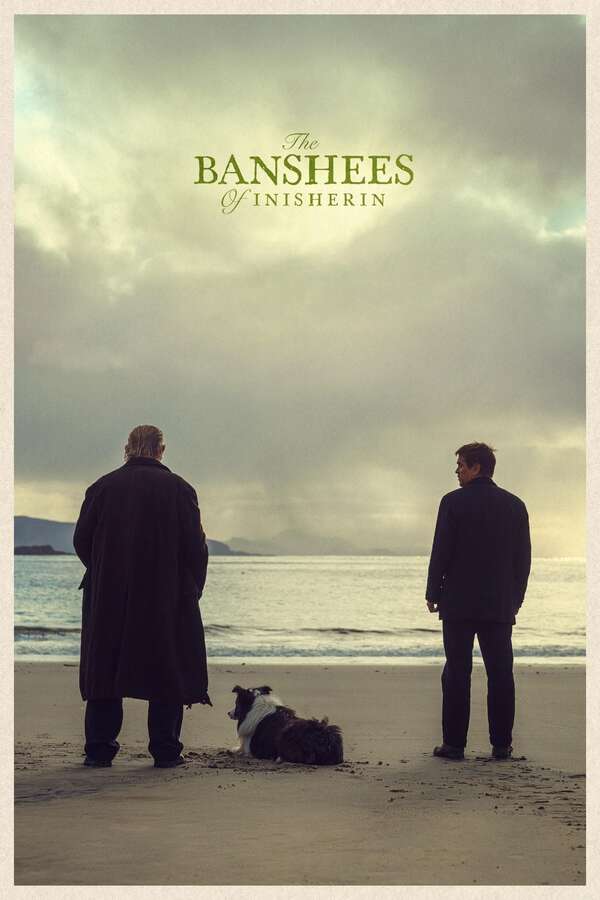
Martin McDonagh’s latest is sad, hilarious, tragic, and true. Or feels like it could be true, even if some of the decisions characters make are baffling, to say nothing of gruesome.
On a rugged, beautiful island off the coast of Ireland in 1923, with the civil war going on on the mainland, two friends fall out. Or rather, one says he doesn’t like the other any more. A whole sequence of events flow out from this simple, almost child-like choice.
The funniest part happens when one of them goes to confession.But that’s only to be expected: confession’s a pretty funny kind of thing, when you think about it.
(Updated 2022-12-11 at 18:47:58)