
books
📚 Books 2024, 25: The Bridge of San Luis Rey by Thornton Wilder
Finished reading several weeks ago, in fact. I’m way behind with the change of year.
Anyway, this is an odd little book. I stress the ‘little’ because it’s very short. We’re in Peru. An ancient rope bridge, of Inca origin, collapses one day, killing the five people who were crossing it. A priest, Brother Juniper, witnesses the event and decides to use it to prove God has a plan for humans.
The narrator, however, tells us that Juniper’s eventual vast book on the subject was derided, destroyed, and in any case incomplete. The narrator knows things about the people that Juniper never learned. How the narrator knows these things is never stated — we might assume it’s because the narrator is also the author, though that’s rarely a safe assumption.
That’s the start. The rest of the book consists of the stories of the victims and how they came to be there on that day.
It’s good. Won the Pulitzer.
📚 Books 2024, 24: A Jura for Julia by Ken MacLeod
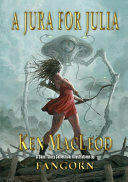
Short stories by Ken 📚. I mentioned this in my Nineteen Eighty-Four post, since the first and last stories are inspired by Orwell’s novel. The last being the title story.
Both they, and the others, are very good. Ken’s usual concerns are here, of course: the future, politics, Scotland, and more.
Also the cover and internal illustrations are by Fangorn. Highly recommended.
📚 Books 2024, 23: Death's End by Cixin Liu, Translated by Ken Liu

I laugh gently at my past self, musing that this volume, based on its title, might have a less bleak universe-view.
Reader, it does not.
In fact, that’s the thing I liked least about this whole trilogy, the dark view of the universe, of sentience. The idea that every species that develops intelligence and advances to the point of thinking about space travel and the idea of possibly communicating with other intelligent species; that they would all have a xenocidal1 instinct. Have it, and routinely, casually act on it, by wiping out the star systems of other species they detect.
I’m not saying it couldn’t be so. As one explanation for the Fermi paradox it’s exactly that: one explanation. But it’s just too fuckin bleak for my tastes.
Otherwise, this story, and the trilogy as a whole, is jam-packed with ideas, stuff about relativity, higher and lower dimensions, all sorts of good hard-SF stuff. The characters are kind of blank, undeveloped: I don’t think they’ll be sticking in my memory. But I enjoyed it overall.
Apart from when I was annoyed/disturbed/upset by the dark forest idea.
Your central idea: I do not like it.
-
The word is Orson Scott Card’s invention, but/and it’s a good one. ↩︎
📚 Books 2024, 22: The Dark Forest by Cixin Liu, Translated by Joel Martinsen
This is somehow much less obscure and strange than the first one. I don’t know how much that is to do with it having a different translator, but it’s possible. The third one is back to Ken Liu, who translated the first one, so maybe we’ll see.
The other odd thing is that when I added this to Micro.blog’s Bookshelves feature, it came up with a subtitle I’ve never heard of before: ‘Remembrance of Earth’s Past, #2’. On the book’s title page, and in any other discussion I’ve heard of, it’s always referred to as ‘The Three-Body Trilogy’.
Getting to the story itself: perhaps the least believable thing about the whole thing is the idea humans could be convinced to believe that an alien invasion force was on its way to Earth and would arrive in 450 years. To believe and act toward resisting the force or ameliorating the situation by escaping or anything else.
I mean, in the real world we can’t even get people to believe in, get governments and businesses to act on, the climate emergency, and its effects are visible day by day.
The climate is largely ignored in this book, as well, though in the latter part, set two hundred years after the start, we see some extreme desertification in China.
It’s pretty bleak in places, in its philosophy, this one; especially as regards the Fermi paradox, or a solution thereto. But it leaves us at a point where I’m thinking, ‘Where now? That feels like a decent ending.’
But Death’s End (great title, and potentially a much less bleak philosophy, if it matches the title) is sitting waiting, all 700+ pages of it. Why does each volume of a trilogy tend to be longer than the one before?1 So we’ll see where that takes us.
I enjoyed this. There’s a lot of telling, and the characters maybe aren’t very clearly differentiated, but it’s full of ideas.
-
Not the ur-trilogy, The Lord of the Rings: a large part of The Return of the King was appendices, making it the shortest of the three. ↩︎
📚 Books 2024, 21: The Three-Body Problem by Cixin Liu , Translated by Ken Liu
Spoilers below.
This is a really strange book. I know it’s probably cultural differences in storytelling style, and what have you. But there is something deeply odd about the way this is told. I can’t quite put my finger on what it is (and at least part of it will be to do with the translation).
At a plot and character level, one thing that surprised me is that when someone starts seeing unexpected visual effects — specifically, a countdown timer superimposed on the world around them — they don’t ever seem to think that the explanation is they’re actually in a simulation. That would seem like the logical first attempt at an explanation, given the recent history of SF and indeed discussions outside of it.
We never learn what was meant to happen at the end of the countdown. And (not connected to that) the character we’re first sympathetic to betrays all of humanity!
I liked the early parts about the Cultural Revolution in China. They linked surprisingly well into my recent Nineteen Eighty-Four deep dive. Which is amusing because not long ago I read something about someone encouraging someone else to read this, where they said you just had to get past that part to really start enjoying it.
I did enjoy it, mind. I went right out and bought the sequels and have started The Dark Forest. I just find it weird. And there’s nothing wrong with that.
This is actually a reread, but it’s nearly a decade since, and I only remembered two scenes.
1984: A Year With Gravity
Ministry of Plenty
It’s 2024. It’s 40 years since 1984. So I guess that’s why there have been a lot of things turning up that are related in one way or another to George Orwell’s Nineteen Eighty-Four1. It’s considerably more than forty years since the novel was published: more like 75 years. Which is a memorable enough number in itself.
At Worldcon in Glasgow in August, the last panel I went to was about the book. People discussing when they had first read it, how it had affected them, the effects it had on literature and culture more broadly, and so on.
Then a few weeks later the podcast of the BBC Radio 4 programme In Our Time dropped into my feed, with an episode about it. It was described as a ‘summer repeat’. I assume the programme is off the air but they like to keep the feed fed. It was originally broadcast in 2022, so nothing to do with any anniversaries in this year, but no matter.
All of this served to remind me of two things: one, that it was high time I read it again. And two, since read it in my teenage years and never since, I had shamefully never quite read all of it. Because there’s that bit in the middle where Winston is reading ‘The Book’, as it’s called. And when you’re fourteen or fifteen that can seem terribly dull and easily skippable.
Also at the convention2 I picked up a copy of Ken MacLeod’s new collection, A Jura for Julia. You might guess from the title that there’s some sort of connection, what with Julia being the only female character in the original book, and Jura being where Orwell spent the last months of his life writing it.
And indeed, the collection is bookended by two connected stories comprising a sequel to Orwell’s novel.
So I was going to revisit the original and then read Ken’s stories. But I realised I didn’t actually have a copy. I think I read it from the library all those years ago. We got our son a copy at some point, but that’s either with him or in a box in the basement. So I decided just to buy a new one.
While I was in Foyles I noticed another connected work: Julia by Sandra Newman. I remembered reading about this when it came out and thinking I’d like to read it. It’s a retelling of the story of Nineteen Eighty-Four, from Julia’s point of view. It came out last year, so I’m sure author and publisher had anniversaries in mind, and there’s nothing wrong with that.
Not Forever
So what about these books, then?
There are two things Ingsoc got right, I mention in passing: going over properly to the metric system — which leads to the oddity of a prole barman who has never even heard of a pint — and going to full use of the twenty-four-hour clock, giving us that famously startling opening line about the clocks striking thirteen.
Not much else, though. It’s a bit odd thinking about it now that the ideology is called ‘English Socialism’ when the geopolitical bloc Airstrip One is part of, Oceania, is clearly dominated by America. The renaming of the UK makes that clear. And indeed, the switch to decimal measurements and twenty-four-hour time are even stranger, given how America in our world is the biggest holdout against those.
I suppose the ‘English’ in ‘Ingsoc’ could mean the language. But a socialism dominated by America? Something that calls itself socialism, at least: it’s no more socialism than Germany’s ‘National Socialism’ was.
I’ve said before that I dislike dystopian fiction as genre or background to stories. I wonder if that dislike was caused in part by early inoculation with this work. But what I found really weird about reading it after all these years is how weirdly cosy it all felt. Maybe it’s just because I knew what happens; maybe because there are these sequels by other hands to consider; or it could be somehow inherent in the writing. But I had no real sense of bleakness, nor even of menace. Strange, really.
It is, of course, a tragedy, among other things. Winston and Julia know that they’ll be caught by the Thought Police and taken to the Ministry of Love eventually; but they believe that, whatever they have to go through, there will be a core of them, deep in their hearts, that will survive, uncorrupted, undefeated. I was reminded of Evey, in Alan Moore and David Lloyd’s V for Vendetta. About how you’ll survive — maybe win — as long as they can never reach that last half inch of you (I write from probably inaccurate memory).
That turns out not to be true for Winston and Julia, as they each betray the other. O’Brien’s assertion that ‘We will empty you out and fill you up with us’ proves true; and the novel closes with Winston loving Big Brother. There is no hope. A boot stamping on a human face.
Except, then we get the appendix. It tells the story of Newspeak, and does so wholly in the past tense, describing plans the party had for the minimal, stripped-down language. How it was expected to limit the capability for thoughtcrime — for thought itself — in the populace forced to use it. But it is presented as if it were an academic work, part of a history of the Big Brother times in what was then called Airstrip One, and is now called Britain again.
Hope in an appendix. I like it.
Keeping it Short
So we come to the first sequel I want to speak of, which is composed of Ken MacLeod’s two short stories. ‘Nineteen Eighty-Nine’ picks up on Winston’s story. He’s taken from the Chestnut Tree café thinking he’s finally going to be killed. But in fact it’s the revolution. Big Brother and the party are overthrown. Winston is to be Minister of Truth in the new government.
And then in ‘A Jura for Julia’ it’s a decade or two later. Julia is a researcher in ‘computational literature’, mechanical writing. She used to be a mechanic who worked on the machines that created cheap novels for the proles. Now she’s an academic studying the technology behind the machines. She travels to Jura because she has heard there is an important link there to the history of the machines. What she finds ties her story and Winston’s together with Orwell’s in a fascinating way.
A Woman’s Perspective
I hadn’t heard of Sandra Newman before Julia, but she’s written several books, and been nominated for various awards. This one is authorised by Orwell’s estate and tells the familiar story from Julia’s perspective, expanding it both in worldbuilding, character, and time.
It’s a much richer story than Orwell’s, in that Julia’s character is dramatically expanded from the original, and we learn a great deal about the society, or the various societies that exist in Airstrip One. It’s all well done, very convincing, and completely in keeping with the original. There’s nothing added that couldn’t have been imagined in Orwell’s time.
Julia the character is not much more than a cipher in the original, and here she has a rich inner life, and is wonderfully and believably changeable.
One chapter opens with the line, ‘She was in Love.’ Which jars you for a second, because the previous chapter ended with her and Winston’s arrest. Till you remember that she refers to the ministries just by their key words: ‘Truth’ for the Ministry of Truth, and so on.
It takes us to a an ending not so very different from MacLeod’s but perhaps a more ambiguous one.
And that’s enough Nineteen Eighty-Four for a while, and enough 1984, too, though it strikes me that the novel I’m writing at the moment is set then. It’s a year that still has a massive gravitational pull on the imagination.
📚 Books 2024, 20: Julia by Sandra Newman
As I said about Nineteen Eighty-Four itself, a bigger post is coming.
📚 Books 2024, 19: Nineteen Eighty-Four by George Orwell

I’m going to write a bigger post about all the Nineteen Eighty-Four -related things I’ve read, listened to, or attended recently, and I’ll link to it here when I do.
📚 Books 2024, 18: Nova Scotia Vol 2: New Speculative Fiction from Scotland, Edited by Neil Williamson and Andrew J Wilson

If there’s a record for the longest gap between volumes of a series of collections, I think we all know that there’s only one real contender. Though to win it, JMS’s The Last Dangerous Visions will have to actually be released (which, at the time of writing, is scheduled to happen next month, amazingly).
Second on the list, though, might be Nova Scotia. The first volume was published in 2005, to more-or-less coincide with the second Glasgow Worldcon. Nineteen years later all is well, as Volume 2 is published to more-or-less coincide with this year’s Glasgow Worldcon.
And it is again, very good, and very varied. I’m not going to go through the stories, but it struck me that three of them concern someone being resurrected — woken from cryogenic stasis, or reconstructed from DNA and memories — in a future that might not be quite what they had expected or hoped for. A couple of others include bringing back extinct species, or sentient life coming to entities that are not (to the best of our knowledge) sentient at present.
I doubt the stories were chosen deliberately to have those connections. Rather, perhaps this is how our current end-of-the-world fears are playing out: in fantasies of technological afterlives. Not that such stories are particularly new, but maybe they’re particularly now.
Notable contributors: Ken McLeod, of course, Scotland’s premier living SF author. James Kelman, surprisingly: as one of Scotland’s best-known literary authors, it’s pleasing that he’d lower himself into our genre murk. Grant Morrison, Scotland’s best known comics writer, I imagine. And plenty others.
📚 Books 2024, 17: The Library of the Dead by TL Huchu
I saw Tendai (as is his name) interviewed at Worldcon last month. Went along without knowing anything about him or his writing, and the interview was interesting enough that I went and bought this in the dealers' room immediately afterwards. Or maybe the next day, but you get the idea.
It’s the first of the Edinburgh Nights series, which I think is currently at three books with a fourth on the way and a fifth planned. Which means it kind of violates one of my personal guidelines to have bought it, but what the hell, you know?
Anyway, it’s set in an alternative Edinburgh where there’s magic. The time is approximately the present day, because there’s things like smartphones. But our heroine, Ropa, can talk to ghosts, which tend to hang about when they’ve got unfinished business back on the plane of the living.
And a whole lot more happens besides. It’s a pretty bleak environment that she lives in, essentially a shanty town of caravans on the edge of the city, very much hand to mouth. It feels kind of post-apocalypse, but I don’t think there’s been anything quite as disastrous as that, just a slow decline. Not sure, though, there are hints at things. It’ll be interesting to see where he takes it.
As far as the ‘Don’t start a series that the author hasn’t finished writing’ guideline goes, it’s pretty standalone, thought with plenty of setup for more.
📚 Books 2024, 16: Case Histories by Kate Atkinson
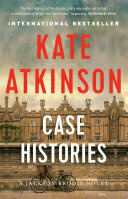
I mentioned in the last books post that I’ve seen the Jackson Brodie TV series. Well, maybe not all of them. I enjoyed the latest book in the series so much that I thought I’d go back and read the earlier ones. This is the first, and the story was completely unfamiliar to me.
It was also surprisingly horrific. It starts by setting up three ‘case histories’, with three stories of crimes at different times in the past: a young girl disappears; a young woman is murdered; another young woman murders her husband.
Then we’re introduced to Jackson Brodie: divorced and trying to co-parent a young daughter and carry on his life, while also trying to run a private detective agency in Cambridge, a city he hates.
Somehow, all these cases are going to come together and get solved. As I said about the latest book, though, it’s clear that Atkinson’s writing about the minutiae of the human heart, far more than the minutiae of detective work. And that’s OK.
It’s an enjoyable, easy read — well, apart from the gruesomeness and tension of the first three chapters — and intriguingly it ends as if Brodie’s career is over. I don’t know if she planned to write sequels, but clearly something must change.
📚 Books 2024, 15: Death at the Sign of the Rook by Kate Atkinson
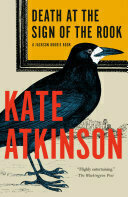
I’ve read several of Kate Atkinson’s books, but never one of her Jackson Brodie detective series. This despite having seen the TV adaptations. So getting this as a birthday present was great.
We’re promised a murder mystery set against the background of a country house hosting a murder-mystery party, and that’s what we get, eventually. I really enjoyed it, but if anything I’d like her to spend more time with the titular detective.1 But we get various viewpoint characters, and really very little from Brodie’s viewpoint. Very little actual detecting, too.
Indeed, I got the impression that Atkinson doesn’t really want to be writing a detective story. Or she does, of course, but she’s so keen on multiple viewpoints and character creation — and so good at them — that those are the things she’s doing, more than writing a conventional story of a detective solving a mystery.
Nothing wrong with that, of course, you can tell any story you want, any way you want, and why be bound by conventions?
-
Not really titular: Brodie’s name doesn’t appear in the title, after all. ↩︎
📚 Books 2024, 14: The Last Dark: The Final Chronicles of Thomas Covenant, Book 4 by Stephen Donaldson
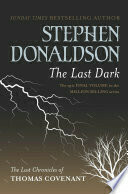
When the final chronicles were first announced, and indeed on the first two books, it was referred to as a trilogy. I assume that the third volume just became so long that the publishers, and probably Donaldson himself, decided it needed to be split in two. Each of the third and fourth volumes is about the same length, anyway.
And they bring everything to a satisfying conclusion, that’s the main thing. Of course Linden hesitates, and Covenant resists using wild magic (but not to the extent he once did). Of course Donaldson uses fifty words where fifteen would do. Of course his writerly tics come through.
But the pages keep turning, and old friends and enemies turn up, and Wild Magic, Law, and Earthpower do their things, and we all leave satisfied.
📚 Books 2024, 13: The Legend of Luther Arkwright by Bryan Talbot
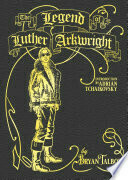
I didn’t even realise there was a third (and final?) volume in Talbot’s Luther Arkwright chronicles. Until friends mentioned it at worldcon.
I ordered it immediately. It’s really good, right up there with the earlier ones. In this there turns out to be an even more highly-evolved, more powerful human than Arkwright and co. And they do not have the best interest of anyone but themself at heart.
📚 Books 2024, 12: Against All Things Ending: The Final Chronicles of Thomas Covenant, Book 3 by Stephen Donaldson
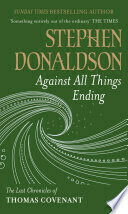
Not going to say much about this here, as I’m already well into the next (and final) volume, and they’re very much a single story.
📚 Books 2024, 11: The Crow Road by Iain Banks
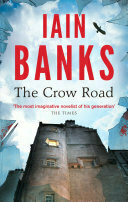
You will, I think, be far from surprised to learn that this is a reread. At least the third read, in fact. I suggested it as a possibility for my book club, and when it wasn’t chosen I decided it was time anyway.
There are still books that should be in The Great Banksie Reread that I’ve only read once: Stonemouth and The Quarry. But I’ll get to those eventually.
One oddity about The Crow Road is that I’ve never blogged about it before. Yet I’ve loved it since I first read the opening line, at a convention in Glasgow in 1992, if memory serves.
‘Just read the opening line and you’ll buy it,’ my friend Steve said, when I was hesitant about shelling out the huge £10 price for the hardback. I had already read all of Banks’s earlier books, so I was definitely planning on getting it, but waiting for the paperback was the norm.
‘It was the day my grandmother exploded.’ Steve was right. I bought it, and all he subsequent books, in hardback.
Memory does serve, but not all that well: I’ve written all that before, it turns out, after Banksie died. Though it remains slightly unclear which convention it was that year.
A book is more than its opening line, though. The Crow Road is a family drama, set mostly in a fictional Scottish town not far from where I grew up. Also in Glasgow, a non-fictional city where the titular road exists. The metaphorical one is everywhere, of course: it means death, in the vernacular of that exploding grandmother.
I read it with more of a writerly eye this time, I think, and I wondered whether the structural games really add anything to the whole. I don’t mean the parts that are effectively speculative: the main character, Prentice McHoan, trying to work out what might have happened to his missing uncle. Nor the flashbacks in third-person, when the main narrative is in first. That makes sense, as they’re showing us Prentice’s childhood, or things that happened to other family members when Prentice wasn’t there.
I’m more thinking about a couple of flashes forward, that hint about where the main narrative is going to go. They aren’t enough to really make the reader speculate, and they happen when we’re already well into the story, so they aren’t needed to make us keep going.
They do no harm, though, and maybe Banksie needed to use them to keep his own interest up. And there’s nothing wrong with them, or that.
I do find it hard to explain why this book is so compelling. I think it’s probably his best non-SF book. It’s probably not quite my favourite, though it’s up there. I’ve long thought it was partly cultural for me, in that the characters and locations feel like people and places I knew growing up. But that can’t explain its broader appeal.
I guess Banksie was just a great writer.
📚 Books 2024, 10: Beyond the Light Horizon by Ken MacLeod

Ken finishes his wonderful Lightspeed Trilogy with a flourish. Not all the problems are solved or mysteries explained, but that’s life. All the main characters get good conclusions. And a yellow submarine in space is still an astonishingly cool idea.
📚 Books 2024, 9: Trust by Hernan Diaz
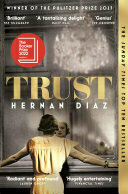
Forget I hadn’t posted about this. I finished it almost two weeks ago. The latest book-club book, and not the sort of thing I’d choose normally. It’s the story of a financier around the time of the Wall Street Crash in the 1920s, told from four different points of view. Which one do we trust? (See what he did with the title?)
It’s pretty good, but nowhere near as good as the praise heaped upon it by reviewers, as quoted all over the cover, would suggest.
📚 Books 2024, 8: Some Desperate Glory by Emily Tesh
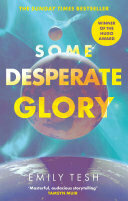
Actually finished this a few weeks ago, and forgot to write about it. I don’t know why, because it’s absolutely fantastic. Space opera of the biggest scope, yet a tightly-focused character-driven story, and a bildungsroman.
The Earth has already been destroyed when we start reading. Our heroine, Valkyr, or Kyr for short, lives on humanity’s last outpost (or is it?), where they train for revenge.
But there’s so much more to it than that.
📚 Books 2024, 7: My Brother by Jamaica Kincaid
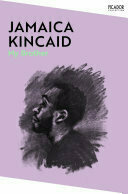
The latest bookclub book. Kincaid’s brother died in 1996 of AIDS. Kincaid herself was estranged from her family for 20 years, so she saw her brother when he was three, and then again when he was 33, and dying.
Unsurprisingly this is more about her than about him. She looks at feelings towards her birth family: does she love her brother? Does she love her mother? ‘No’ is her conclusion for both. But she examines different kinds of love, different ways of loving.
Parts of it are kind of like cubist art in a way: examining the same place, person, or event, at different times, in the way the cubists would try to show a subject from different angles at the same time.
The writing flows very smoothly despite some impressively- if not excessively-long sentences.