
📚 Books 2026, 10: The Lost World, by Arthur Conan Doyle
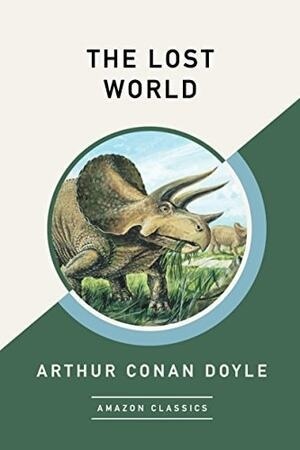
I had read a lot of Sherlock Holmes, but none of Doyle’s other work; including none of the Professor Challenger stories. There aren’t nearly as many as there are Holmes stories, so it’s less of a challenge (ha) to do so. I was in a second-hand bookshop a few weeks back, in an unfamiliar town — let’s not be coy, it was Taunton — and I was there so long, going, ‘So many books, so little time,’ that I felt I had to buy something: it would be impolite not to.
And just as I was preparing to leave, I saw a collected Professor Challenger volume, and here we are. I’m treating the individual novels in it as separate novels, since they are, and will write about them here individually.
So to The Lost World . A tale of adventurers finding a fabled land where dinosaurs still live, even in the 20th century. In this case it’s on an inaccessible plateau in South America, not underground, for example.
In fact, this is the motherlode for all those kind of stories, predating Edgar Rice Burroughs and everyone else.
It’s presented as a work by a journalist, Edward Malone, a young man seeking both to please his editors, and (seemingly more importantly at first) to charm his beloved, one Gladys, who says she’s attracted to the adventurous type of man.
Challenger claims to have seen evidence of the prehistoric creatures' existence; his brother scientists don’t believe him; the Zoological Institute commissions an expedition to confirm or deny. Young Malone volunteers/is volunteered to go along and report back.
Stuff happens. Dinosaurs are found. Ape-men fought. An impossible fecundity of life exists on a twenty-by-thirty mile plateau, isolated from the rainforest and Amazon below it. (A question comes to mind: why wouldn’t the pterodactyls fly down from the plateau to the jungle? At least sometimes?)
It’s lots of fun, if very full of the idea that the white European (or really, British) man is the most highly evolved entity on the planet. It is, of course, of its time.