
📚 Books 2026, 9: Disappear Doppelgänger Disappear, by Matthew Salesses
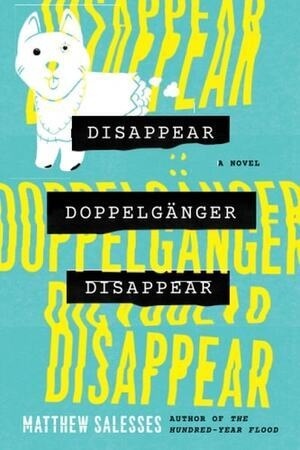
I first heard of Matthew Salesses when I was doing my MA. One of the tutors said his forthcoming book on the craft of creative writing was eagerly awaited by everyone in the business of teaching it. This was in early 2021. I got hold of an ebook copy of Craft in the Real World at some point, and haven’t got very far with it. The main thesis, as I recall, was about the typical method of critiquing creative works didn’t work well for all people.
Which is fair enough, if perhaps a bit slight to hang a whole book on (I’m sure there’s more). But when I was looking into it, I read the announcement of this novel (which came out earlier, in 2020), and thought it sounded amazing.
What’s actually amazing to me, having read it, is that it’s the second novel in a row I’ve read that makes almost no sense at all.
I expect it’s me. I suppose it must be, because again, the cover and inner pages here are festooned with glowing platitudes, while I was left cold by much of the action, and confused by what Salesses was trying to say.
A young Korean-American writer1feels he’s disappearing. A near-duplicate of his girlfriend turns up. She used to have a boyfriend who looked just like the narrator, and who disappeared.
She has never heard of Boston, where the novel is set. Until it switches to the alternative universe where the doppelgänger woman came from, and a city whose name is given as XXXXXX. Why not make up an actual, believable, name, I wondered.
All of which is fine, and could explore some interesting ideas about identity, and indeed tries to. But the narrator is such an annoying character who keeps doing stupid things for no very good reason, that it’s hard to get with him. That in itself could be seen as good characterisation, of course.
But whatever is going on between the two alternatives doesn’t make much sense to me, and things don’t get resolved in any meaningful way, and I just didn’t enjoy it much. Cultural differences, maybe? That is, I believe, part of what Salesses’s Craft book was about: different cultures have different ways of telling stories. Maybe my understanding and expectations are just too western to appreciate this.
Which is my loss, I guess.
-
Just because they say ‘Write what you know’ doesn’t mean you have to write about writers, by the way. ↩︎