
Yes! The Book of Dust volume 3 is out in October!
The Rose Field: The Book of Dust Volume Three a book by Philip Pullman and Christopher Wormell.
Finally!
Ah, my Letterboxd post finally made it. Just a lag in the feed handling, I suppose.
My Latest Letterboxd post hasn’t synced to Micro.blog (and hence my blog), and I can’t get iCloud photos to sync to my Mac. Or not all of them yet, at least.
Everything’s not quite working. Maybe it’s the heat. 31°C here in London at the moment.
Persuasion, 2007 - ★★★
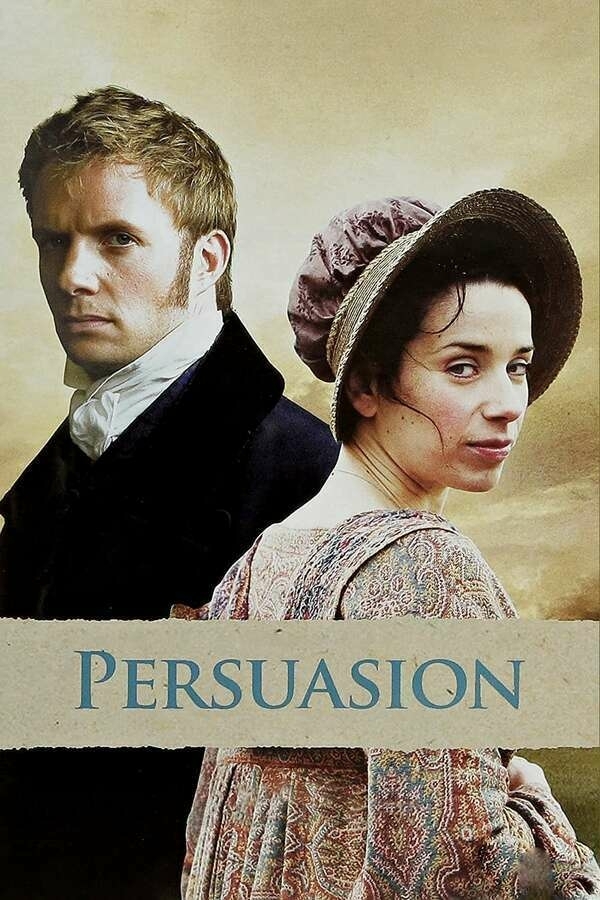
Decent Austen adaptation. I haven’t read the book, which, I understand, many say is her best. I thought the ending fell a bit flat.
A fortnight in Canada, a long weekend camping in Somerset, and a couple of days back at work. Couple of film notes and now a Crucial Track. Off we go, then, with a Summer of Blogging.
(Or not, let’s wait and see.)
Crucial Track for 18 June 2025: How Was it for You?
"How Was It for You?" by James
Share a song that makes time feel like it's standing still.
I’m not sure this exactly fits the bill, but a chat at work today led me to play James’s Gold Mother for the first time in a while, and ‘How Was it for You?’ had me waving my arms in the air like I just didn’t care, or like I was back at the Brixton Academy in 1990 or so.
Crucial Track for 18 June 2025
"How Was It for You?" by James
Share a song that makes time feel like it's standing still.
I’m not sure this exactly fits the bill, but a chat at work today led me to play James’s Gold Mother for the first time in a while, and ‘How Was it for You?’ had me waving my arms in the air like I just didn’t care, or like I was back at the Brixton Academy in 1990 or so.
Sneakers, 1992 - ★★★½
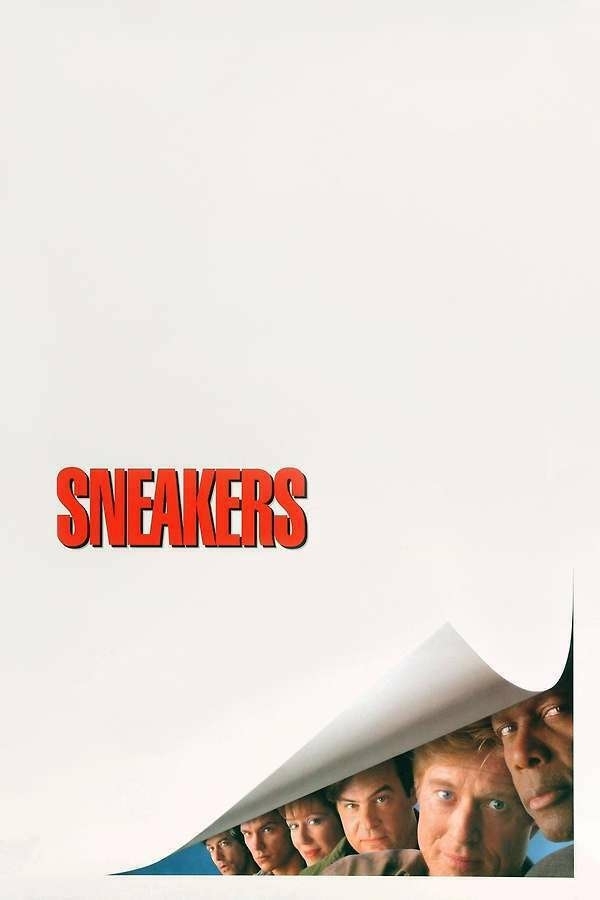
Watched this on the return flight from Canada home. I feel like I’ve been hearing about it for years, as a not-bad early hacking/cracking type of thing.
Which is basically what it was, with an element of heist movie thrown in. Pretty good.
Everything Everywhere All at Once, 2022 - ★★★★½
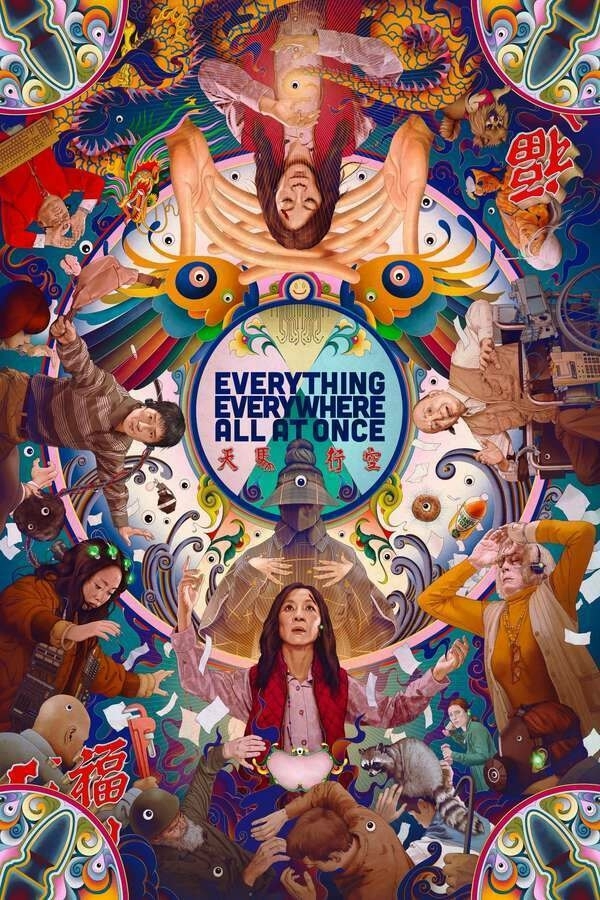
After watching this in Paris with French subtitles, I finally managed to see it again. This time on a plane to Canada.
It holds up really well on a second viewing. The Air Canada seatback screens were pretty good. And this time I was able to get all the jokes and nuances in the non-English parts.
I love this film.
Farewell, My Lovely, 1944 - ★★★½
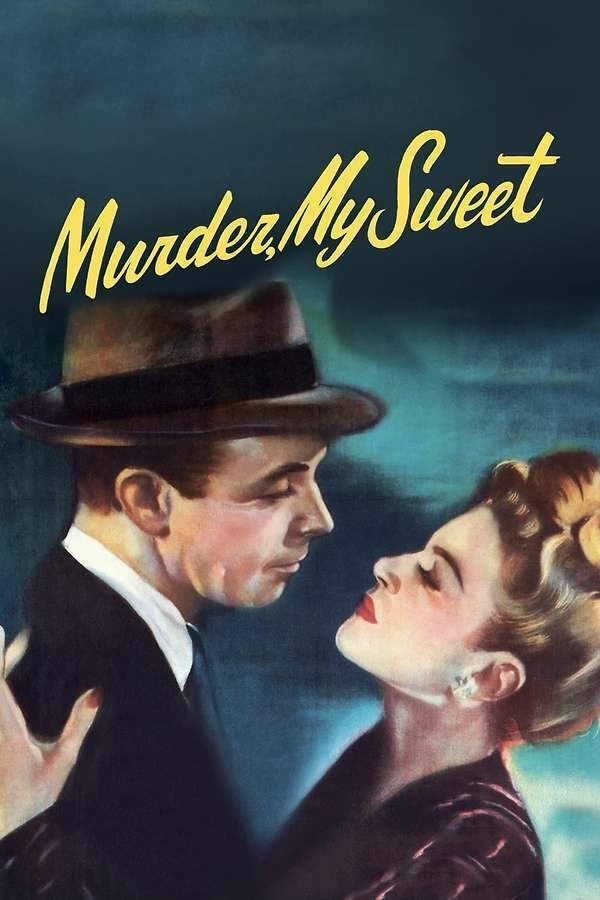
This appears as Murder, My Sweet, on Letterboxd, TMDB, and IMDb, but is actually Farewell, My Lovely. Apparently it was re-titled for the US market back in 1944, because there was a musical with the original name.
The original being, of course, one of Raymond Chandler's novels about the private detective Philip Marlowe. This is a really good adaptation, with what sounds like most of Chandler's dialogue (I mean, why would you change it?).
It's proper, classic noir. But/and there's a scene where Marlowe is captured by the bad guys, drugged, and interrogated, that feels more like the mind-control paranoia of sixties films like The Ipcress File. The visual ideas for suggesting that kind of thing go back a long way, obviously.
📗 Books 2025, 12: The Age of Wire and String, by Ben Marcus
This is a strange wee beastie. The edition I have was published in 1998, and I must have bought it then or not long after. I vaguely remember reading a bit of it and finding it amazing, really powerful. And I obviously started it, because I had a bookmark in it, a few pages in.
But every time I’ve had a look at it since, it hasn’t really grabbed me. Until recently, when I started it again.
And… I’ve no idea what I saw in it back then. It’s a work of surrealism, but it’s just wilfully obscure. Every sentence is grammatically and syntactically sound, but semantically meaningless. It purports to be a catalogue or almanac of a society, with sections titled ‘Sleep’, ‘God’, ‘Food’, and so on. And within them chapters, or short stories, called ‘Sky Destroys Dog’,‘Ethics of Listening When Visiting Areas That Contain Him’, ‘Hidden Ball Inside a Song’.
It can be strangely compelling in places, almost reaching the level of poetry. But mostly it’s a bit of a chore to get through. If I hadn’t had it and kept it so long I probably wouldn’t have bothered.
A very curious work.
📗 Books 2025, 11: Blitzkreig Bops, by Alli Patton
I picked this up at a stall at the local market a few weeks ago. It’s a slim volume, taking its title from the Ramones' song ‘Blitzkrieg Bop’, and subtitled, ‘A Brief History of Punks at War’. Alli Patton is a music journalist from the southern US and this slim book takes a look at how punk, from the 70s through to the 20210s, has been used to resist war, and call for peace and justice.
She starts with Stiff Little Fingers and the Troubles in Northern Ireland, and moves on through apartheid South Africa to Chile during Pinochet’s regime and punk bands in East Germany during the Cold War.
And then beyond that, decade by decade. There are always wars and oppression, and it seems there are always punk bands resisting and calling for peace.
Worth a read, and she includes a YouTube playlist of some of the artists she covers.
What is this archaic nonsense? Seems the only way we can vote for Eurovision in the UK is by making a phone call! What century is this?
Well, I’m not doing it. Iceland will have to do without my vote.
Waiting for Yellow Ribbons
Bemoaning the state of search-engine results leads, by way of some old songs, to the state of part of the Middle East.
Paddington in Peru, 2024 - ★★½
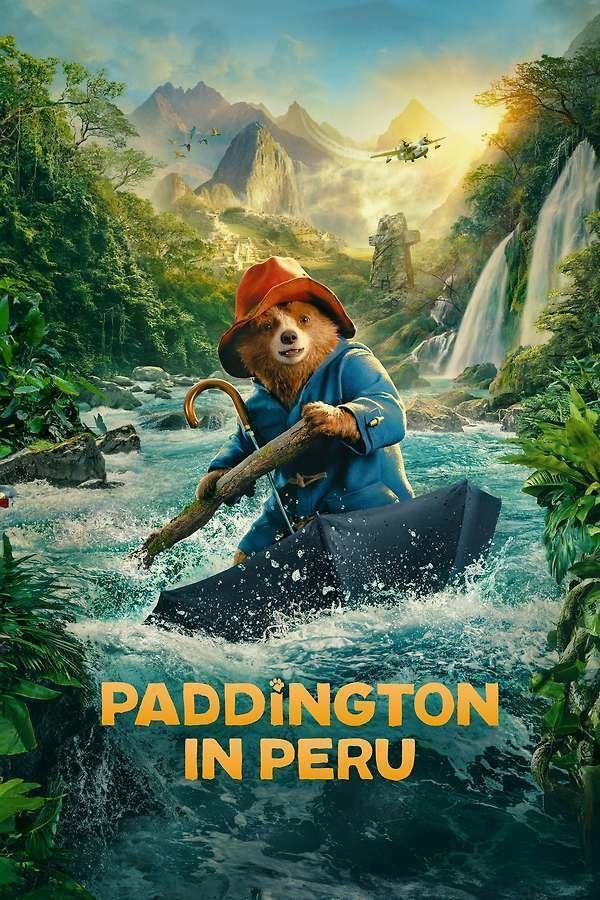
Has its moments, but let's face it. Paddington is inherently funny because he's a bear in London, out of what should be his native habitat. When you put him back into what should be his native habitat, it just loses something.
London Town, 2016 - ★★½
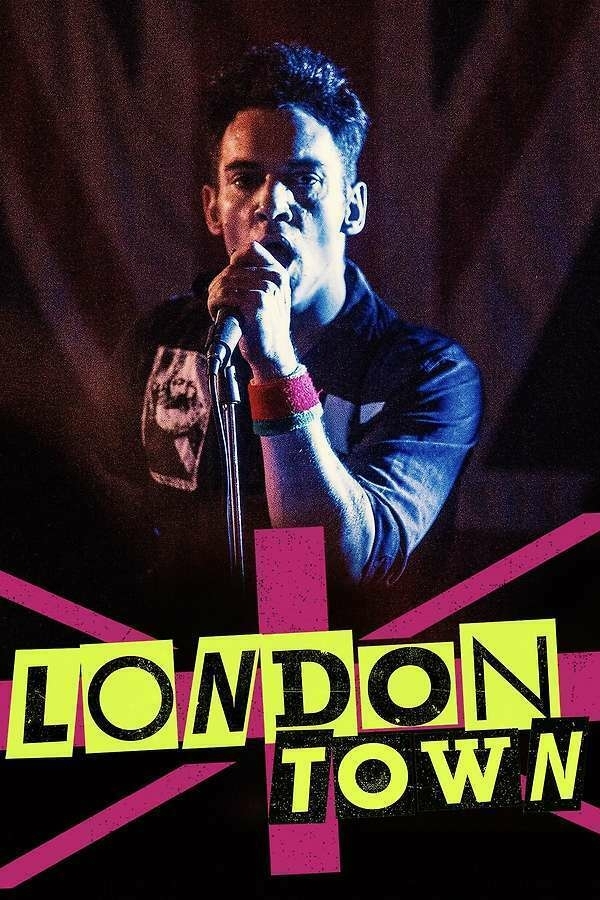
I'm not, honestly, sure this deserves even the two-and-a-half stars I'm giving it. It's a daft story, but it gets extra marks from me for its Clash connection.
It's 1978. A 14-year-old boy lives in Wanstead with his dad and six-year-old sister. Their mum has left and is living in London's squatting scene, trying to make it as a singer. She sends the boy a tape of the first Clash album. It somehow later becomes the record and has '(White Man) in Hammersmith Palais' on it, which it the first album didn't. (The US version might have, but that's not what he's got.)
That's far from the most absurd thing. After the dad gets injured by a piano (which isn't absurd, as he runs a music shop and was delivering it) the boy tries to keep things together for his sister.
In so doing he — and here is the real absurdity — learns to drive and starts driving his dad's black cab, taking fares and avoiding the cops.
Yeah, I know. He picks up Joe Strummer one night. Obviously.
Honestly, it's daft as a brush. I quite liked it, but mainly for the music.
Crucial Track for 11 May 2025: Walk on the Wild Side
"Walk on the Wild Side" by Lou Reed
I don't know whether I can honestly say this the song 'feels like home' to me, but I do recall once, long ago, arriving in Edinburgh from London, and walking up the Bridges with Transformer playing, and thinking it felt like coming home.
'Walk on the Wild Side' is the second track from Transformer to feature on Crucial Tracks, I note, but that's not surprising. I'd consider it a 'crucial album'.
Crucial Track for 11 May 2025
"Walk on the Wild Side" by Lou Reed
I don't know whether I can honestly say this the song 'feels like home' to me, but I do recall once, long ago, arriving in Edinburgh from London, and walking up the Bridges with Transformer playing, and thinking it felt like coming home.
'Walk on the Wild Side' is the second track from Transformer to feature on Crucial Tracks, I note, but that's not surprising. I'd consider it a 'crucial album'.
📗 Books 2025, 10: The White Album, by Joan Didion
I read one of the pieces from this, ‘At the Dam’, on my MA course. It didn’t make a huge impact on me at the time, but enough to keep Didion’s name in my mind, and eventually to stir up enough interest for me to get this.
It’s a set of personal essays covering various events around the end of the sixties and the early seventies. It struck me, reading this, she’s kind of a gonzo journalist, or at least gonzo-adjacent, in that the often puts herself in the narrative. Which is good and proper in my humble opinion. Not as intense as HST, but still.
There’s a lot of good, interesting stuff here, including one piece that involves her hanging out with The Doors, waiting for Jim Morrison to arrive. It’s not much about music, though, and I don’t know why she chose to call it The White Album.
One minor annoyance about at least this edition is, although the front matter credits the various publications the pieces originally appeared in (Life, The New York Review of Books, etc), it doesn’t tell us which piece appeared where.
But that doesn’t detract from the pieces themselves.