
Erin Brockovich, 2000 - ★★★★

I wouldn’t have expected that a film about someone fighting an evil corporation that is poisoning people could be so feelgood. But this achieves it.
Wear a Mask! And Celebrate Your Immune System
Yesterday’s XKCD “Pathogen Resistance” turns things round and shows the current crisis from the point of view of the virus. It is genius. And even has a Watchmen reference in the mouseover text.1
But more importantly, and unrelated: it turns out that wearing a mask — any kind, even just a scarf– will help to reduce the spread of the virus. This is contrary to what we were told initially, but it makes complete sense even without technical analysis. Anything coming between someone else’s droplets and your lungs, or your droplets and someone else’s lungs, is better than nothing coming between them.
It’s like wearing a cycling helmet: I’ve always thought that something between my head and the ground, should I come off, is better than nothing.
And there are designs online for making masks out of any old cloth. I feel #blessed that my daughter has an A-level in textiles and a sewing machine.
On the question of masks, though, something has been confusing me since this all started. And to an extent, before that, really, when I’d occasionally see people out and about wearing what appeared to be a hospital-style mask. Which is, where did people get such things? How did they come to have what looked like professional medical supplies in their private possession? Aren’t these things controlled?
Clearly not, for the last one. And I wondered why? Why did people have them? Now, that seems like a foolish question. And it ignores the cultural differences, whereby in parts of Asia it’s considered rude not to wear a mask if you are sick. Makes sense, though I always wonder how horrible it is if you sneeze while wearing one.
- “We’re not trapped in here with the coronavirus. The coronavirus is trapped in here with us.” ↩
Drive Your Plow Over the Bones of the Dead, by Olga Tokarczuk, Translated by Antonia Lloyd-Jones (Books 2020, 4)
I like this quote from near the end:
The fact that we don’t know what’s going to happen in the future is a terrible mistake in the programming of the world. It should be fixed at the first opportunity.
When I read Tokarczuk’s Flights at the start of last year, it was actually this one that had led me to her. Warren Ellis recommended it in his newsletter, if I remember correctly, and the title intrigued me. What I didn’t realise then was that the title is a quote from William Blake: “Drive your cart and your plow over the bones of the dead,” he says, in Proverbs of Hell. With that spelling, I note.
Apparently it caused a great fuss when it was published in Poland. I don’t understand why, but cultures are different.
Unlike Flights, it’s a complete, single story. It’s also much simpler. The narrator is an interesting character, though her practice of astrology adds nothing to the story and gets in its way to an extent.
Each chapter has a quote from Blake as an epigraph. I don’t think she used the thirteenth proverb of hell, though it could be seen as the narrator’s north star:
All wholesome food is caught without a net or a trap.
The Big Short, 2015 - ★★½
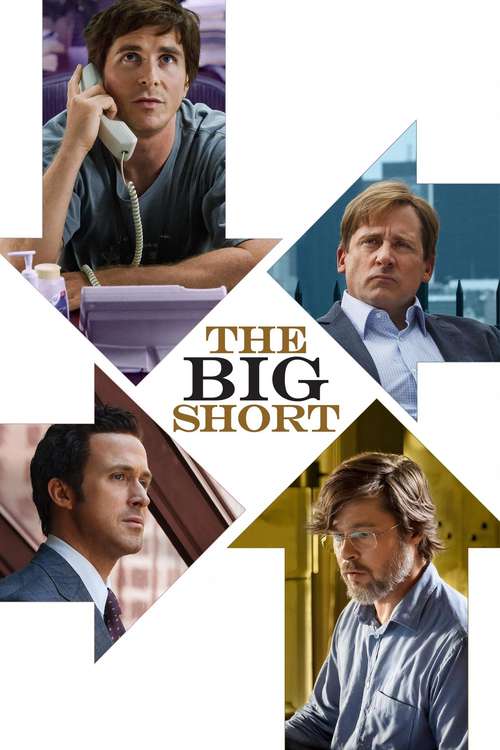
You might come out of this film with a better understanding of the events that led to the 2008 financial crisis -- or you might not. More likely, I think, you'll sort-of understand it while you're watching, but be none the wiser when it's all over.
The question of what happened is explained, but not the one of how it was allowed to happen.
But I think the problem with this as a movie is that it tries to dramatise the events, using versions of some of the real people involved as characters; but it doesn't go far enough in that. We don't see anything of their lives outside of their financial dealings, so it fails to humanise them sufficiently. As characters, I ended up just finding them tiresome.
To really help us to understand the whole thing, it would need to be a documentary, and that would have been harder to sell. So by not quite being enough of one thing or the other, it fails at both.
Just been for a bike ride. I think I’ve forgotten how my legs work.
Lots of people out, mostly keeping their distance.
Down to the Olympic Park. Nice view of the Orbit.

Writing News
I wrote a screenplay and submitted it to the BBC Writersroom (which they always present that way, probably to avoid having to decide where to put the apostrophe) “Interconnected” competition. The idea was to write a five-to-ten-minute piece with between two and four characters, communicating via videoconferencing app. Very now.
I only heard about it (from my friend Andrew on Facebook) six days ago. I don’t think I’ve ever written a finished piece so quickly.
They will, of course, get thousands of submissions, so mine stands little chance of being one of the chosen four, but it was very satisfying to get it done.
Good piece by Margaret Atwood about… what everything’s about, these days.
Any child growing up in Canada in the 1940s, at a time before there were vaccines for a horde of deadly diseases, was familiar with quarantine signs. They were yellow and they appeared on the front doors of houses. They said things such as DIPHTHERIA and SCARLET FEVER and WHOOPING COUGH. Milkmen – there were still milkmen in those years, sometimes with horse-drawn wagons – and bread men, ditto, and even icemen, and certainly postmen (and yes, they were all men), had to leave things on the front doorsteps. We kids would stand outside in the snow – for me, it was always winter in cities, as the rest of the time my family was up in the woods – gazing at the mysterious signs and wondering what gruesome things were going on inside the houses. Children were especially susceptible to these diseases, especially diptheria – I had four little cousins who died of it – so once in a while a classmate would disappear, sometimes to return, sometimes not.
This video on how to deal with your food shopping is good. I’m alarmed to hear that some coronaviruses can live frozen for — two years, I think he said? So buying open bread from the bakers and freezing it is probably not as safe as I had thought.
Oh, here’s The Guardian talking about the government’s mass text:
UK mobile firms asked to alert Britons to heed coronavirus lockdown
As I imagined, it’s not like there’s a massive database with everyone’s numbers. They just asked the operators to send it to all their customers.
I just got a text from the government about the new regime. I assume everyone did. I didn’t know they could do that. It just has this link.
Crazy Rich Asians, 2018 - ★★★½

In considering how rich families try to control who their progeny marry, I found it interesting to see if this mapped on to Pride and Prejudice at all. Only if if you stretch things quite a lot. “Darcy” and “Elizabeth” are already together at the start, after all.
It’s a fun enough romp if you don’t mind the fantastical displays of fabulous wealth. Interesting too, to see Michelle Yeoh as a controlling mother rather than a kickass starship captain.
Venturing Out: A Status Report from Hackney
I had cause to go to Westfield in Stratford the other day. It looked like this at about noon:

The Levis shop was open. I was picking up some jeans that had been in for repair. That’s a good note for when this is all over, incidentally. If your Levis wear into holes or get torn, most of their shops offer a repair service now. They may have done for years; I only learned about it a month or so back. But it means that for significantly less than a new pair of jeans, I have two good-as-new pairs, including the ones which were already my favourites. One antidote to fast fashion.
There was almost no-one around, and no-one was getting very close to anyone. In Lakeland I was able to get a refill (really, replacement) for one of our SodaStream CO2 cylinders. But they didn’t have any new ones. It seems unlikely that those have been panic-bought, but I was thinking of getting an extra one in case it becomes hard to get replacements, so others might have been ahead of me.
In and out within half an hour, and the parking was the least I’ve ever paid at Westfield: £3. I wouldn’t normally drive if I wasn’t buying much, but getting on the Overground would have been the opposite of social distancing.
Or maybe not, if it had been as empty as the mall.
But just yesterday I gave my daughter a lift to a friend’s house — same idea, avoid the bus — and up in Stamford Hill at around 4:30pm it was really busy with pedestrians. A lot of cars on the road, too. Maybe that was normal or less than, for that time on a Tuesday, though.
Dropped into the wee Sainsbury’s on the way back. No fresh fruit or veg at all. Most tinned goods and bread gone — no toilet rolls, obviously — plenty of snacks and crisps, surprisingly. Either panic-buyers prefer healthy options, or Sainsbury’s are quicker at getting unhealthy supplies back.
I have to confess to feeling a small amount of smugness at having stocked up over the last year or so. Brexit was the initial trigger, but I soon realised that having a supply of non-perishable items is actually pretty useful. If you can afford to buy a bit extra from time to time, and you’ve got the space to store it all, of course.
On the other hand, meals are going to get dull really fast without a regular supply of fresh things.
But if that’s the most we have to worry about, we’re doing better than many. I hope you are coping OK, dear reader.
Bajrangi Bhaijaan, 2015 - ★★★★★
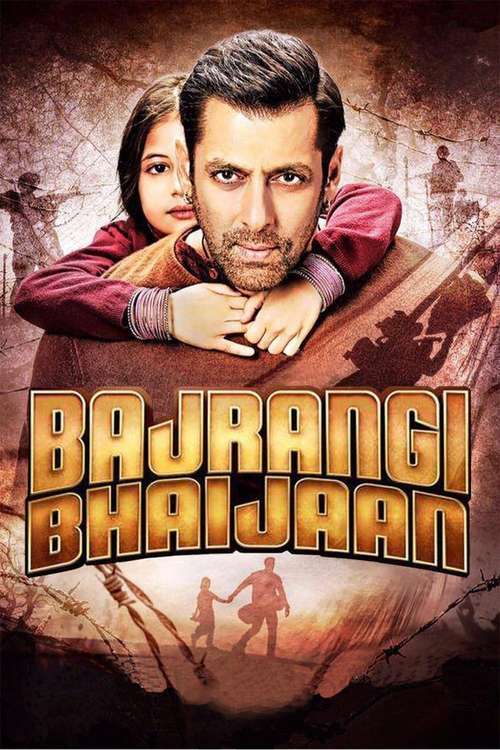
I loved this film more Than I can possibly say. Sure, it’s sentimental as hell, but if you can watch the tale of a mute Pakistani girl who gets lost in Delhi, and looked after by a Hindu Indian guy, without a tear in your eye, then you have no heart.

Some thoughts on using Instapaper, from Dan J: Doubling Down on Instapaper – Dan J’s IndieWeb Headquarters.
Quite similar to my own experience (though with more note-taking).
Harry Potter and the Methods of Rationality, by Eliezer Yudkowsky (Books 2020, 3)
Harry Potter fan fiction, by Merlin’s beard! I heard of this book — HPMOR, as it’s known — from my son, a couple of years ago. Didn’t think about it for a while, and then recently I saw a tweet from a friend-of-friends, @ciphergoth:
The correct quote is "There is no justice in the laws of Nature, Headmaster, no term for fairness in the equations of motion." https://t.co/n3qAmdyhV2 pic.twitter.com/Agxq7FruRk
— Paul Crowley (@ciphergoth) January 28, 2020
The fact that it was a quote from Harry Potter, and that I didn’t recognise it — indeed, it didn’t seem like something Harry would say — intrigued me, so I clicked through.
And then I shortly found myself downloading the ebook and reading it for the next… actually, month or so.
Because this book is looooooong! It’s a retelling of just the first Harry Potter book, along with much more, and it’s about half as long as all seven of the JKR originals.
In fact, it could have done with an editor. I thoroughly enjoyed it, but it has some weaknesses.
First, the strengths, though. Yudkowsky can write a page-turner almost as well as Rowling. What we have here is an alternative universe in which Petunia Evans marries someone else, not Vernon Dursley. They adopt Harry, and bring him up in a loving home. Harry’s adoptive father is a scientist, which is where he learns his rationality. So his first thought when he discovers that magic exists is to try experiments to understand its capabilities and limits. Experimentation soon gets overwhelmed by events, though, as the plot gets going.
There are other differences from the original, of course, and the end result is very different.
Part of what Yudkowsky does is takes the literal translation of Voldemort’s name — “flees from death,” essentially — recognises the rationality of that feeling — who wouldn’t prefer going on living, to dying? — and builds from there.
The major flaws are wordiness and couple of authorial tics that get repetitive and mildly annoying. He has a tendency to refer to people by their role, rather than their name: “The Defence Professor,” rather than “Quirrell,” for example. Which is fine if used sparingly, for variety. But he has people referring to other people like that, when they just wouldn’t.
There’s also overuse of scenes that start like, “The boy stood in the forest…” and only slowly revealing which boy. Again, fine occasionally, but he overdoes it.
And a few Americanisms creep in: like calling the staff of Hogwarts the “faculty.” And anachronisms: nobody apologised for their snarkiness in 1992, since the word hadn’t been coined yet. Well, I could be wrong there: this site says it goes back to 1906 or earlier. No-one in Britain, then.
But I shouldn’t complain. It’s an astonishingly well-constructed work, and I thoroughly enjoyed it.
The Clash On Display

My favourite band have become a museum piece.
Or at least, some of their instruments, clothing, lyrics, and memorabilia are in an exhibition which the Museum of London1 has been running since the fortieth anniversary of London Calling in December. I popped along today.

It’s small, but pretty good. The centrepiece is Paul Simenon’s smashed bass from the famous cover photo. It lies under glass on a red velvet cushion, like a fallen warrior lying in state (see above).
It’s actually kind of gruesome. “That’s no way to treat an expensive musical instrument,” as someone once said.

I didn’t learn anything I didn’t already know, I don’t think. Except maybe that Joe had a backup white Telecaster, that I don’t think I’ve ever seen him use, either live, in video, or in photos. His iconic black one is in the Rock ‘n’ Roll Hall of Fame, I believe. Or another museum.
Oh, and see the poster in that shot? “Two for a fiver”? When I bought London Calling it was only £3.99. Both times, as I’ve written about before.
Anyway, worth checking out, especially since it’s free. My main complaint: there are a lot of songs that could have been playing, even if they kept it to the relevant album. Instead they had a loop of just three (“London Calling,” “Train in Vain,” and “Clampdown,” the latter two live versions).

- Which I had never before visited, in thirty-two years living here. ↩
Glen Matlock Remembers How to Rock, but Nearly Forgets the Songs That Put Him Where He Is
Glen Matlock doesn’t seem to have much time for the past, except the past as he sees it. Cover versions of the New York Dolls, or one or other size of The Faces, are fine. But the songs that he co-wrote? The songs that are responsible for what fame he has — for 200 people being out on a cold, virus-infested night, to see him?
Those songs — that single song, in fact 1 — is relegated to the encore.

There’s nothing wrong with keeping your best-known songs for the encore, of course. But when the ticket site said “Curfew: 10:30,” and it’s 10:27 and there hasn’t been a single Pistols song, you can start to get a bit twitchy.
On the plus side, he did introduce “Pretty Vacant” by saying, “This is ‘SOS’,” referring to his borrowing of the intro riff from the Abba song.
It was a good night, though. His originals and the covers were all fine. It’s just that, if you heard a no-name pub band playing those songs — well, you wouldn’t bother going out specially for it.
The night was billed as “Glen Matlock + Earl Slick.” I’m embarrassed to admit I had to look up who Slick was. Turns out he only replaced Mick Ronson in Bowie’s band, and worked with John & Yoko! And now he’s playing lead guitar in Glen Matlock’s band. Oh well.
- There’s no point in asking what that is. You’ll get no reply. ↩