
Lunch in Richmond today. Quick look at the Ted Lasso location by the Green, and the shop. Didn’t bother taking photos, but nice to see it.
Why are certain tracks on certain albums unplayable for me in both Apple Music and (just as a test) Spotify? For example, ‘Eat Y’Self Fitter’, the opening track on The Fall’s Perverted by Language? Greyed out, no length shown, and it just won’t play.
📚 Books 2026, 3: How to Seal Your Own Fate, by Kristen Perrin

As I said a couple of days ago, the second Castle Knoll Files book isn’t quite as good as the first. It’s a fun enough read, but it feels slight as a work of detective fiction, compared to, say, Christie or Rowling, the main crime writers I’ve read recently.
And there are some incongruities. The writer is American, though she has lived in the UK for years, and it shows. Especially in the parts that are written as being a diary from 1967 (the main narrative is present day). Modern terms are used in ways that they wouldn’t have been back then. No examples come to mind right now, but I might update this if they do.
And there are occasions of dialogue that reads more like exposition. People just don’t talk like that.
Apart from those relatively minor points, I enjoyed it a lot, and will doubtless get the third book, which is due out in April. I wonder both for how long Perrin will be able to keep coming up with titles that match the style; and for how long our intrepid investigator, Annie Adams, will be able to find cold cases in great-aunt’s notes.
Watched: ¡Nae Pasaran! 🎥
¡Nae Pasaran! is a great wee documentary about some workers at a Rolls Royce plant in East Kilbride (near Glasgow), who refused to repair the jet engines for Hawker Hunter aircraft belonging to the Chilean air force, because of Pinochet’s coup and atrocities.
The filmmaker, Felipe Bustos Sierra, is the son of Chilean exiles, and he manages to track down various people in Chile who were connected to the events. Former air force officers who refused to support the coup and who were arrested and tortured thereby. An air force general who did serve in Pinochet’s murderous regime, but wasn’t flying the day they bombed the parliament building, honest guv!
There were eight engines in East Kilbride for maintenance when one of the workers realised they were Chilean. As a union shop steward he ‘blacked’ them: marked them as disputed and not to be worked on.
Eventually they were moved outside. After six months in the Scottish weather, we learn, even crated up, they would be useless.
Well worth a watch if you can track it down (It was available to buy on Vimeo). A celebration of international workers' solidarity, and reminder of a time when unions were strong in this country.
Little Lost Machine
A little while ago, which turns out to have been June 2024, I microposted saying I ought to write about my thoughts on the current state of what people like to call AI. LLM-based prediction machines, some might say. Then about a year later I briefly wrote again about my negative reaction to the whole idea.
But I didn’t go into detail. And I’m still not going to; at least not today. I have several thousand words of attempted essays, if that’s not a tautology1, wherein I try to understand my own thoughts and feelings.
And time passes. And the development of the things is lightning fast. It’s a moving target that annoys me.
Still, I do have thoughts. And feelings. And the best way to understand them is to write about them. And the best way to write about them is publicly. Maybe. So I’m going to try writing about them here. A series of short posts around that theme. This is the first.
Maybe I’ll give them their own category, though I have too many categories as it is. I discovered it’s hard to search my blog for ‘AI’. Micro.blog’s search is good, but that’s just such a common set of letters. Weirdly, it brought up all my Crucial Tracks entries, as if it was also finding the ‘IA’ in ‘crucial’.
-
What with ‘essay’ originally meaning ‘attempt’. ↩︎
📚 Currently reading: How to Seal Your Own Fate by Kristen Perrin
The sequel to one I read last year. I got that for my birthday, this for Christmas.
I’m enjoying it, though so far I’ve got to say it’s not quite as good as the first.
And the third one is coming out this spring.
Yesterday there were people marching through London, ostensibly in support of Palestine, flying the Flag of the Islamic Republic of Iran, and pictures of Khamenei. They might as well have had swastikas and pictures of Hitler. I mean what the actual fuck is going on in these people’s heads?
Watched early in the new year: Spider-Man: Across the Spider-Verse 🎥
This is fine, a perfectly acceptable addition to the Spider-Man films. Though I have to say, a few weeks later, I remember little of it. And I blame that partly on its incompleteness: the fact it’s part one of two. Frustrating.
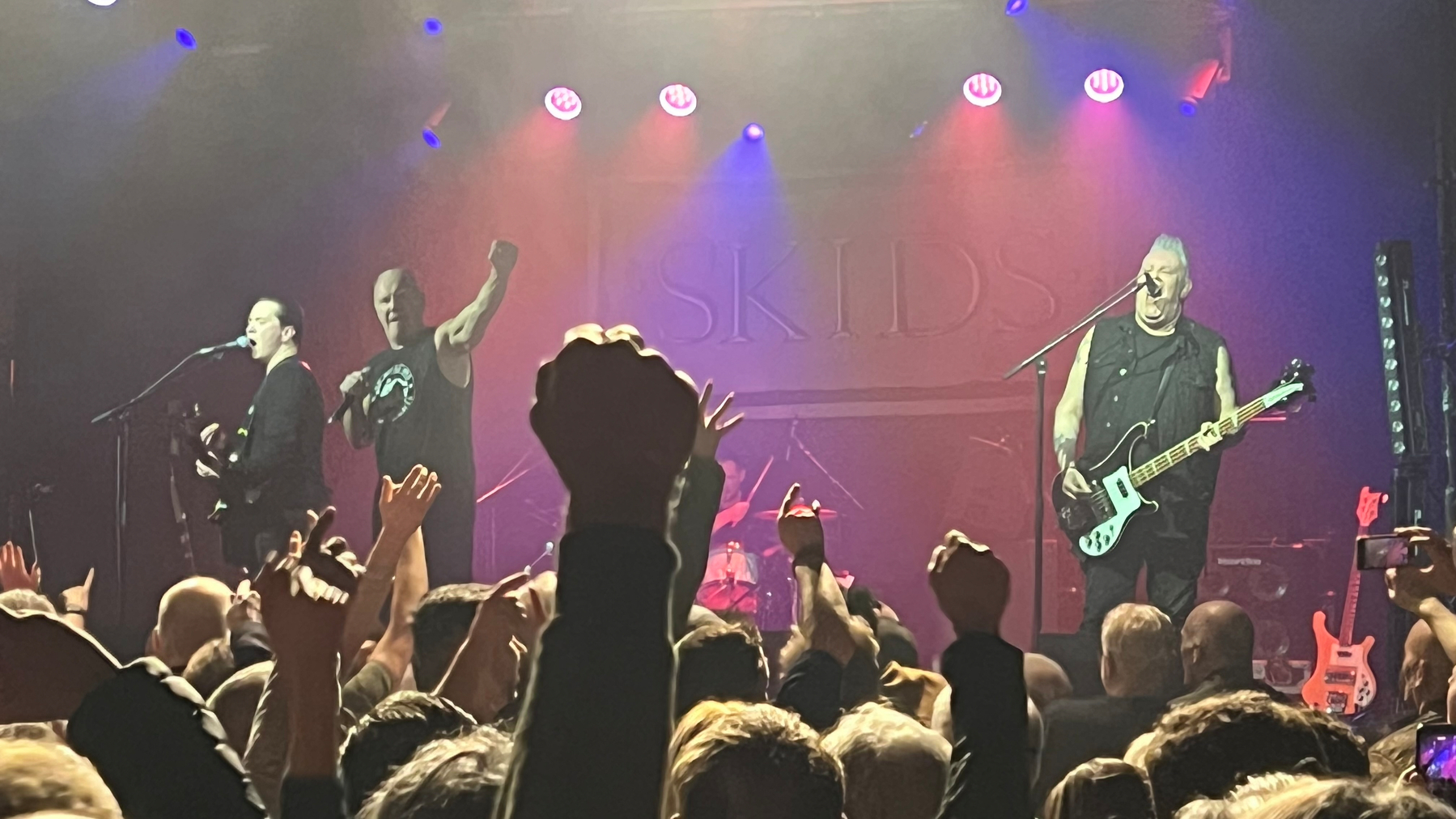
You know what’s a great album? The Absolute Game by The Skids. Who I’m going to see tonight.
Watched just before Christmas: The Shop Around the Corner 🎥
James Stewart, a Christmas movie, and not that one? Not specifically a Christmas movie, but part of it happens then, so why not?
Two shop workers hate each other, but fall in love with their mysterious pen pals. Guess what?
Not bad.
Watched: Hamnet 🎥
This is a fabulous film. It’s about motherhood and magic, and grief and how a genius can turn it toward one of the world’s great works of literature. And also about the special bond between twins.
But mostly it’s about grief. It is heartbreaking, yet also deeply life-affirming.
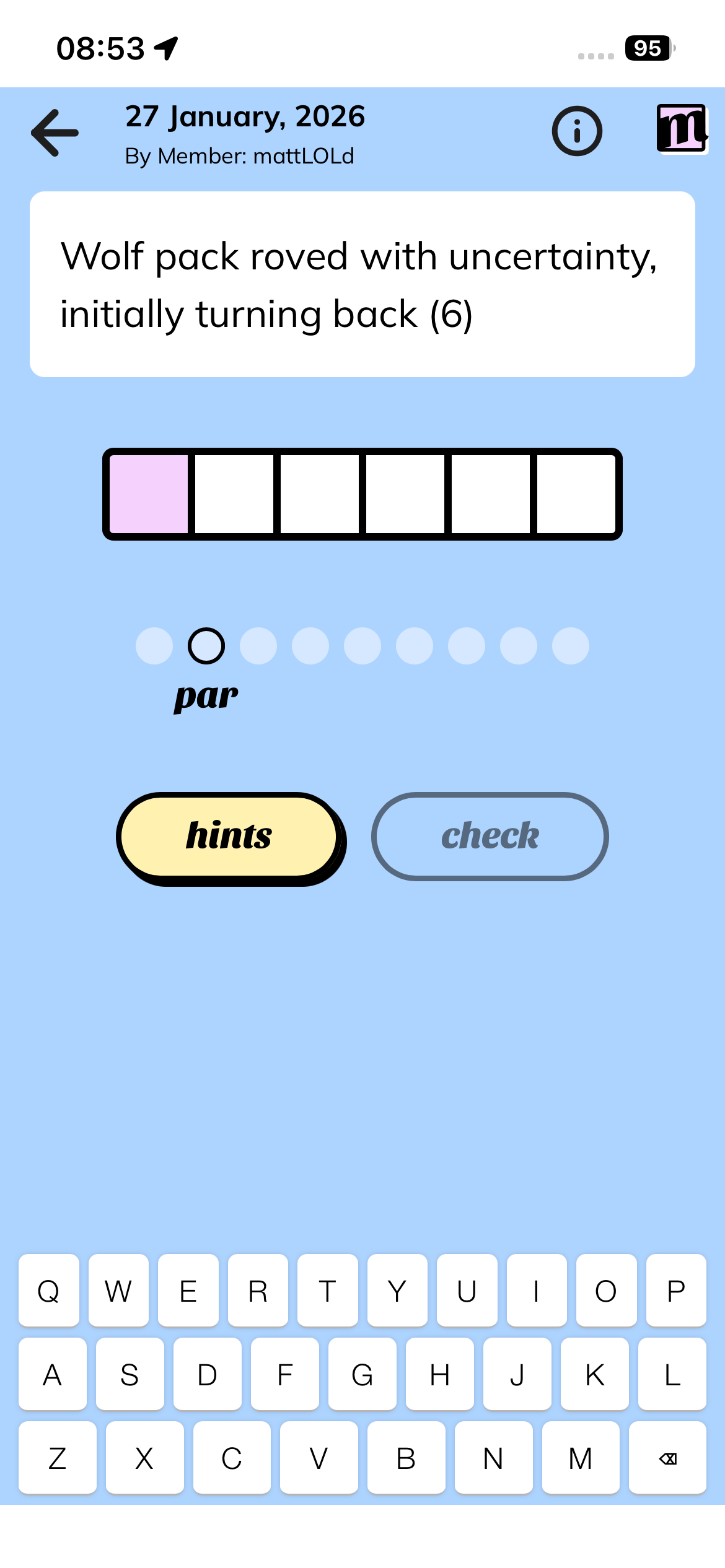
Minute Cryptic - 27 January, 2026 “Wolf pack roved with uncertainty, initially turning back” (6) 🟣🟣🟣🟣🟣🟣🟣🟣🟣 🏆 0 hints – 2 under the community par (55,613 solvers so far). www.minutecryptic.com
In answer to my earlier question: like this! I’m not sure it all quite hangs together, though. I’ll have to watch Angas’s video.
Every word in today’s Minute Cryptic could be an indicator. Every. Single. Word. How am I meant to solve that?
Watched: Now You See Me 🎥
I believe the third of these recently came out, but we hadn’t seen any of them at the start of the month and year when we watched this. A group of stage magicians — so good they seem that they might have real powers — do heists. Or do they?
A decent romp.
Watched: Office Space 🎥
Some of my work colleagues recommended this to me. I was vaguely aware of its existence before that, since it’s been around since 1999.
It’s a comedy about office workers — amusingly enough, they’re specifically software developers working to prevent the year-2000 two-digit date problem, or ‘Y2K Bug’, as it was usually called. Amusing, because I did some of that myself. Or at least tested the system I worked on at the time to make sure it didn’t have the problem (it didn’t).
As to the amusement value of the film itself: it was fine. Not that great, but not a total waste of time. Probably two and a half stars, if M.b had stars like Letterboxd.