
Pastieland and Getting Sick
I’ve not posted here for a while. We managed a week-long trip to Cornwall – yes! Leaving home, leaving the city, staying in a rented house. It’s almost like things are getting back to normal.
Though not quite. Mevagissey is a great wee town, but it’s far from fully open yet. Almost none of the restaurants have any outside space, what with it been squeezed in between the bottom of a steep hill and the sea, so they haven’t reopened yet. The takeaways were open, but it’s a sleepy place, and most things close early.
We stayed in Tregoney House, on the hill of the same name, which I mention here as much for my own records as anything else. Nice house, though.
We got to see family and eat pasties, fudge, and fish & chips. And visit the Lost Gardens of Heligan. It was all quite exciting, really.
Then the day after we got home, I got sick. Not Covid, I’m pleased to say, but it knocked me out for about four or five days. No writing, just some reading.
I’m all better now, though, and starting to buckle down for my dissertation. It’s due in four months time, which suddenly seems perilously short.
Bernard and the Cloth Monkey by Judith Bryan (Books 2021, 6)
This is a story of a family – especially two sisters – and things that brought them together and pushed them apart. It varies between straightforward realist events, and ambiguous, almost fantastic scenes, which may be memories, or partly memories, or a way for the character to deal with memories.
It’s part of a series that Bernardine Evaristo has curated for Penguin, called Black Britain: Writing Back, aiming to bring lost works back into publication. This one won awards back in 1997 (even though, confusingly, the copyright date is 1998). It’s been out of print since.
Worth checking out.
Ocean's Eight, 2018 - ★★★½
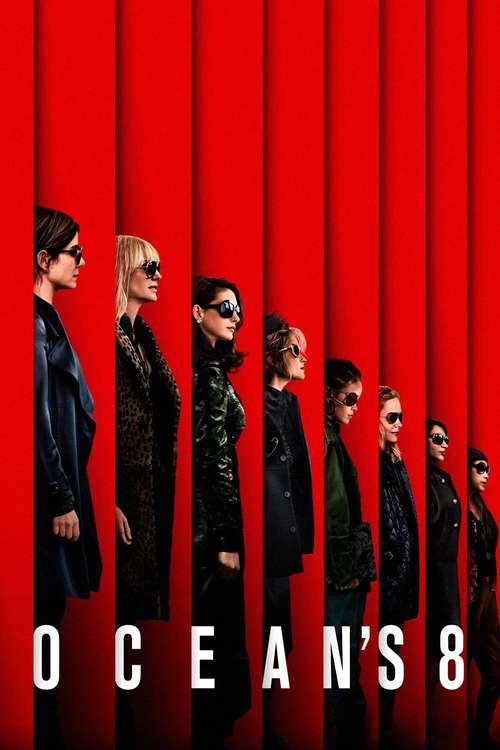
A fun heist romp with a slightly flat ending. And you don’t need to have seen any of the other ‘Ocean’s’ films to enjoy it.
A Dead Cat in Downing Street
This story about Boris Johnson redecorating in Downing Street is too stupid not to be a deliberate distraction. 10 Downing Street, along with 11 and others, are government buildings. Their maintenance should be paid for with government money. And since they are also places where people live, it’s not unreasonable that there should be money available for redecoration when the resident changes.
And I guess it’s also fair that the new resident can pay extra for the work, out of their own money, if they choose to do so. Any money coming from other sources would have to be declared in the Register of Members’ Financial Interests.
This is all normal. If Johnson has failed to declare contributions from his party or donors, that’s the offence. It’s pretty straightforward.
So the fact that it’s filling the headlines with leaks and all, suggests it’s a smokescreen for something else.
But what?
At the Olympic Park Again
Cycled down to the Olympic Park today. Took a few photos.
I’m writing a story at the moment – a novel, part of which will form the dissertation for my MA – which is set during the London Olympics. Nine years ago. Nine years! Anyway, the ArcelorMittal Orbit will probably play a role.
OffMail
I just got an invite/reminder email about a service called OnMail. I must have signed up to be notified when it became available. Could have been months ago: they apologise for it taking so long.
They should apologise for being bad for the email infrastructure that binds the world together.
I’m exaggerating, but only a bit. Email remains the most important thing on the internet aside from the web. Whenever you sign up for a service, or order something online, you expect to get an email confirmation.1
Without reliable email, a lot of things would fall apart.
A while back I wrote about Hey, the new email service from Basecamp. There, I was bothered by it not being based on the standard, open protocols that underlie email, at least to the extent that you can’t get your Hey email using a third-party, standard client.
OnMail seems both visually and functionally similar to Hey, and it’s got exactly the same problem.
This trend is bad for email, bad for people who use email. It should be possible to give us the kind of powerful, automated controls over our inboxes that these services offer, without stopping us from using the apps we prefer. It is possible to do that, as companies like SaneBox show.
I do not like this trend.
-
Oddly, I had this expectation confounded just today, when Birkbeck’s submissions system didn’t send me any confirmations about the pieces that I submitted for assessment. ↩︎

This Is England, 2006 - ★★★★

A gritty, realist tale of British skinheads in Thatcher times. We get the good skins — into ska, soul, and having Black friends. And then the bad ones — into ska, soul, racism, and joining the National Front.
But it’s mainly about a young boy whose dad died in the Falklands.
It’s good. Kate from Line of Duty (Vicky McLure) is in it, too. Disappointing that the Clash song of the same name is not used, but since that was released in 1985 and the film is set in 1983, it wouldn’t have made sense.
Heartburn by Nora Ephron (Books 2021, 5)
When I wrote about watching When Harry Met Sally… last year, I said that ‘Nora Ephron may be my favourite screenwriter after Aaron Sorkin, where dialogue is concerned.’ The dialogue in this novel isn’t so sparkling, but the narration is.
It’s a fictionalisation of the breakdown of her marriage to the journalist Carl Bernstein, and it’s amazing how funny she makes it, considering how painful the experience clearly was.
Seems to be her only novel, which is kind of a shame.
The strangest thing is that the woman Bernstein had an affair with is the daughter of prime minister Jim Callaghan.
Far more interestingly, though, is that, according to Wikipedia, Ephron was one of the few people who knew the identity of Deep Throat.
None of which has anything to do with the book, which you should just read.
Eurovision Song Contest: The Story of Fire Saga, 2020 - ★★★★

A great story about a competition we all grew up with, and then stopped caring about because it was endlessly uncool, and then started taking an interest in again because it was so daft and fun.
Maybe that's just me.
Anyway, this film (made with the cooperation of the European Broadcasting Union, which is the body behind Eurovision) pokes fun at the competition in all the right ways, and does it with love and a big heart.
North Star
I wrote recently about not enjoying or finishing Claire North’s 84K. In her latest blog post she lists her (improbably large) back catalogue, with notes. On 84k:
My most miserable novel ever.…The word “dystopian” has been applied to it a lot, and I’d say that’s fair.
However, she also tells us about her forthcoming Notes from The Burning Age, which sounds amazing:
To make up for just how monumentally dystopian 84K is, Notes from the Burning Age is a look at the distant future of the earth… in which we’ve got it right. We sorted our shit out, we built an environmentalist utopia of clean energy, social justice, respect for all and so on. And we did all of it partly because we really learned to love and value this beautiful, glorious planet, as well as each other, and partly because the spirits of the earth awoke, provoked by our blundering destruction, and nearly stomped us into tiny tiny bits.If you think that’s the pitch, you will be potentially surprised to know that’s just the first 50 pages, and the book is actually a cat-and-mouse espionage thriller.
She really has written an astonishing number of books, under three different names. I’ll be sure to try some of the others.
Bookshops are Back
Sometimes you don’t even realise what you’ve been missing. Or how much you’ve been missing it. I went to our local bookshop, the lovely Pages of Hackney, to pick up a book that I had ordered and that had to come from the US.1
They’ve stayed in business through this mad year, and I’ve ordered several books from them in that time. If a book’s not in stock they can usually get it in in a couple of days. I just had to walk up the road and collect them at the door.
No going in, though. Apart from collecting an order, all I could do was look in the window.
So it was fantastic to be able to go into the shop and browse. I’d almost forgotten what that’s like.
-
The Situation and the Story, by Vivian Gornick. I don’t know why it had to cross the ocean. ↩︎
Good Vibrations, 2012 - ★★★★

Great fun story of Terri Hooley, who ran the eponymous record shop and label in Belfast.
Great music, and an appearance by John Peel; or at least an actor doing his voice very badly.
Palm Springs, 2020 - ★★★★½
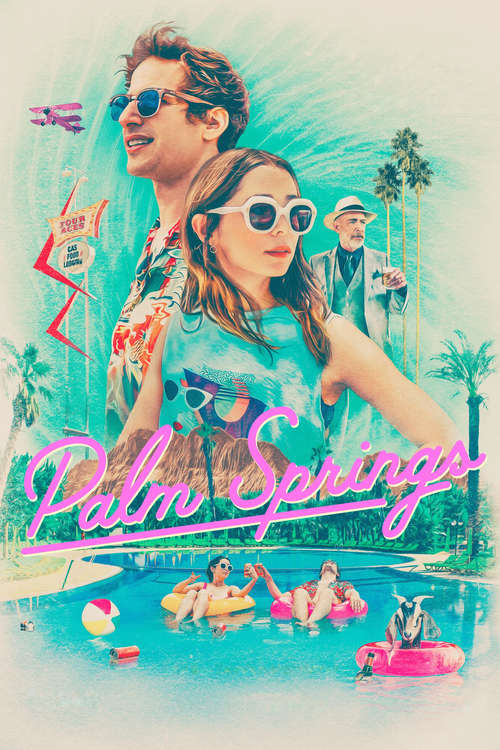
Brilliant time loop film (oh, spoilers, fuck off), let down only slightly by the ending. I’d have rolled credits when it goes black.
Not that the ending they did have is bad; just that it’s the weakest part of what is a totally great film.
‘New single by Belly’: not what you expect to see on your phone in 2021. Thanks, MusicHarbor.
However, as I wrote in ‘Colliding Names,’ back in October, this is a different performer with the same name. The Wikipedia article tells us that ‘our’ Belly are active again, though.
We started watching Line of Duty two or three weeks ago, and now we’ve caught up. So we’ll have to watch the rest of series 6 week by week. Like it’s the past.
How to Write an Autobiographical Novel by Alexander Chee (Books 2021, 4)
Despite the title, this is not a writing ‘how-to’ book, except maybe by example. Nor is it a novel itself; it is a collection of essays. The subjects they cover do include writing and writing courses, most notably the Iowa Writers’ Workshop. That was one of the first, if not the first, postgraduate-level courses in creative writing, and Chee studied on it.
But the book covers a lot else, too. As Chee is a mixed-race gay man, you won’t be surprised to hear that those details feature in a number of the essays. As does living in New York and trying to make it as a writer. And growing roses, and the origin of Catholic rosary beads.
I was drawn to this because one of the essays was assigned reading on the MA early this term, and he was also cited at various other points on at least two modules.
His debut novel is called Edinburgh, which immediately interests me. Though you learn from a couple of the essays that he hoped, when younger, to go to Edinburgh to study parapsychology, but didn’t; and that the Edinburgh connection in the novel didn’t survive the writing and editing process, but he kept the title anyway.
I don’t know what his fiction is like yet, but he’s a fine essayist.
Lunch and writing in the garden today, and unlike back in February, it’s not just not cold, it’s almost too hot.
On Giving Up On a Book
This is not, as you might have guessed from the title, about writing. It’s about reading.
How long should we give a book by even a beloved author, before giving up on it, if we are not enjoying it?
It’s relatively rare for me not to finish a book that I start. There are a few that I took a couple of runs at, having to start again – Ulysses springs to mind. And some that I haven’t finished, and would have to start again: Gravity’s Rainbow, Swann’s Way. I might never bother with either of those again, but you never know.
I’m fairly sure I’ll never get further than the the two or three pages I’ve managed into Finnegan’s Wake. And there’s the odd other one I’ve abandoned. One that I accidentally left on a train, and realised I didn’t care. It was something to do with an excise inspector in Scotland. No idea what it was called or who it was by.
Most of those above are what people would call difficult: something about the style, form, or content makes reading them a challenge. Overcoming that challenge can be rewarding, but we should never feel guilty about abandoning them if we’re not enjoying them, I feel. Reading for pleasure should not be a chore.
But now we come to a strange case. Claire North is an author I like a lot. The First Fifteen Lives of Harry August was great, and so was Touch, which I read the last time I was out of the country.
So I was pleased to get her 84k for Christmas. And I’ve tried to read it twice, but I just can’t get into it. It’s not that it’s boring or hard to read.
It’s that it’s unpleasant.
That probably doesn’t make a huge amount of sense. Lots of books have unpleasant characters, or depict upsetting or hurtful events. Lots of entertainment shows those things, TV, movies, songs…
I have mentioned here before that I don’t really care for dystopias as a subgenre.1 I’m not sure I can easily explain why that is, but they just don’t appeal.
And this is set in one. It’s largely a version of Britain, more or less present-day, but things have gone so far into privatisation, rampant capitalism, and generally Conservative party policies, that everyone knows the value of a human life.
That’s what the title means. That’s how much, in pounds, the rich have to pay to get away with murder. They can do anything else they want, too, as long as they can afford it.
I’m sure it will have a positive, maybe even uplifting, outcome. But I won’t be carrying on with it. I got about thirty pages in on my second time of starting it (only a couple the first time), and it’s just too bleak, too grim, for me to want to spend any more time there.
Maybe it’s partly the times were living in. But it’s not for me.
-
If that’s the right thing to call them. ↩︎