
Straight to Hell, 1987 - ★★
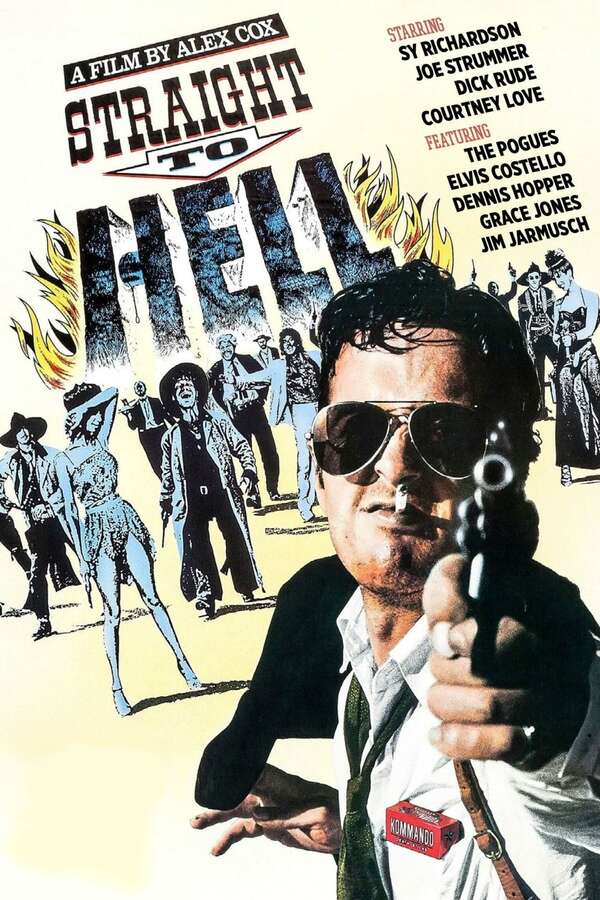
Alex Cox made a spaghetti western, with Joe Strummer, the Pogues, Elis Costello, Courtney Love 'acting' in it. Plus some proper actors.
The plot is completely incoherent, but I'm glad it's there.
Still, the best bit is the closing credits. Not because it's over, but because The Pogues' 'Rake at the Gates of Hell' plays over them.
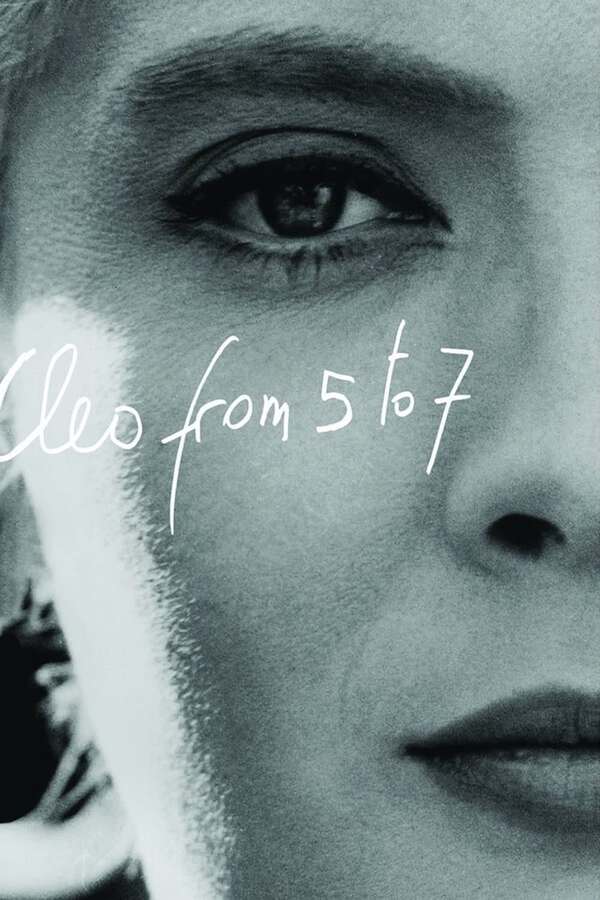
Frances Ha, 2012 - ★★★½
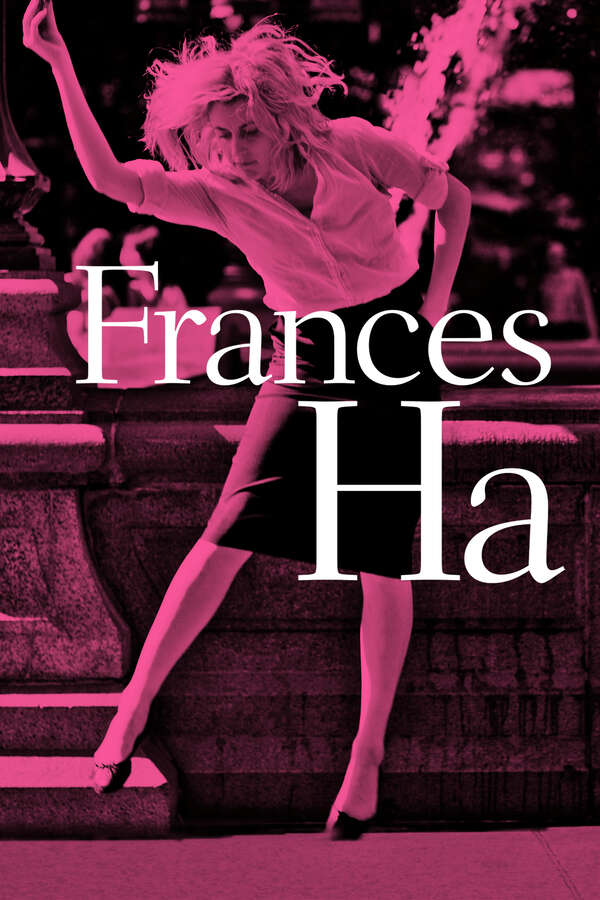
It’s as if a French New Wave film had been made in New York in the early 2000s (with a quick visit to Paris thrown in for maximum effect).
Written by Greta Gerwig and Noah Bauerbach, starring the former and directed by the latter. Frances is a would-be dancer/choreographer with friend, relationship, money, and apartment troubles.
Well worth a watch.
Well, it’s obvious that no one reads this, or they’d have drawn my attention to the ridiculous typo in the title of the last but one post. And of the book it was naming. My apologies to Becky Chambers.
Cold Comfort Farm by Stella Gibbons (Books 2023, 16) 📚
Normally speaking I’d claim a novel written in the 1930s and set in the late 40s for science fiction. But this doesn’t quite reach the threshold. There are around three obvious things that are futuristic: a reference to the Anglo-Nicaraguan war of 1946; ‘air mail’, where a package sent from London is dropped into a field in Sussex; and the astonishing combination of phone and television, allowing the callers to see as well as hear each other! Or rather, one caller to see the other, since phone boxes don’t have ‘television dials’ (but must at least have cameras).
Oh, and the train service has become rubbish, not because of the car or Beeching, but because (wealthy) people mostly fly.
But all that is nothing compared to how funny and overall good this novel is. Stella Gibbons wrote many other novels, but all of them are out of print but this, which is a great shame.
The Long Way to a Small, Angry Planet by Becky Chambers (Books 2023, 15) 📚
I started reading this a few years back, and stopped after the first chapter or so, because it seemed too similar to the thing I was trying to write at the time. I didn’t want to be overly influenced, or worse, unconsciously plagiarise it.
But it’s always been in the back of my mind. And recently I’ve been trying to get back into that novel I was working on then, and finding it difficult. So I thought maybe reading the space opera I backed away from because it was too similar to my own nascent space opera would be just what I needed to get me kickstarted.
That hasn’t quite happened yet (maybe because I read it on holiday), but I loved the hell out of this.
Great characters you enjoy spending time with. A plot that’s just believable enough, with stakes that are high for the characters and then get higher. An interesting, believable galactic political background, with Earth as very much the minor player.
None of the nonhuman characters feel really alien, except from in their physical descriptions, but that’s OK.
I’d say, if you liked Firefly, you’ll like this.
Lincoln in the Bardo by George Saunders (Books 2023, 14) 📚
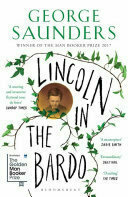
I’ve been meaning to read this since I read a review of it back when it came out, in 2017. So, six years on, I finally did.
It’s surprisingly slight, given all the fuss and praise. I wasn’t familiar with Saunders before reading that review, but he is famous for his short stories. I’ve read a few of those since — at least one during my MA — and they’re fine, but to my mind tend to suffer from the problem that many short stories have.
I’ve mentioned this here before, though seemingly only once. Often, when I read a short story — even, or perhaps especially, by one of the supposed greats of of the form: Carver, Hemingway, even Chekhov — I’m left thinking, ‘So what? What was the point of writing that, and why did you leave it where you did?’
However, I recognise the skill that it takes to conjure a life, a character, in few words. And Saunders makes good use of that ability here. Because the story is not very much about Abraham Lincoln. It’s not even that much about his son, Willie, who is the one who is actually in the ‘bardo’, a place where souls wait after death in some schools of Buddhism. Rather, it’s about some of the other souls that are trapped in the same Washington graveyard. We get a whole host of compressed backstories.
And we get altogether too many quotes from books and articles about Lincoln and the death of his son. I haven’t investigated to see whether these are from actual Lincoln biographies, histories of the American Civil War, and so on, or they are cleverly invented by Saunders. (This Wikipedia article suggests it’s a mixture.) But I found them much less interesting than the stories of the dead souls. A few would have been fine, for background, but it feels like they make up about half the book.
More stories about the dead, please.
Piranesi by Susanna Clarke (Books 2023, 13) 📚
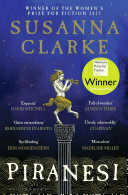
Piranesi has always lived in the house; even if that’s not his name, which it may not be.
A fantastic and fantastical, strange book, this; much simpler and shorter than Susanna Clarke’s previous, Jonathan Strange and Mr Norrell, which I loved. I kind of love this, too.
I don’t have a lot to say about it, though, as to say much would be to spoil it.
I’m not sure who the New York Times folks are trolling with today’s Connections, but it’s a good one.

The Runes of the Earth: The Final Chronicles of Thomas Covenant, Book 1 by Stephen Donaldson (Books 2023, 12) 📚
Forty years ago it was: towards the end of school, Watty — he of the Number 6 badge, celebrating The Prisoner — turned me on to The Chronicles of Thomas Covenant the Unbeliever.
‘What does he not believe in?’ I asked.
‘Everything!’ said Watty with relish.
It took me a while to get into the first book. There was an early section where I ground to a halt. But I went back to it, and ripped through the five books of the two trilogies that were out yet.
Then I had to wait. This is largely why I try not to start a series before its author has finished writing it. Those weeks and months through the first year of uni were interminable. (Only in that one regard, though, to be fair.)
There was a guy on my corridor in the halls of residence who was similarly waiting, and when White Gold Wielder came out, he bought it at once.
In hardback. I was shocked by the profligacy, and didn’t emulate him. Besides, it wouldn’t have matched my paperbacks.
But after he’d read it, he lent it to me. I wish I could remember his name.
So it should be clear that I liked the books a lot. However, I was thereafter corrupted by the general consensus that these were not well-written books, not a good example of the genre.
And yes, sure, they’re not particularly well-written. Donaldson can be over-wordy and repetitive at times. But he knew how to weave a tale that gripped me.
And now, forty years hence, after my son had borrowed my old copies and read them (including my paperback of White Gold Wielder, which I bought to complete the set, but have never read, since I never reread the series) he discovered (something which I vaguely knew) that Donaldson had written a ‘final’ trilogy. Which has since turned into a tetralogy. I don’t know when that happened. This volume that I read — my son’s — says it’s three volumes.
So how is it? Pretty damn good, actually. A copious ‘What Has Gone Before’ leads off, and reminds me how much I don’t remember about the original six books. And then — well, I don’t want to get into spoilers, but after the first hundred or so pages, it’s a real page-turner for the next four hundred or so, and leaves me keen to know how it all ends.
So expect more of this stuff here, in due course. This time, it’s all finished, and there will be no need for me to wait for a final volume.
The City & the City by China Mieville (Books 2023, 11) 📚
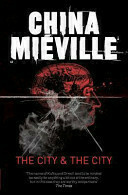
It’s like China wanted to write a police procedural, a detective story. But being China, there was no way it could be set in the quotidian world of today.
Which is great.. The setup here is that there are two cities, Besźel an Ul Qoma, somewhere in Eastern Europe; but they both occupy the same space. People in on can’t interact with those in the other.
That’s about as much as I knew about it before I started.
In another way it feels it’s kind of an extended metaphor for how we don’t notice things that are right under our noses. Or, as my beloved said, just for how we can live in a city like London alongside people from other cultures, people who look and dress differently, who even move differently; and never interact with them
This is both good and bad, of course. Or can be both or either depending on the circumstances. Because we’re ignoring other people, whole swathes of them. The live their lives, full, rich, desperate, happy, sad; and we know nothing of them. They know nothing of us. Yet we don’t get in their way. We don’t interfere with them. We let them get on with their lives, and they us with ours, not causing them problems, as they cause us none.
Or only the most minor of inconveniences as we avoid each other on the street.
But is there even a third city, co-terminal with the two we know about? Some believe there is. Does Orciny exist?
You’ll have to read it to find out.
Oh no, we’ve lost touch with Voyager 2. I feel weirdly sad about this. It’s the furthest-away thing humans have ever made.
This Scottish MP who’s been ousted by the people for breaking Covid rules: I think this is the first time we’ve had a recall in the UK.
Now, what we need is to have the policy extended to the whole of parliament. Could we get 10% of the electorate to vote to recall the current parliament? Yes. Yes, we could.
The Casual Vacancy by JK Rowling (Books 2023, 10) 📚
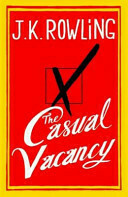
To tide me over until the new Strike book comes out (in just under two months) I suddenly decided to reread JK’s single non-pseudonymous, non-magical book. It’s over a decade old now, which is kind of hard to believe.
And it’s still bloody heartbreaking. How she can make us feel so much for so many flawed characters (but especially one or two) in so few words, never stops amazing me.
It’s a slice of small-town England, in which a parish council member dies, leaving the titular vacancy. And all that proceeds from that. It shouldn’t be as compelling as it is, based on that description. But there you go.
Barbie, 2023 - ★★★★½
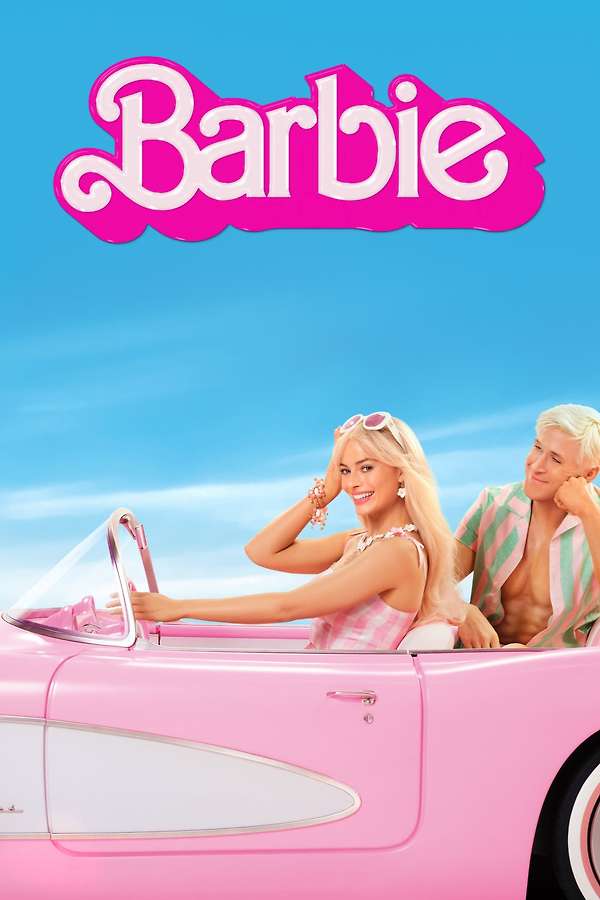
Best musical moment for me: ‘Closer to Fine’ by the Indigo Girls, repeatedly. That was unexpected.
And overall, it’s a great movie.
Oppenheimer, 2023 - ★★★★
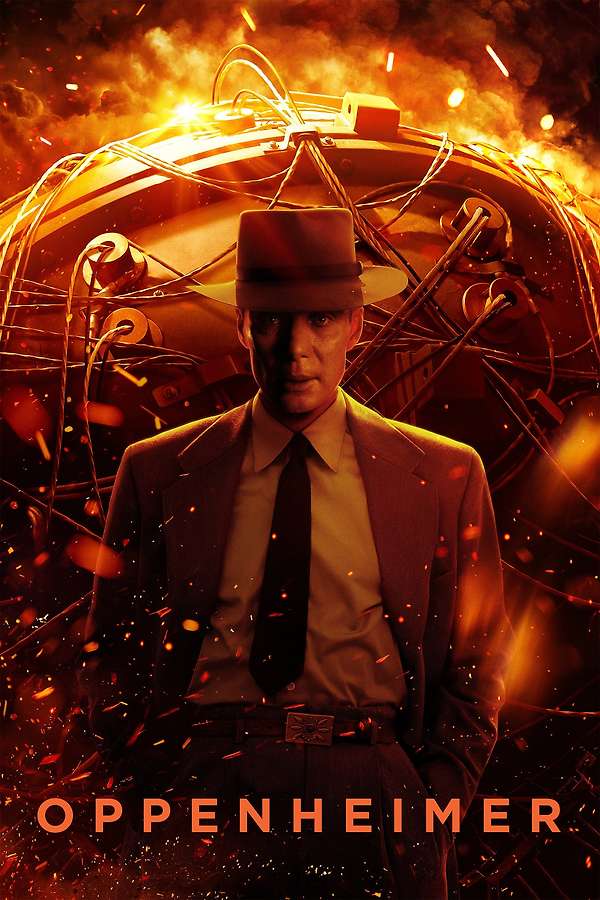
I’ve never seen the Hackney Picturehouse as busy as it was when we arrived last night. A rainy Monday in July, and it was packed. The Barbenheimer effect, of course. But I was there on the first weekend of Black Panther, I was at the opening night of the last Star Wars movie… Neither was as busy as this.
Oppenheimer was incredible. Hard to make out the dialogue, at times, of course, You expect that from Nolan, and we've maybe got worse at listening to screened entertainment, due to nearly always having the subtitles on at home.
But I didn't feel I missed anything too significant.Oppenheimer's story is quite incredible. I had the vague impression, since I knew only that he'd been instrumental in the Manhattan project, that he was more experimenter than theoretician, maybe an engineer, rather than a physicist. But it turns out (assuming the film and the book it's based on are right) that he was very much a theoretical physicist — even theorising about black holes — and very much not an experimentalist.
Later 'more politician now than scientist', as one of the many other characters says. And those other characters: so many names from the history of physics, many with parts so small you don't even realise they were there till you look at the cast list. Feynman, for example.
Heisenberg (I didn't know his politics were so uncertain); Bohr. Einstein, obviously, though he wasn't involved in the Manhattan Project.
Artistic license: how far were they from the trinity bomb, the initial test detonation? The longest distance they mentioned was twenty miles, for the longest-distance observers, and the closest 1000 yards. That must have been the blast radius, though: there's no way anyone was that close!
But as represented, the time between the light and the sound seemed ridiculously long. It created quite a chilling effect, though: I may never have experienced such a silence in a cinema.
Good film, would watch again. Preferably with subtititles.
Falling for Figaro, 2020 - ★★
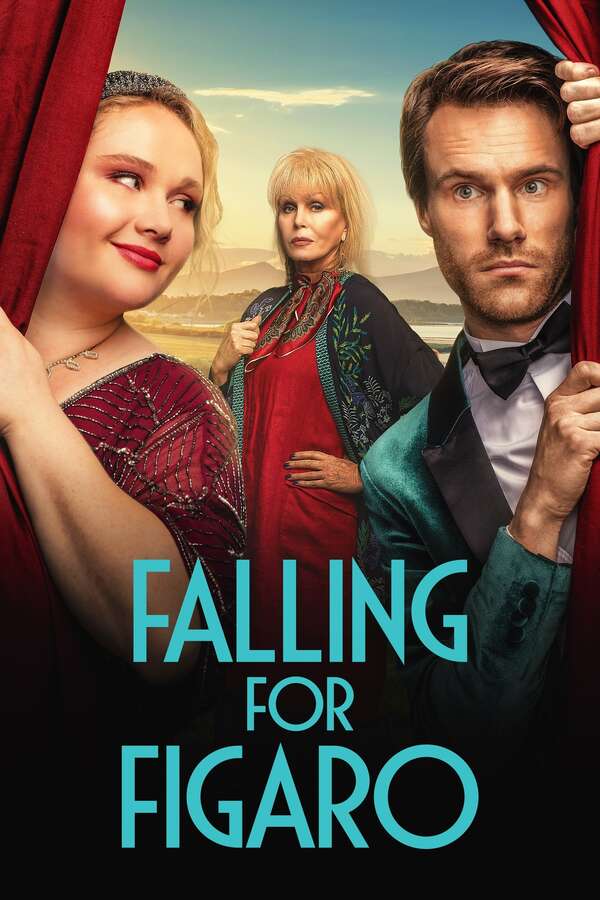
A woman gives up her high-paid fund-management job in London to try to become an opera singer. You could probably write the rest.
This was what you might call a slight movie. It has some feeling of being a romcom, without much of either rom or com.
It was moderately funny in places. It has Joanna Lumley as a faded opera diva now teaching in the Scottish Highlands, after all.
Started reading The City & the City by China Miéville 📚
This is one of only very few of China’s books that I haven’t read, and I’ve joined a kind of online book club at work, so I have to finish it by the 10th of August. Which should be doable.