
Crucial Track for 02 May 2025: Sit Down
"Sit Down" by James
Which song would you use to introduce yourself to someone new?
Not sure this is a thing I've ever done in the musical kind of sense, but I guess somebody might say, 'Tell me a song you love,' or something. I could answer with 'Sit Down' by James, for sure.
I saw them live a ton of times in the late eighties/early nineties. They're probably the band I've seen most, along with The Pogues and The Fall. Including on my 25th birthday, headlining the Reading Festival. Actually The Pogues were on that day, too. Or so my memory says, even if the Reading histories don't.
An interesting thing about 'Sit Down' is that they released it as a single and it didn't do much. I saw the video a load of times on the old ITV Chart Show on Saturday mornings back when I lived in Walthamstow.
But like a year or so later they didn't just rerelease it; they rerecorded it, with reordered verses, and a more upbeat performance. Here's the original video on YouTube.
The new version, of course, became a huge hit.
Crucial Track for 02 May 2025
"Sit Down" by James
Which song would you use to introduce yourself to someone new?
Not sure this is a thing I've ever done in the musical kind of sense, but I guess somebody might say, 'Tell me a song you love,' or something. I could answer with 'Sit Down' by James, for sure.
I saw them live a ton of times in the late eighties/early nineties. They're probably the band I've seen most, along with The Pogues and The Fall. Including on my 25th birthday, headlining the Reading Festival. Actually The Pogues were on that day, too. Or so my memory says, even if the Reading histories don't.
An interesting thing about 'Sit Down' is that they released it as a single and it didn't do much. I saw the video a load of times on the old ITV Chart Show on Saturday mornings back when I lived in Walthamstow.
But like a year or so later they didn't just rerelease it; they rerecorded it, with reordered verses, and a more upbeat performance. Here's the original video on YouTube.
The new version, of course, became a huge hit.
Kind of hard to believe, now, the one on the left would go on to lead Britain’s worst (or maybe best) spies. Still with fag in hand, mind you. I wonder if Gary Oldman smokes.

Crucial Track for 1 May 2025: Mario Y Maria
“Mario Y Maria” by Butch Hancock
It’s annoying that the song I want to use for the prompt, ‘Share a song that tells a great story,’ isn’t found on Apple Music. It’s sitting right there in my music library being fantastic, ever since I ripped it from a cover CD from Uncut magazine, back in 2002.
It tells the tale of a pair of lovers that we might describe, in the clichéd form, as ‘star-crossed’. But it’s not a tale of young lovers. Rather, the titular pair are experienced, world-weary (certainly by the end), but they keep on keeping on.
I don’t know if creating this entry will even work with the song not found, but if it doesn’t, I’ll create the post manually. (It didn’t; I did.)
Masked and Anonymous, 2003 - ★★★½
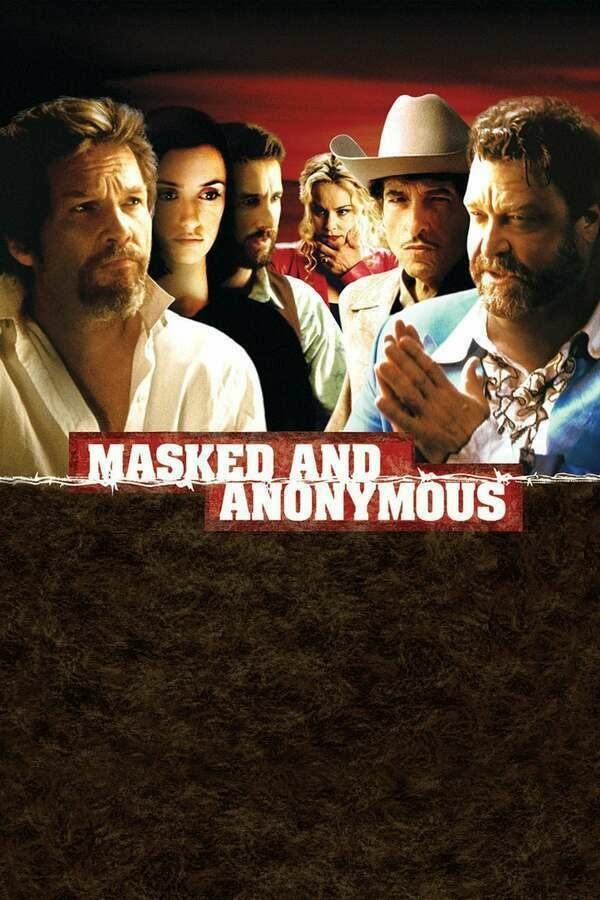
I'd give it five stars for the soundtrack: all Dylan songs. The story is also all Dylan. And the lead actor: Dylan too.
Yes, in 2003, Bob Dylan wrote and starred in this film. In a country in state of constant revolution and war, with the dictator-president dying, a singer is released from prison to play a benefit concert. It's not clear why, but 'The Network' wants to broadcast it.
And Uncle Sweetheart, played by John Goodman, is hoping to get rich from it. It can't end well, and Jeff Bridges, as a journalist who talks a lot more than he writes, listens, or observes, is supposed to be uncovering the corruption.
It can't end well, and frankly it's a bit incoherent. Enjoyable enough though, and certainly interesting to the Dylan fan.
Incredible Story About the Smallpox Vaccine
Astonishing story in The Atlantic, about the smallpox vaccine:
At the heart of history’s most successful eradication campaign is a mystery. The smallpox vaccine—now also being deployed against monkeypox—contains a live virus that confers immunity against multiple poxviruses. But it is not smallpox or a weakened version thereof. Nor is it monkeypox. Nor is it cowpox, as suggested by the vaccine’s famous origin story involving pus taken from an infected milkmaid to immunize an 8-year-old boy.
The vaccine predates systematic, controlled manufacture, so several or many versions were made from various sources. And they were transferred by sending infected children around the world! I do seem to recall hearing that last part before, but not the fact that its true origin is shrouded in mystery.
Well worth a read. Via Kottke
I still don’t understand why AI gives me such a visceral negative reaction.
The intellectual reasons for concern are well known.
But right now, I just wish apps would stop adding AI and trying to tell me it’s great. I’m looking at you Raycast, but you’re just the most recent culprit.
Crucial Track for 30 April 2025: Death or Glory
"Death or Glory" by The Clash
I don't know if this song always makes me feel better, exactly, but I love it to bits and want it played at my funeral. So there's that.
Crucial Track for 30 April 2025
"Death or Glory" by The Clash
I don't know if this song always makes me feel better, exactly, but I love it to bits and want it played at my funeral. So there's that.
Crucial Track for 29 April 2025: Hungry Heart
"Hungry Heart" by Bruce Springsteen
As far as representing my current mood goes, I'm actually just hungry. But Springsteen's 'Hungry Heart' is always a good choice. The story goes he wrote it for The Ramones, or at least was going to offer it to them. But he decided to keep it, and of course put it on The River.
That album — and most of his gigs since — wouldn't have been the same without it. But I'd still love to have heard The Ramones do it.
Crucial Track for 29 April 2025
"Hungry Heart" by Bruce Springsteen
As far as representing my current mood goes, I'm actually just hungry. But Springsteen's 'Hungry Heart' is always a good choice. The story goes he wrote it for The Ramones, or at least was going to offer it to them. But he decided to keep it, and of course put it on The River.
That album — and most of his gigs since — wouldn't have been the same without it. But I'd still love to have heard The Ramones do it.
Crucial Track for 28 April 2025: The Prince
"The Prince" by Madness
Madness: At the heart of the ska revival of the eighties. I’d have gone to see them in Glasgow, on the Two-Tone tour, with The Specials and The Selecter, if it hadn’t been at an over-18s-only venue. I was 16.
Crucial Track for 28 April 2025
"The Prince" by Madness
Madness: At the heart of the ska revival of the eighties. I’d have gone to see them in Glasgow, on the Two-Tone tour, with The Specials and The Selecter, if it hadn’t been at an over-18s-only venue. I was 16.
Crucial Track for 27 April 2025: Ticket to Ride
"Ticket to Ride" by The Beatles
It’s interesting that, although I could give you various answers to the ’first single’ question, I don’t actually know what the first album I bought was.
Still, it’s bound to have been a Beatles one. So let’s go with the Red Album, and ‘Ticket to Ride’.
Crucial Track for 27 April 2025
"Ticket to Ride (2023 Mix)" by The Beatles
It’s interesting that, although I could give you various answers to the ’first single’ question, I don’t actually know what the first album I bought was.
Still, it’s bound to have been a Beatles one. So let’s go with the Red Album, and ‘Ticket to Ride’.
Wordle 1,407 2/6*
🟨🟨🟩🟨⬛
🟩🟩🟩🟩🟩
I must say, I’d’ve been very disappointed if I hadn’t got this one, but I haven’t often got it in two.
Crucial Track for 26 April 2025: I'm So Free
"I'm So Free" by Lou Reed
Lou Reed is one of my all-time faves, both with the Velvets and solo. This one popped into my mind this morning as we were walking back from badminton (playing the game, not the place where they have horsey things). It’s from the mighty Transformer album.
Crucial Track for 26 April 2025
"I'm So Free" by Lou Reed
Lou Reed is one of my all-time faves, both with the Velvets and solo. This one popped into my mind this morning as we were walking back from badminton (playing the game, not the place where they have horsey things). It’s from the mighty Transformer album.
Crucial Track for 25 April 2025: Baby, I Love You
"Baby, I Love You" by Ramones
First love, eh? 'Music was my first love,' as an old song has it, 'And it'll be my last.' But that's not what this is about, really, is it?
Let's go with The Ramones (they were going to turn up some time, in one or another form, of course), where they made it on to Top of the Pops. Maybe because Phil Spector was at the controls, though we'd have to hope not.