
Longform
Mission: Impossible, 1996 - ★½
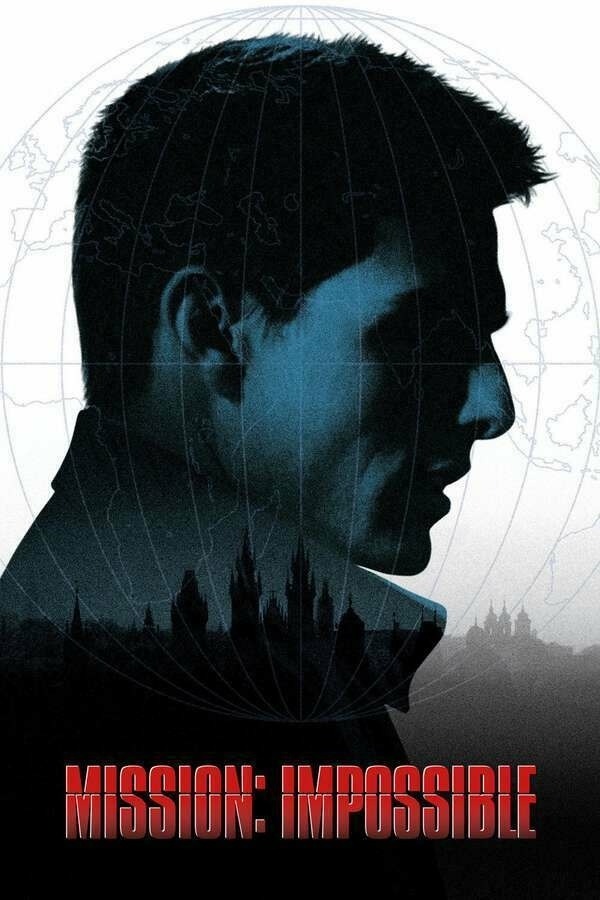
I didn't see this film when it came out, but I used to love the Mission: Impossible TV series back in the seventies.
So this really annoyed me. Why the fuck would you make Jim a traitor? The heroic leader of the IM team for years? The man to whom the self-destructing message was always given. Give him a peaceful retirement, for god's sake. Or just leave him out of it. Don't have him betray everything he ever stood for.
I mean Jesus fuck almighty. It's like if Star Trek: The Next Generation had come along, and they were like, oh yeah, Kirk? He was a Romulan agent all along. Blew up the old Enterprise and everyone on board.
That's the kind of betrayal this film starts with.
Anyway, some shit happens. Things explode. Restaurants, helicopters, trains. Fuck knows.
Crucial Track for 10 October 2025: Clash City Rockers
"Clash City Rockers" by The Clash
Damn, I haven't added a Crucial Track since June? What's been happening?
Today's prompt is:
A song from the 1970s that you like or means something to you.
Well, I mean. If the golden age of music is 14, as the old saying has it, then we're talking about 1978. Let's go straight to the top, then, with The Clash, and 'Clash City Rockers', indeed. Can't go far wrong with that.
What does it mean to me? I first became aware of it by hearing friends who already had it, singing it. Brendan, I think. And the first time I heard it might have been at a gig by the band he was in with Friendy, The Varicose Veins, doing a version of it.
I certainly didn't buy it when it came out (14, remember), but a couple of years later, at one of the Glasgow record shops. Possibly Listen Records on Renfield Street, but it might have been the Virgin Megastore, down the bottom of that street — or rather its continuation, Union Street — on the corner with Argyle Street. I think it probably was, because they had a lot of space and kept a lot of browsable back catalogue.
Great song, great B-side in 'Jail Guitar Doors'. I once saw Primal Scream at the Reading Festival invite Mick Jones on stage and do a version of that.
'Rock rock, Clash City Rockers!'
Crucial Track for 10 October 2025
"Clash City Rockers" by The Clash
Damn, I haven't added a Crucial Track since June? What's been happening?
Today's prompt is:
A song from the 1970s that you like or means something to you.
Well, I mean. If the golden age of music is 14, as the old saying has it, then we're talking about 1978. Let's go straight to the top, then, with The Clash, and 'Clash City Rockers', indeed. Can't go far wrong with that.
What does it mean to me? I first became aware of it by hearing friends who already had it, singing it. Brendan, I think. And the first time I heard it might have been at a gig by the band he was in with Friendy, The Varicose Veins, doing a version of it.
I certainly didn't buy it when it came out (14, remember), but a couple of years later, at one of the Glasgow record shops. Possibly Listen Records on Renfield Street, but it might have been the Virgin Megastore, down the bottom of that street — or rather its continuation, Union Street — on the corner with Argyle Street. I think it probably was, because they had a lot of space and kept a lot of browsable back catalogue.
Great song, great B-side in 'Jail Guitar Doors'. I once saw Primal Scream at the Reading Festival invite Mick Jones on stage and do a version of that.
'Rock rock, Clash City Rockers!'
📗 Books 2025, 23: How to Solve Your Own Murder, by Kristen Perrin
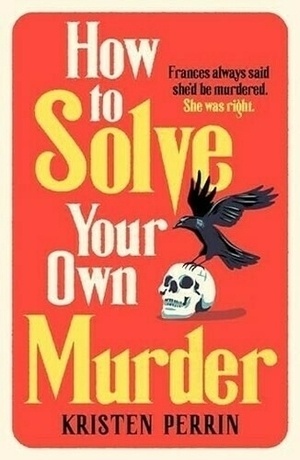
Most sites describe How to Solve Your Own Murder as ‘cosy crime’, which I suppose it is. It has a first-person protagonist, so the reader doesn’t think there’s much chance she’ll die. She does find herself in some danger, though, and hell, she might not inherit her great aunt’s fortune, if she doesn’t solve the mystery of her murder.
The great aunt’s murder, that is. Our heroine has never met the great aunt at the start, and never does, because she’s murdered right away. But we know from a prologue that the great aunt always expected to be murdered. A medium told her so — or at least implied as much — when she was 16. It became the defining fact of her life, which is quite sad.
The great aunt is a secondary first-person narrator, by way of her diaries. So we get alternating chapters of the past and present. It’s a good read.
I did something unusual for me at the end: I read the few pages fom the sequel that are included at the back. Usually I skip that kind of thing. Especially when it’s not from a sequel, but from another book entirely. Not this time, though, and I’ll be seeking out How to Seal Your Own Fate (‘Book two in The Castle Knoll Files’) at some point.
📗 Books 2025, 22: Orbital, by Samantha Harvey
A Booker winner, no less. And a science-fiction novel, too. Well, of sorts. It’s set in space, but very much the non-fictional, real space of the International Space Station, and the present day. And nothing weird or fantastic (in the fantastika sense) happens.
Yet it is set slightly into the future. On the day it takes place — the whole story happens across a single day, sixteen orbits of the space station — a new mission to the moon is launched. A crew of four, scheduled to land on the moon a few days later. Is that enough to make it SF? Kind of. If it were up for SF awards, which I’m sure it must have been, few would quibble.
But none of that matters compared to how gorgeous the prose is. This is a very writerly novel. The language is lovely, almost poetic in places; yet with a lot of lists, oddly, both from the author and from at least one of her characters.
I was, however, mildly annoyed at times, in two aspects of my being. The physics graduate disagreed with some word choices. Right in the opening line, for example, a space station in orbit is described as ‘rotating’ round the Earth. While that’s not exactly wrong, it’s not how we’d usually phrase it. Orbiting or circling, we’d say. It might be rotating too, but that would be around its own axis. A tiny thing, though.
Then the writer and user of English was mildly disturbed by how the small amount of dialogue was presented: no quote marks. That’s not uncommon nowadays, but it can be distracting, and what purpose does it serve?
It’s a delightful work. There isn’t much plot, but there are fragments of all the six crew members' stories. We see them at work, performing experiments and maintaining the station; watching a typhoon building on Earth and worrying about the people in its path; and musing about and remembering their lives and families back home.
It’s incredibly skillful to conjure so much from so little text — it’s unusually short for a modern novel. A worthy winner, and very highly recommended.
Sliding Doors, 1998 - ★★½ (contains spoilers)
This review may contain spoilers.
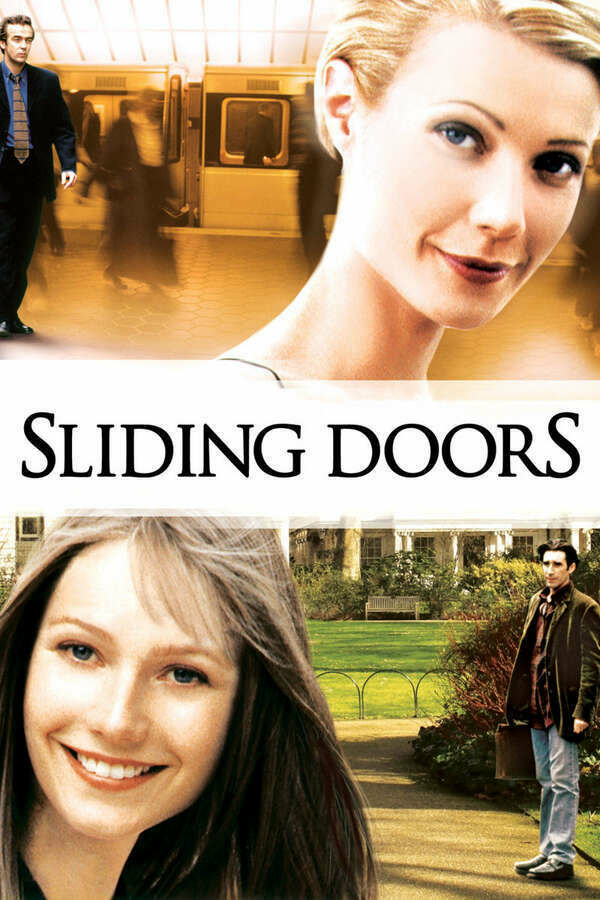
Well my goodness, but this is a strange old film. I've known about it and kind of wanted to watch it for years, because I knew it was about alternative realities, paths not taken, that kind of thing.
What I didn't know is it's also a romcom. Or two. Of sorts.
And a tragedy. I mean, spoilers, but…
What were they actually trying to make here? Part of me thinks the idea was, 'Hey, what if we have a romcom but tragic, and the heroine dies at the end?' And the studio, or co-creators were, like, 'No way.'
'Unless…'
And you end up with two romcoms. Sort of.
📗 Books 2025, 21: The Book of Daniel, by EL Doctorow
It’s a strange thing, or so it seems to me, to deal with a political event of your own lifetime, by writing a fictional version of a life. And not of one of the protagonists, but of an imaginary version of one of their children. Yet this is what we have here, and it’s on the whole successful.
Doctorow takes the story of the Rosenbergs, who were accused of conspiracy to commit espionage against the USA, convicted, and executed in 1953. Changing their name to Isaacson, he tells the story of their son, Daniel, along with his younger sister, Susan. In reality the Rosenbergs had two boys, but their ages were similar, and some of what happened to them after their parents' arrest, according to Wikipedia, is similar to the experiences of Daniel and Susan.
As a novel it’s extremely well written, both readable and literary. It uses a number of devices — I might call them gimmicks, if that didn’t seem too dismissive, but I’m not sure I understand the reason for them. It switches frequently between Daniel’s first person and third — sometimes within the same sentence —, and also jumps around in time. One section is told from the point of view of the father and mother, which makes sense, as it’s when they are in prison and on trial, where Daniel would have no access to them.
The whole thing is presented as the thesis (or part of it) that Daniel is writing for his PhD, so there are several levels of meta involved. The main problem I had with it was the adult Daniel is at times a thoroughly objectionable character. There are a couple of early scenes where he sexually humiliates his young wife that nearly made me throw the book across the room.
Protagonists don’t have to be pleasant characters, of course, but this seemed prurient to me. I suppose we’re meant to understand he’s been damaged, if not abused. by his experiences, and goes on to abuse in turn. But I’m not sure the two sides tie up that well. The scenes of the young kids trying to make their way after their parents are gone, running away from an awful children’s home and returning to their now-empty house, are very moving.
Susan is in a mental institution at the start, and apparently dies there. Her story is the one that’s missing from this, in fact. We learn about her as a kid, certainly, and there are some interactions with Daniel when they’re older, then they’re estranged for a while. Then he visits her at the institution and she dies offstage. It feels like a gap, but again, maybe that’s how life feels sometimes.
As I say, it’s an unusual choice. Doctorow could have written a story about children torn from their parents and all that implies, without making it so closely tied to real events. Or he could have written a biography of the Rosenbergs. The latter would be a different kind of thing, though, and probably have a different readership. You’d only read such a biography if you were specifically interested in the case or the people, while you can read this as a novel without even knowing it’s inspired by real events. And maybe that’s the reason for using the events as the seed.
📗 Books 2025, 20: The Hallmarked Man, by Robert Galbraith
The mighty JK Rowling’s latest reaches us, at long last. After the bombshell ending of The Running Grave two years ago, we have the next installment in Strike and Robin’s story. (That should really be ‘Strike and Ellacott’s’, or ‘Cormoran and Robin’s’, but sometimes you’ve got to write things in the way that feels right).
The case is way complex. I’m not sure I followed all the twists, or even quite had all the characters figured out — especially actual and possible victims, even more than culprits. That’s partly because of the speed I read it at, and the late nights my reading caused.
Anyway, I’ll not say too much more because of spoilers, but I think The Ink-Black Heart is still my favourite.
The Italian Job, 1969 - ★★★½
I would have said I had rewatched this inside the last five years or so (after seeing it as a kid). But I remembered next to nothing of it, apart from the overall idea and the iconic scenes.
It's still pretty good. Oddly, it kind of makes me want to see what they did with the remake, but let's face it, the answer is probably, 'made a mess.'
📗 Books 2025, 19: In Ascension, by Martin MacInnes
It’s unusual to get a science-fiction novel that was also longlisted for the Booker, as this was. The question, though: is it science fiction?
It certainly has science: most notably marine biology. Also space travel to the edge of the solar system via a new, unexplained drive; something which might be a first contact event; possible time travel; and a kind of ascendence. In fact there’s a section near the end that had strong resonances of 2001: A Space Odyssey for me.
So yes, it’s SF. But it feels somehow incomplete. Not unfinished, except in the way you might say that about 2001 itself. It keeps the pages turning OK, but I’m not entirely sure exactly what it’s trying to achieve, and (therefore) whether it’s successful.
It tells two stories at once. And I do wonder whether MacInnes was similarly torn between his desire to write a mainstream, literary novel, and one diving deep into fantastika.
Leigh, the marine biologist who ends up on a space mission, had a physically abusive father, which not surprisingly affects much of her life. Though her sister appears not to have suffered similarly, and there are hints that Leigh is not entirely a reliable narrator. (But then again, who is?) The adult Leigh is torn between her career and her desire to visit her mother, who is showing signs of dementia.
As a marine biologist Leigh experimentally engineers algae which is intended to feed, oxygenate, and cheer up the small crew of a year- (or more) long voyage. But there’s a lot going in the background of the story, that Leigh and most of the other characters are not privy to. Secrets kept by companies and governments. We, the readers, are also kept outside the walls of secrecy.
So it’s very good at evoking the situation of someone who is a cog — albeit an essential one — in very complex machine, but who has no picture of the machine as a whole.
All of which leaves it convincing, but frustrating, especially if you’re looking for a nicely wrapped-up story.
📗 Books 2025, 18: Glory Road, by Robert A Heinlein
I had a sudden hankering to reread this old Heinlein book (even older than me, it turns out, being first published in 1963). I read it as a kid, from the library, and if I ever bought a copy it isn’t accessible now.
I searched my local library’s catalogue. No joy. But the excellent World of Books duly had an old copy or two, and one was soon here.
It is almost exactly as I remembered it, which is to say it’s a tale of derring-do, sword-and-sorcery adventure, where the sorcery is sufficiently-advanced technology. We don’t learn anything about how it works, and it doesn’t matter. It’s just a fun story, very much of its time.
The first-person male protagonist is one of those highly-capable men beloved of that era’s male American SF writers. But he is relatively lacking in self-confidence at times, which is surprisingly refreshing for the type. The female lead is mostly great, and considerably more capable than the guy, even if he doesn’t exactly realise it.
Anyway, loads of fun, and I’m glad to have read it again after all these years.
The Naked Gun, 2025 - ★★★½
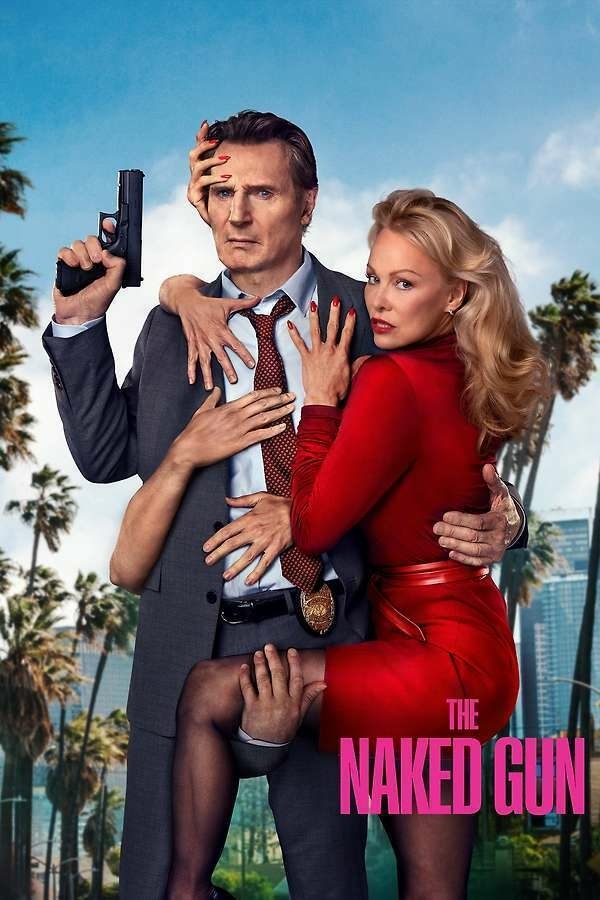
Remakes can be just as much fun as the original, it turns out. I note I gave that four stars, which seems high, but you know how it is: we award these things in the moment.
Anyway this new version updates the old without losing any of its zany charm and laugh-out-loudness. Well worth a couple of hours of your time.
The Ballad of Wallis Island, 2025 - ★★★★½
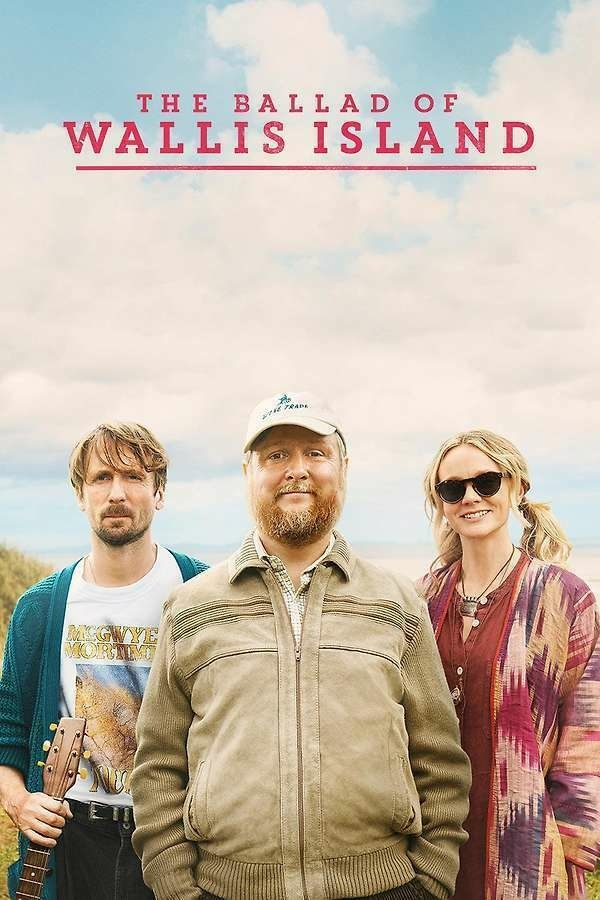
I forgot to write about this when we saw it a couple of weeks back. I went in knowing nothing about it but the basic setup: rich guy invites faded, formerly popular, folk duo to his island for a private gig.
I didn't even know it was a British film. The above description gives kind of Glass Onion vibes when you tell it to people, but this is nothing like that. It's much more gentle and charming and sad yet happy.
The music's great too. Highly recommended.
📗 Books 2025, 17: Theophilus North, by Thornton Wilder
The roaring twenties, told from the seventies, and read in the… unroaring twenties? Much better than that famout novel set in the twenties.
📗 Books 2025, 16: The Cracked Mirror, by Chris Brookmyre
The new Chris Brookmyre is a detective story in multiple genres, you could say.
📗 Books 2025, 15: To the Lighthouse, by Virginia Woolf
In which I talk whimsically about a modernist masterpiece.
📗 Books 2025, 14: The Final Empire, by Brandon Sanderson
This is the first book in the Mistborn series, and I saw in a bookshop the other day that it’s now published just as Mistborn. Which is more sensible. I can’t help but imagine some potential readers were put off or confused by that ‘final’ in The Final Empire.1
My son basically made me read this. He’s a Sanderson fan and I had read none. He (my son) also told me Sanderson wanted to write a fantasy where the good guys had lost. Like what would have Middle Earth been like if Frodo and Sam had failed on their trip to Mordor? Sauron would have got the one ring back and basically been all-powerful.2
So this is basically that, with quite a different setup. The empire is ‘Final’ because it has lasted a thousand years or more and is never expected to end. Most people live as peasants, near slaves, and few noble houses are allowed to exist because the empire needs trade and internal tensions and what have you. The emperor — The Lord Ruler, as he’s known — is basically all-powerful, invulnerable. He’s said to have survived various assassination attempts up to and including a beheading. Which seems… wildly improbable, but hey, this is fantasy.
But some people — the titular Mistborn, and others — have special abilities, and there are pockets of resistance.
Sanderson writes a good enough page-turner, but I don’t know if I’ll be going on with the series. First of all there are just too damn many. But more importantly, and surprisingly, this first book is actually quite a complete story, with an ending. Sure, it’s a reasonably open ending, with hints of the kind of troubles the characters are going to face, and so on. But if there were no more books, you wouldn’t feel unsatisfied to leave it there.
And I don’t care enough about any of the characters to want to invest my time in it. Which is probably its biggest weakness. I even left it at home when we went on holiday to Canada recently. I was about 100 pages from the end and didn’t want to have to pack such a huge book that I would probably have finished on the flight over. Which is not how I’d have treated The Lord of the Rings back in the day, just to give one example.
Clue, 1985 - ★★★½
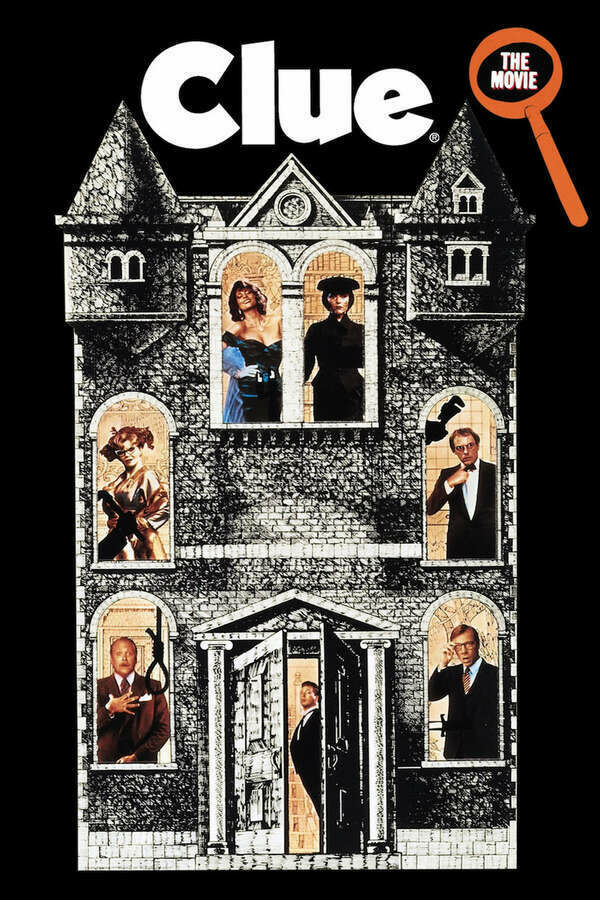
This was daft, but quite fun. A film based on a board game. Specifically on Cluedo. Which in America, strangely, seems to be called 'Clue'. Why would you not use such a great, clever name as 'Cluedo'? Unless they don't have Ludo there? But that seems impossible.
Anyway, it's probably the second-best thing I've seen Tim Curry in. Hmm, he was in Times Square, wasn't he? I remember enjoying that, but not much about it. Right now I'd have to but this ahead of it. He plays the butler, and since one couple turn up in the same car, and it's a stormy, rainy night, I was getting serious Brad & Janet vibes. I was disappointed when they had an umbrella on getting out of the car, instead of a newspaper.
Anyway, the writers had to struggle a bit to fit the conventions of the game into an actual story, but they did OK. There are shenanigans, murders, betrayals, multiple endings. All in all, not bad.
📗 Books 2025, 13: No Great Mischief, by Alistair MacLeod
This was published in 2000, and my partner’s parents gave it to me that year or the next. I have a vague feeling I also knew about it from somewhere else. Maybe just saw it in a bookshop and thought it looked interesting. Either way, I never got round to reading it till now.
It’s the story of a Scottish family — clan, almost, and certainly they’re referred to that way in the Gaelic terms that pepper the book — that migrated to Canada some time after Bonnie Prince Charlie’s 1745 uprising. It’s simultaneously the history of that migration, and the story of a present-day descendent of the family, now a successful orthodontist in Ontario; and his older brother who is in less successful circumstances. And most of all, of how they came to be that way.
I decided, since we were taking a trip to Canada, that now might finally be the time to read it. I started it on the way to the airport, but I don’t think I read any while we were still over there.
I’ve finished it now, though, and it’s pretty good. Nice use of parallel storylines, various bits about Scottish history and modern-day (well, actually the modern parts are set in the 80s) Toronto, and so on.
MacLeod came up in conversation while we were over. Not apropos of this; I just recognised the name. He was mentioned as a poet, I think, and I believe that’s how he’s better known. Still, he’s a decent novelist too.
Persuasion, 2007 - ★★★
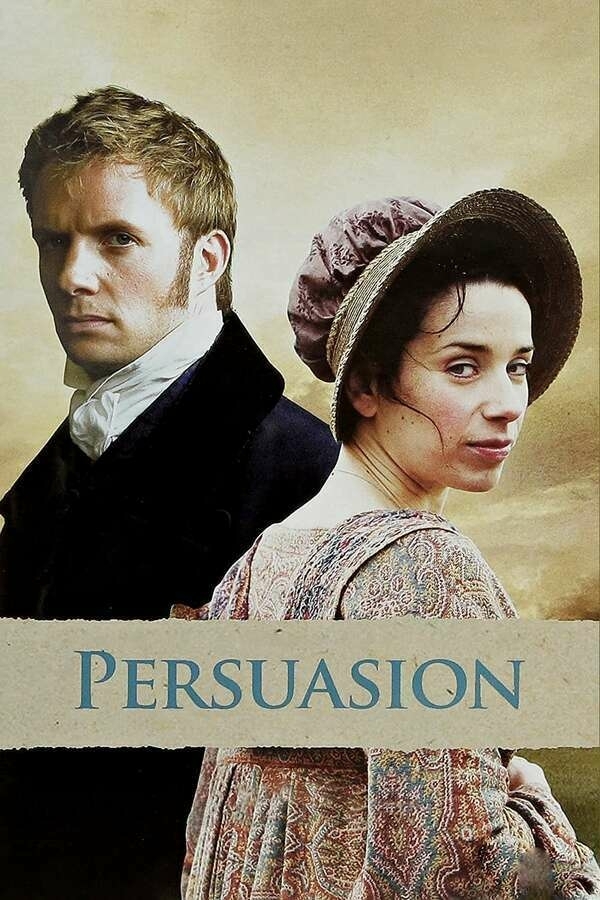
Decent Austen adaptation. I haven’t read the book, which, I understand, many say is her best. I thought the ending fell a bit flat.