
books 2025
📗 Books 2025, 11: Blitzkreig Bops, by Alli Patton
I picked this up at a stall at the local market a few weeks ago. It’s a slim volume, taking its title from the Ramones’ song ‘Blitzkrieg Bop’, and subtitled, ‘A Brief History of Punks at War’. Alli Patton is a music journalist from the southern US and this slim book takes a look at how punk, from the 70s through to the 20210s, has been used to resist war, and call for peace and justice.
She starts with Stiff Little Fingers and the Troubles in Northern Ireland, and moves on through apartheid South Africa to Chile during Pinochet’s regime and punk bands in East Germany during the Cold War.
And then beyond that, decade by decade. There are always wars and oppression, and it seems there are always punk bands resisting and calling for peace.
Worth a read, and she includes a YouTube playlist of some of the artists she covers.
📗 Books 2025, 10: The White Album, by Joan Didion
I read one of the pieces from this, ‘At the Dam’, on my MA course. It didn’t make a huge impact on me at the time, but enough to keep Didion’s name in my mind, and eventually to stir up enough interest for me to get this.
It’s a set of personal essays covering various events around the end of the sixties and the early seventies. It struck me, reading this, she’s kind of a gonzo journalist, or at least gonzo-adjacent, in that the often puts herself in the narrative. Which is good and proper in my humble opinion. Not as intense as HST, but still.
There’s a lot of good, interesting stuff here, including one piece that involves her hanging out with The Doors, waiting for Jim Morrison to arrive. It’s not much about music, though, and I don’t know why she chose to call it The White Album.
One minor annoyance about at least this edition is, although the front matter credits the various publications the pieces originally appeared in (Life, The New York Review of Books, etc), it doesn’t tell us which piece appeared where.
But that doesn’t detract from the pieces themselves.
📗 Books 2025, 9: The Interpreter, by Brian Aldiss
Slim, old-fashioned, good idea, but not that well executed.
📗 Books 2025, 8: The History of Rock ‘n‘ Roll in Ten Songs, by Greil Marcus
Should I include it if I started it years ago? Yes. Is it beautifully written? Yes. Is it definitive? Certainly not.
📗 Books 2025, 6: The Pale Horse, by Agatha Christie
Christie does the supernatural! Or not? And reaches the 60s.
📗 Books 2025, 5: Annihilation, by Jeff VanderMeer
As The Dispossessed starts with a wall, Annihilation starts with a tower. And as LeGuin’s wall round a spaceport both closes the planet off from the rest of the universe, and encloses the universe, depending on how you look at it; so VanderMeer’s tower has its topological oddity. It starts at ground level and goes down, into the ground underneath it, rather than rising into the air.
Or so the Biologist sees it, But this is Area X, and things are rarely as they seem.
The Biologist is the first person narrator. Accompanied by three other women — the Psychologist, the Anthropologist, and the Surveyor — they are the latest in a series of groups sent in to investigate the mysterious zone.
Almost everything is unexplained in this book. It is incredibly compelling, gripping, even, but everything remains unexplained, the ending is open. Yet while there are three more books in the series, I feel it’s such a perfect little nugget, beautifully crafted, that to read on would almost spoil it.
I suspect that’s not true, though. We are in safe hands with VanderMeer, so I expect the continuation will be sound. I remember my friend Simon having a similar response when he read Hyperion. Its perfectly-crafted open ending seemed to him like it didn’t need a sequel. But of course The Fall of Hyperion was magnificent, and so were the two Endymion followups.
Anyway, this is great, but you probably already knew that, what with winning awards and being ten years old.
📗Books 2025, 4: Northanger Abbey, by Jane Austen

We started watching Miss Austen, the BBC serial about Jane’s sister Cassandra trying to get hold of Jane’s letters a few years after her death. That made me want to read some more Austen, the only I’ve read before being Pride and Prejudice.
So I tried Northanger Abbey. Which is mainly a spoof of the gothic novels that Austen herself would have been reading at the time, and also, of course, a romance.
I enjoyed it a lot, but it ended very surprisingly. It has the omniscient narrator you might expect for a book of its time, but it’s mostly written in close third-person. We are privy to Catherine’s thoughts and fears. But the thing is, when we get to the climactic scene, when everything is going to be resolved and our heroine end up happy (it’s not much of a spoiler), Austen (or the narrator) turns away.
Instead of being with Catherine as the hero rides to her emotional rescue, we are told about it. We’re kept at a distance, no longer aware of what’s going on in her head. It’s an absolute masterclass in the difference between ‘showing’ and ’telling’ in writerly terms; but the wrong way round for a really satisfying experience.
Perhaps it was a continuation of the style of those gothic romances she was parodying, but read today, it’s a strange choice.
📗 Books 2025, 3: The Great When, by Alan Moore

I think I read somewhere that this ends on a huge cliffhanger. It doesn’t. Or I wouldn’t describe it in those terms.
It has an epilogue, entitled ‘The Old Man at the End’, set 50 years or so after the main story. Someone we take to be the protagonist fears for his life; and the close-third-person narration hints at or mentions some events that intrigue. But we’re not left hanging.
The book is described as ‘a Long London novel’. though, so we certainly expect additions to the series in time.
The term ‘Long London’ is not used in the book, I think, though our normal, everyday London is called ‘Short London’ at one point. ‘The Great When’ is used, and is one of the terms for another London that exists parallel to ours in some sense. Certain people, with certain kinds of imagination (or damage), can find and use some few portals between the two realms.
You know the sort of thing. Parallel worlds, unseen realities, aren’t exactly new. But Moore is such a good writer, this is a high, fine example of the form, even if there have been others like it before. The richness of his description and believability of his characters make this a five-star affair, if I gave stars to books.
And books are key here. It all kicks of in 1949, when Dennis Knuckleyard, 18 years old, orphaned in the war, and working in a second-hand book shop, comes into the possession of a book that doesn’t exist.
It is imaginary, being named in an Arthur Machen tale. Which means he has to get it back to the other London before very bad things start happening.
Highly recommended, and I eagerly anticipate the next volume, despite not being cliffhung by this one.
📗 Books 2025, 2: Vivaldi and the Number 3, by Ron Butlin

I read about this some four years ago on Jack Deighton’s blog. It sounded interesting enough that I tried to order it via Pages of Hackney. But they told me it was out of print.
I couldn’t even find it on Amazon; no Kindle version. So I left it.
Until just recently, when I had cause to by some second-hand books from World of Books. Something made me think of this one. Quick search, and there it was.
And it’s even weirder and more fun than I imagined from reading Jack’s review. It’s a series of short stories, with some interconnections, about various classical composers (plus some philosophers). But it’s all deeply surreal. You’ll find Beethoven living in present-day Edinburgh, for example.
What’s it all for? I don’t really know. But they’re great little vignettes, easily digestible, and lots of fun.
📗 Books 2025, 1: The Murder of Roger Ackroyd, by Agatha Christie
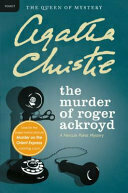
I got this by Agatha Christie for Christmas and started straight after Conclave, so technically last year. But I didn’t finish it till the new year, so 2025 it is.
Another great one from Christie, with a killer twist. Poirot has retired and is living in the country. But that kind of character never really gets to retire, do they?